The Bias Against Creativity
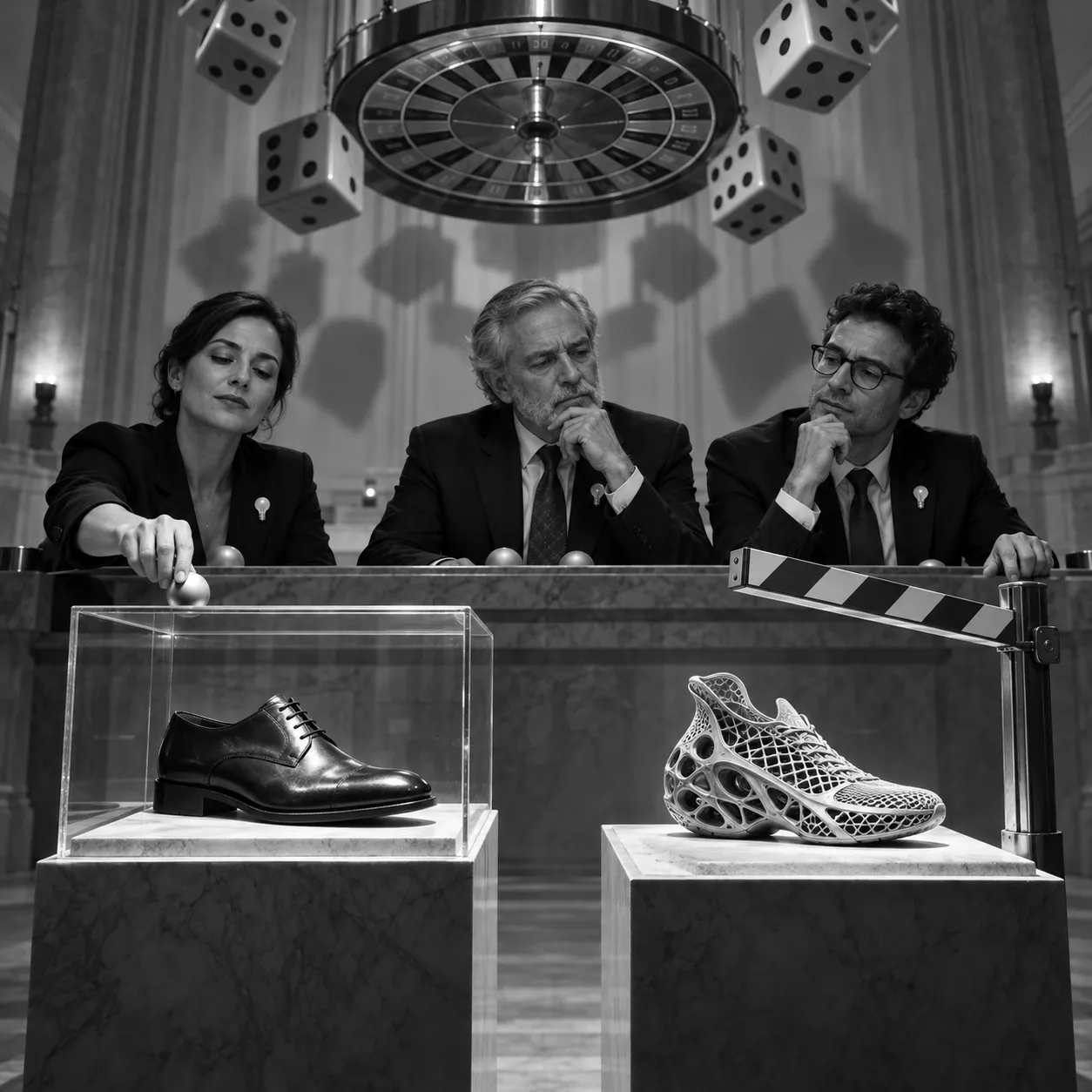
Jennifer S. Mueller, Shimul Melwani and Jack A. Goncalo proposed that people hold negative associations with novelty that they do not acknowledge and that a motivation to reduce uncertainty activates, and that once activated the bias lowers their ratings of a genuinely creative idea. The paradox the paper is built on is that the same people espouse creativity as a goal. Barry Staw named the phenomenon in a 1995 chapter and the authors credit him for it. Mueller and colleagues tested it.
What it is
The paper reports two experiments. In the first, 73 participants were assigned either to an uncertainty condition, in which they were told they might receive additional payment on the basis of a random lottery rather than on performance, or to a baseline condition that was offered no such payment, with a separate pilot of 82 people confirming that this raised feelings of uncertainty. Explicit attitudes did not differ between conditions at all, while on the implicit measure the uncertainty condition showed a bias against creativity and the baseline condition a bias in favour of it, with condition accounting for about a ninth of the variance. In the second, 140 undergraduates wrote an essay arguing either that every problem has more than one correct solution or that every problem has only one, and then judged a running shoe using nanotechnology to reduce heat and blisters which a separate sample had pre-tested as both highly novel and highly practical.
In effect
The second experiment is the one that matters commercially, because the participants primed towards a single right answer rated that same object as less creative than the other group did, with the effect partly running through the implicit measure. The authors' own framing is more careful than the way the finding travels: regardless of how open-minded people are, a motive to reduce uncertainty can bring negative associations with creativity to mind and lower evaluations of a creative idea. They name the irony themselves, which is that uncertainty is known to spur the generation of creative ideas while also making people less able to recognise one.
What it does not say
It does not say people dislike novelty. The trigger in both experiments is a wish for the question to be settled, induced by crude means, and relocating the problem from the evaluator's taste to the evaluator's conditions is the whole of its practical value. It does not rest on a measure with strong general predictive validity, since the first experiment's dependent measure is a reaction-time score and the broader evidence that such scores predict behaviour is weak, so that result should be reported as a finding about associations rather than about conduct. And it has not been replicated: two targeted searches found no registered replication, no multi-lab attempt and no published failure for a paper with over 500 citations, which means nobody appears to have run it again rather than that it has failed.
Sources
- Mueller, J. S., Melwani, S., & Goncalo, J. A. (2012). "The Bias Against Creativity: Why People Desire but Reject Creative Ideas." Psychological Science, 23(1), 13-17. doi:10.1177/0956797611421018. Full text read in the Cornell author version, headed "In press at Psychological Science", not the paywalled version of record, and every figure above is from that version. Experiment 1, N = 73; Experiment 2, N = 140. One arithmetic note read directly: the creativity-rating analysis is reported with different degrees of freedom from every other analysis in that experiment and the author version does not reconcile the two.
- Staw, B. (1995). "Why No One Really Wants Creativity", in Ford and Gioia, Creative Action in Organizations, Sage. Credited in the paper's own acknowledgements as the source of the idea.
- Reis, M., & Kunde, W. (2024). "How to overcome biases against creativity: The role of familiarity with and confidence in original solutions." Cognition, 245, 105741. doi:10.1016/j.cognition.2024.105741. Study 1, N = 67; Study 2, N = 68. The closest conceptual extension in reach, using response-selection rather than association measures, ruling out familiarity as the remedy and finding the pull weaker for self-generated ideas.
- Oswald, F. L., Mitchell, G., Blanton, H., Jaccard, J., & Tetlock, P. E. (2013). "Predicting ethnic and racial discrimination: A meta-analysis of IAT criterion studies." Journal of Personality and Social Psychology, 105(2), 171-192. doi:10.1037/a0032734.