The Challenge-Skill Channel
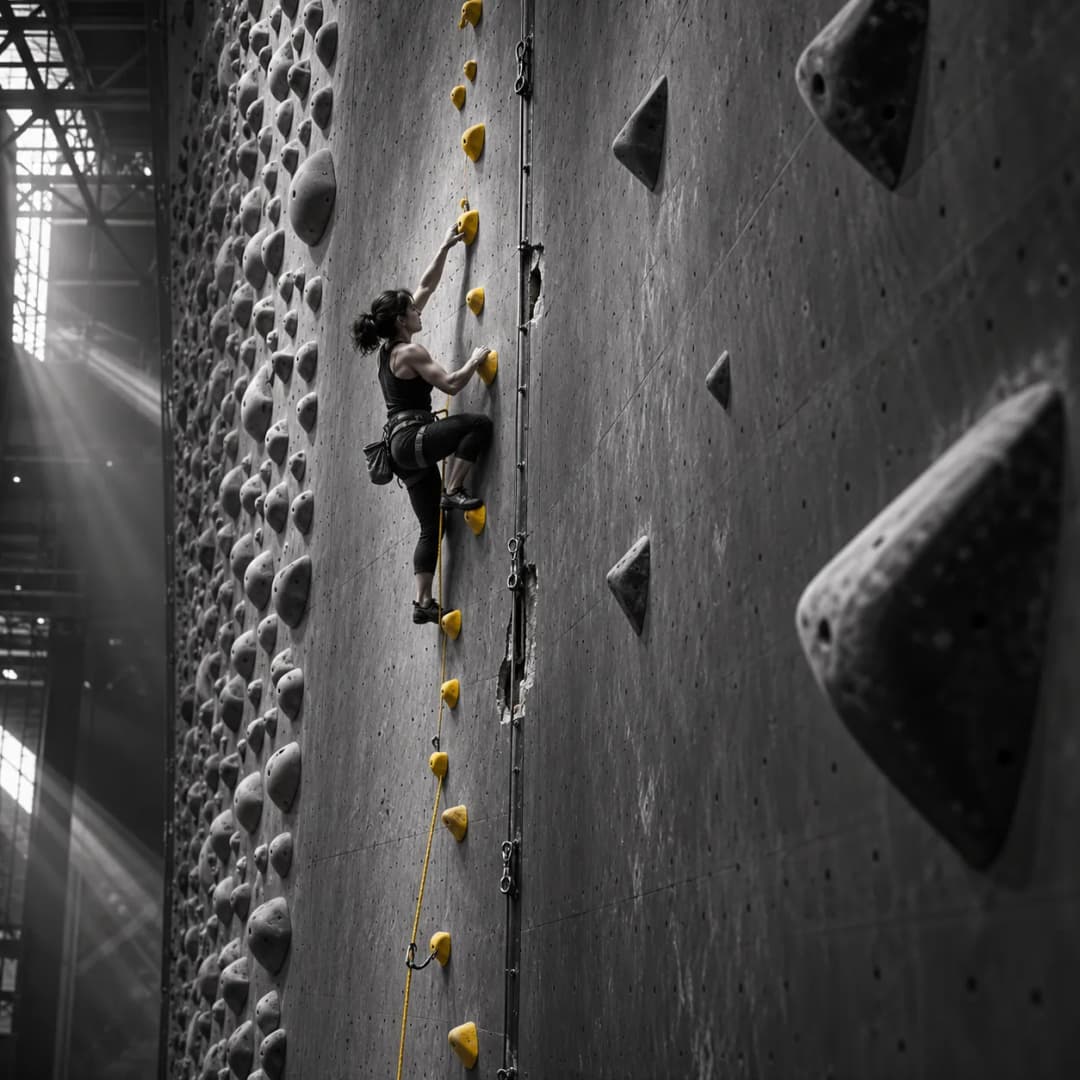
The challenge-skill channel is the claim that optimal experience arrives where perceived challenge matches perceived skill: too hard and you are anxious, too easy and you are bored, and in the band between them the activity carries you. Mihaly Csikszentmihalyi called it the golden ratio, and the Milan group refined it into an eight-channel model. It is the most testable proposition in Flow, and it is the one the designs built to test it have not supported.
What it is
The proposition has a structural problem before any test is run. In the experience-sampling tradition that made flow famous, an observation counted as flow when both challenge and skill were marked above the person's own weekly average. Where flow is defined by the ratio, the claim that the ratio produces flow cannot be tested at all, because the cause and the effect are the same measurement. Testing the claim therefore requires measuring flow some other way, and the studies that did so are the ones that matter.
Stefan Engeser, then at the Technical University of Munich, with Falko Rheinberg of the University of Potsdam, did exactly that in 2008: they measured the experience of flow in its components rather than defining it by the ratio. Their first study ran on 246 psychology students at Potsdam and the Technical University of Berlin, preparing for a compulsory first-semester statistics examination, with flow measured ten minutes into a typical revision task a week before the exam and exam scores obtained from the teachers. The regression gave a significant main effect for skill at b = 0.59, a marginally significant negative main effect for difficulty at b = -0.11, and an interaction that was not significant at b = 0.03 and p = 0.58. Their sentence: neither the channel model nor the quadrant model was empirically supported, and difficulty even had a negative influence on flow. With a direct single-item balance measure there was a reliable linear effect and a reliable quadratic one, the linear being stronger, and the quadratic appeared only where perceived importance was low.
Helga Lovoll and Joar Vittersoe ran two field studies on outdoor students, published in 2014 and read here as an abstract in full. Study 1 followed 64 first-year sport and outdoor students across a three-day coastal trip and a three-day ski trip, giving 698 single reports at seventy-six per cent compliance; Study 2 followed 26 second-year students on a five-day glacier course for 260 reports at full compliance. Multiple regressions with challenges, skills and the interaction gave no support to the challenge-skill ratio on subjective experiences, explaining on average nine and fourteen per cent of a scope of positive and negative experiences. The eight-channel model explained two per cent of the variance in a pleasure measure and three per cent in an interest measure in the first study. Their conclusion was support for an imbalance model instead, and that the findings contest the widespread idea that flow is produced when challenges and skills are harmonised.
The strongest single test is preregistered. Joe Cutting of the Digital Creativity Labs at the University of York, with Sebastian Deterding of Imperial College London and Simon Demediuk and Nick Sephton of York, built a two-player tactical game whose opponent used a variant of the Monte Carlo Tree Search algorithm to hit targeted difficulty-to-skill ratios. With 311 participants, the manipulation produced the intended ratios without players noticing it, and different ratios had no significant impact on enjoyment or engagement. Their conclusion is explicitly conditional: that balance does not always affect engagement and enjoyment, and that games with artificial-intelligence-controlled difficulty provide a useful paradigm for rigorous future work.
The case for the balance should be given in full before any of that. Carlton Fong, with David Zaleski and Jennifer Leach, meta-analysed 28 studies in 2015 and report that the relationship between challenge-skill balance and flow was moderate, that it was smaller with intrinsic motivation, and that balance was a consistent contributor alongside clear goals and sense of control. Their moderator list is the sharpest part: correlations were weaker when individuals were from an individualistic culture, in work or education contexts, using the experience sampling method, and self-reporting state flow rather than trait flow. The effect shrinks as the measurement approaches the moment and grows as it drifts towards a questionnaire about what a person is generally like. That pattern is consistent with part of the relationship being a feature of self-description rather than of events, and consistency is all it is.
In effect
No interaction in 246 revising students
The research case is Engeser and Rheinberg's first study, because it is the cleanest test of the proposition on its own terms. Challenge and skill were measured, flow was measured separately in its components, and the interaction term that the model requires came in at b = 0.03 with p = 0.58. Difficulty, far from needing to rise to meet skill, had a slightly negative relationship with flow. The paper is not a dismissal of the construct: flow predicted performance in two of its three studies controlling for ability. It is a dismissal of one mechanism.
The game that is too easy and still absorbing
In ordinary experience the model's prediction fails often enough that most people have a counter-example. A game well below the limit of someone's skill can hold them for an hour; a task far beyond it can be gripping rather than merely stressful. Csikszentmihalyi's own system is more flexible than its popular version, and Abuhamdeh's formulation is the careful one: flow is not always optimised by a balance of challenges and skills, which suggests that inferring flow from that condition is not a safe bet, and the relationship between challenge and enjoyment appears to be very unstable across both activity and person.
Dynamic difficulty adjustment, which the industry shipped anyway
Games companies have built difficulty-matching systems for decades on the strength of this idea, under names like dynamic difficulty adjustment and rubber-banding. The preregistered study is the first to manipulate the ratio precisely enough to test whether the player notices and whether it changes anything, and the answers were no and no. The honest reading for a designer is not that difficulty does not matter but that matching it to measured skill is not a reliable route to engagement, and that the measurement problem in the academic literature has a commercial counterpart: enjoyment has to be asked about, and asking is where the trouble starts.
What it does not say
It does not say flow does not exist. The construct has moderate measured associations with performance and with wellbeing, and those are reported on this site's flow page.
It does not say difficulty is irrelevant. Engeser and Rheinberg found the balance effect depends on perceived importance and on the individual achievement motive, and Cutting and colleagues hedge their own conclusion to "not always".
It does not say the meta-analytic case is wrong. Fong and colleagues report a moderate relationship across 28 studies, and the reason to hold it lightly is their own moderator pattern, not an error.
It does not settle the question. Where flow is operationalised by the challenge-to-skill ratio, the proposition is untestable, and the studies that avoided that circularity are three in number with one of them preregistered.
Who developed it
Mihaly Csikszentmihalyi, born 1934 in Fiume, now Rijeka, who took his doctorate at Chicago, taught there from 1971, moved to Claremont Graduate University in 1999 and died in Claremont on 20 October 2021. The eight-channel refinement came from the Milan group. The tests reported here belong to Stefan Engeser, Helga Lovoll and Joe Cutting, and the meta-analytic case to Carlton Fong.
Sources
- Csikszentmihalyi, M. (1990). Flow: The Psychology of Optimal Experience. Harper and Row. Chapter 4 for the claim, p. 158 for the operational definition and the "rather liberal" concession, endnotes at 252, 253 and 255. Read in full by the vault.
- Engeser, S., & Rheinberg, F. (2008). "Flow, performance and moderators of challenge-skill balance." Motivation and Emotion, 32, 158-172. doi:10.1007/s11031-008-9102-4. Full text read at source.
- Lovoll, H. S., & Vittersoe, J. (2014). "Can Balance be Boring? A Critique of the 'Challenges Should Match Skills' Hypotheses in Flow Theory." Social Indicators Research, 115(1), 117-136. doi:10.1007/s11205-012-0211-9. Abstract read in full; full text not retrieved.
- Cutting, J., Deterding, S., Demediuk, S., & Sephton, N. (2023). "Difficulty-skill balance does not affect engagement and enjoyment: a pre-registered study using artificial intelligence-controlled difficulty." Royal Society Open Science, 10(2), article 220274. doi:10.1098/rsos.220274. Abstract read in full; full text not retrieved.
- Fong, C. J., Zaleski, D. J., & Leach, J. K. (2015). "The challenge-skill balance and antecedents of flow: A meta-analytic investigation." The Journal of Positive Psychology, 10(5), 425-446. doi:10.1080/17439760.2014.967799. Abstract read in full; full text not retrieved and no pooled correlation is printed.
- Abuhamdeh, S. (2020). Frontiers in Psychology, 11, article 158. doi:10.3389/fpsyg.2020.00158. Full text read at source.