The Four Attachment Styles
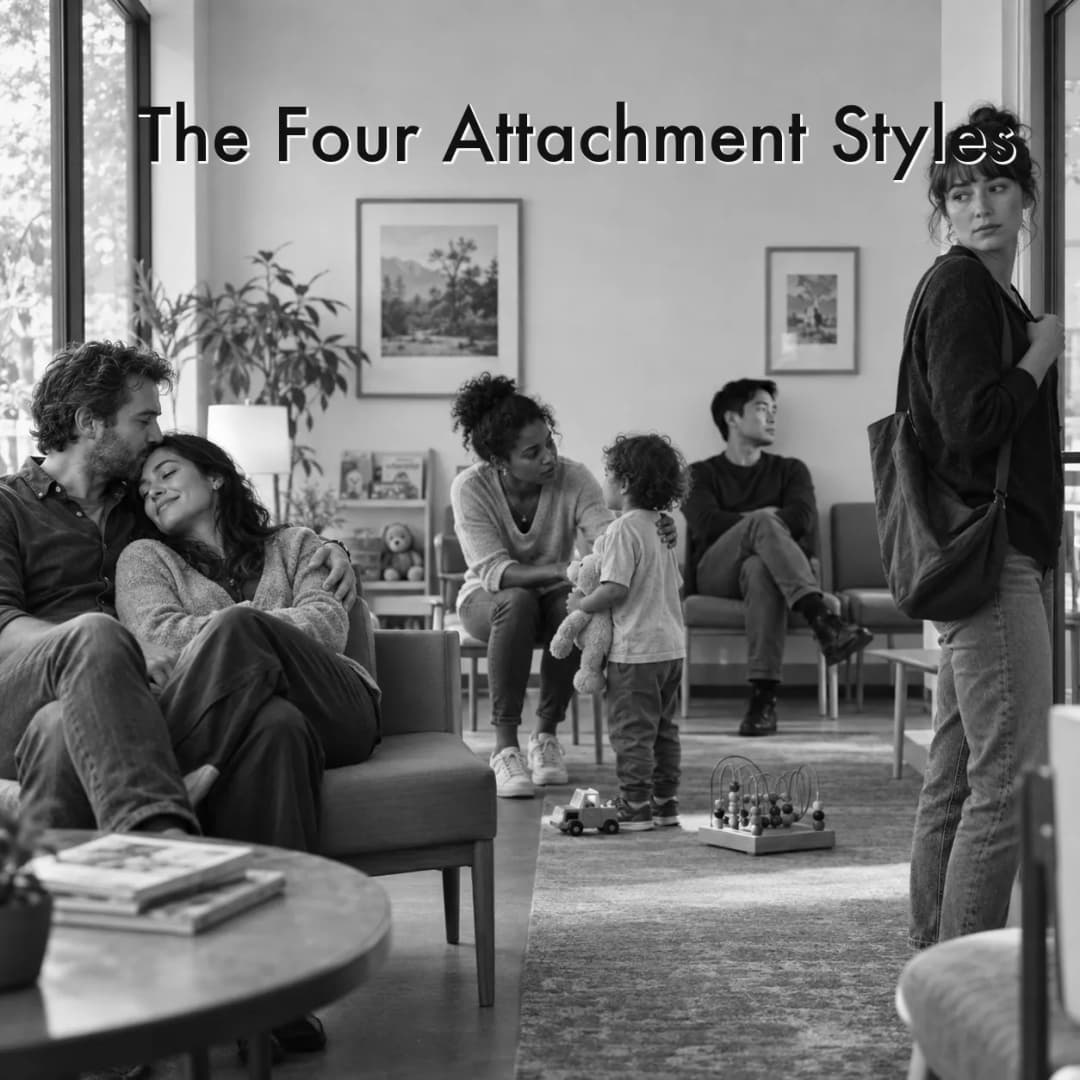
Secure, avoidant, resistant and disorganised. Four labels from a twenty-minute laboratory procedure for one-year-olds, which have since been borrowed by an adult questionnaire tradition that measures something else.
What it is
The first three come from Mary Ainsworth's Strange Situation and describe what a baby does at reunion.
Secure. Seeks the parent when distressed, settles, returns to exploring. About two thirds of the original pooled sample.
Avoidant. Barely acknowledges the parent's return, staying with the toys. The indifference is not indifference: physiological measures show these babies are aroused while behaving as though they are not.
Resistant, also called ambivalent. Cannot settle. Seeks contact and pushes it away in the same movement, and is hard to soothe.
Disorganised was added by Mary Main and Judith Solomon in 1990 for babies who fit none of the three: a movement toward the parent that breaks off, a stilling, an approach with the head turned away. The other three are strategies. This one is the absence of one.