The Illusion of Understanding
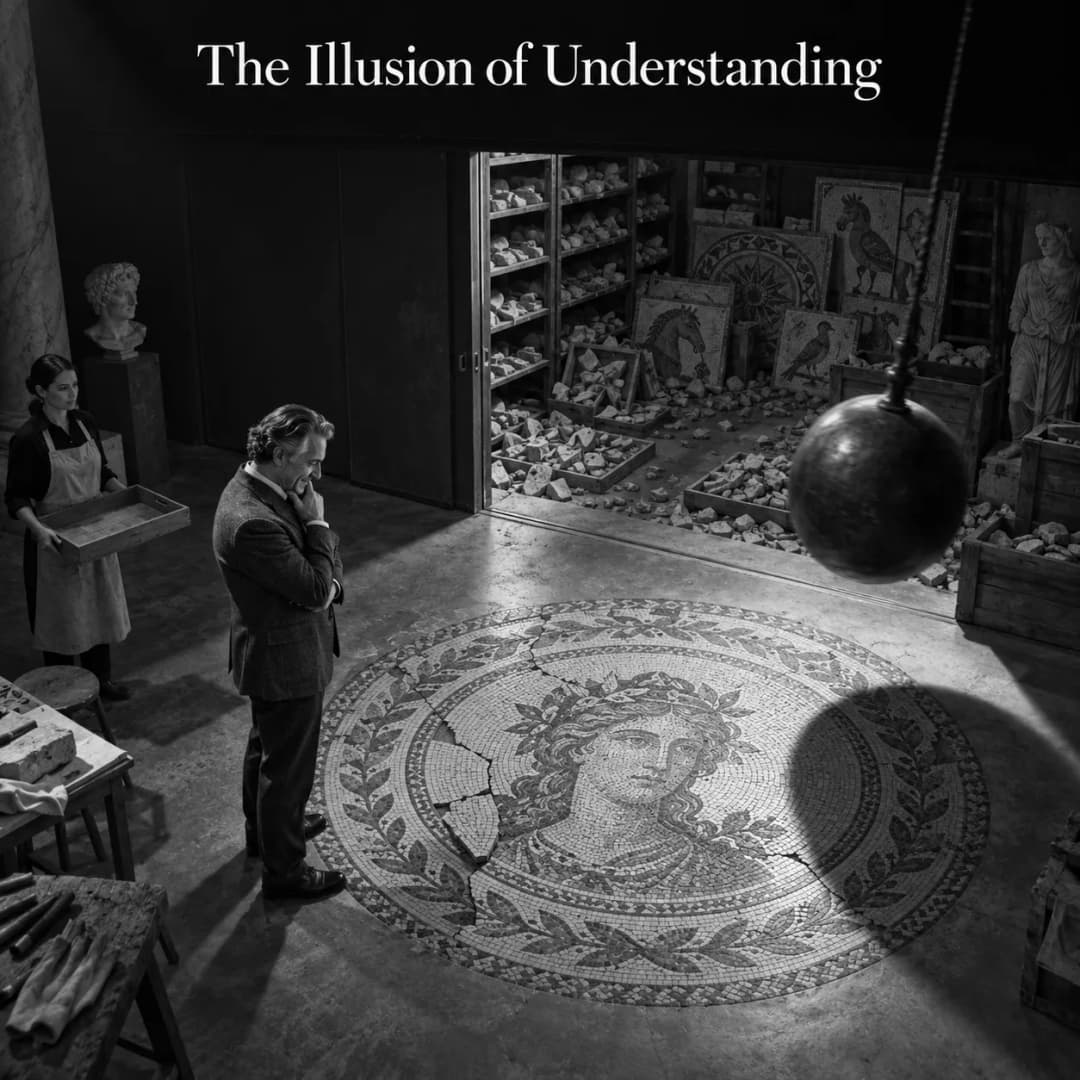
The illusion of understanding is that the past looks explicable because the mind builds a coherent story out of whatever material it happens to have, not because the material was sufficient. Having built the story, we take its coherence as evidence that we understood the event and that the event was predictable. Both conclusions are unearned. The framing is Daniel Kahneman's; the idea underneath it is Nassim Taleb's narrative fallacy, which Kahneman credits to him. The mechanism is sound and the business cases usually cited for it are poorly sourced.
What it is
Kahneman's sharpest formulation is grammatical: the offender is the word knew. People say they knew the crisis was coming, when what they had was a belief that has since been vindicated. The word smuggles in a claim about the quality of the earlier belief that nothing in the record supports.
The second half of the claim is the one writers keep dropping. The more luck is involved in an outcome, the less there is to learn from it, and that is precisely the domain where confident retrospective accounts are thickest. Finance, entrepreneurship and careers all generate large numbers of explicable-looking outcomes that mostly record variance.
Attribution here is layered. Kahneman sets it out in chapter 19 of Thinking, Fast and Slow and credits the narrative fallacy to Taleb. No date for Taleb's coinage appears in the material read in this vault, so no year is asserted for it here.