The Marginal Propensity to Consume
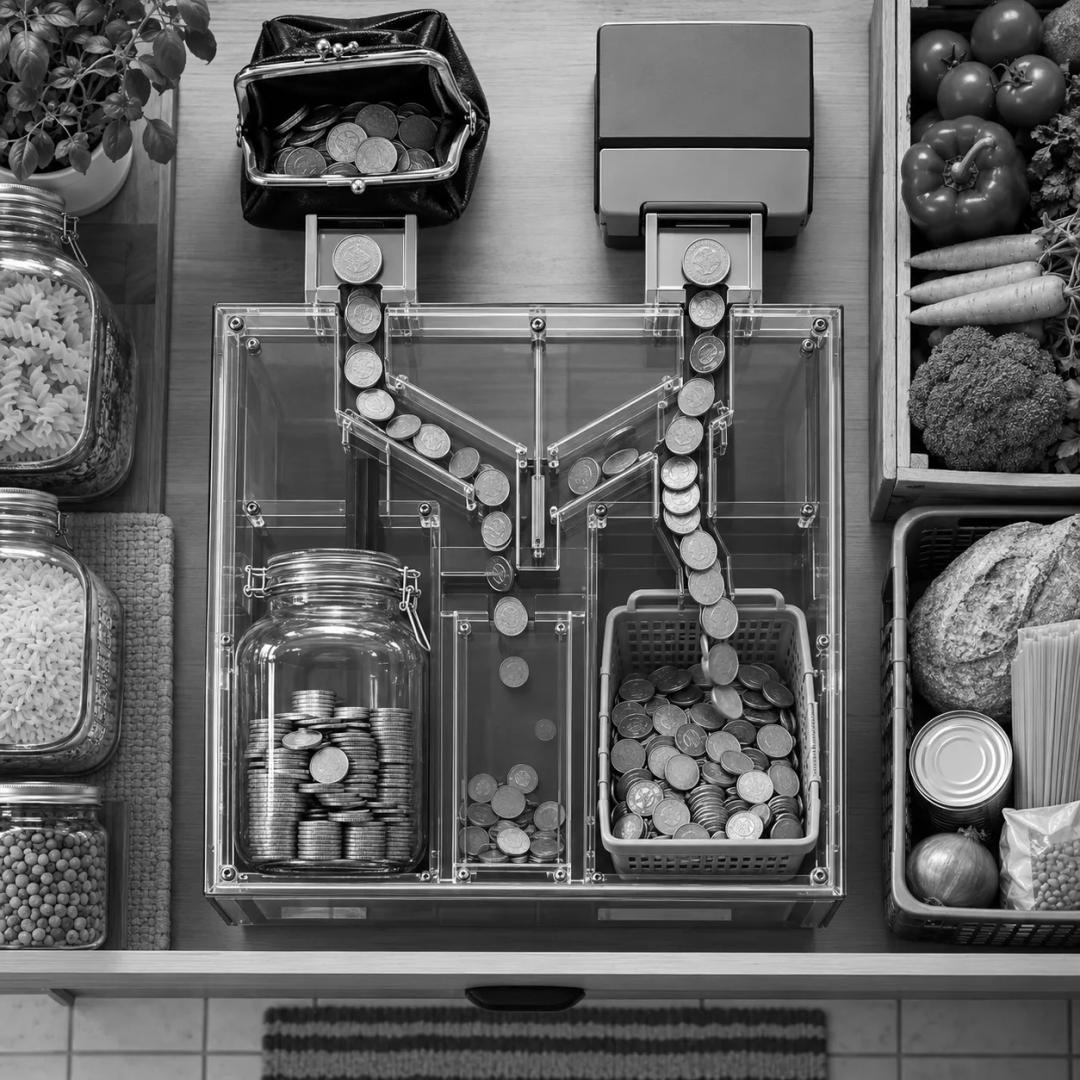
The marginal propensity to consume is how much of an extra pound, once it arrives, gets spent rather than saved. It earns a place in a psychology vault because standard theory says the figure should not depend on where the pound came from, since money is fungible. The field evidence says it does depend, and that is the whole argument for mental accounting as something more than a metaphor.
What it is
Justine Hastings and Jesse Shapiro used a retail panel with detailed transaction records to measure how American households spend food assistance benefits. Their estimate of the marginal propensity to consume eligible food out of those benefits is between a half and six tenths, and out of cash it is much smaller. The force of the paper is in one comparison, and any use of it has to state it: for households whose benefits are below their total food spending, the benefit is economically identical to cash, because every pound of it displaces a pound they would have spent on food anyway. Those households still spent it differently, and using a semiparametric framework the authors reject the hypothesis that households respect the fungibility of money, reporting that a model with mental accounting matches the facts.
In effect
Katherine Milkman and John Beshears get the same shape from a smaller and more ordinary windfall. Comparing what online grocery customers buy when redeeming a ten-dollar-off coupon with what they buy without one, with customer fixed effects, spending rises by about one dollar and sixty cents, and the extra spending goes on groceries the customer does not usually buy. The same authors' earlier work on commodity price shocks found households substituting to lower-octane petrol when prices rose, to an extent income effects cannot explain, with the outcome being the grade chosen rather than total spending.
What it does not say
It does not identify the mechanism. Both headline studies are observational designs on administrative or retail data, which is their strength on realism and their weakness on identification, and the food-assistance panel's household count and date range were not available here. Milkman and Beshears decline to claim the mechanism themselves, writing that although their hypotheses are motivated by mental accounting they also discuss alternative psychological explanations, and that caution should travel with the finding. Nor does the framework select among candidate psychologies on its own: Hastings and Shapiro had to compare category budgeting, loss aversion and salience against each other, because mental accounting alone did not pick one.
Sources
- Hastings, J., & Shapiro, J. M. (2018). 'How Are SNAP Benefits Spent? Evidence from a Retail Panel.' American Economic Review, 108(12), 3493-3540. doi:10.1257/aer.20170866. Marginal propensity to consume eligible food out of benefits between a half and six tenths; household count and date range not available.
- Hastings, J. S., & Shapiro, J. M. (2013). 'Fungibility and Consumer Choice: Evidence from Commodity Price Shocks.' The Quarterly Journal of Economics, 128(4), 1449-1498. doi:10.1093/qje/qjt018. Outcome is octane grade chosen, not total spending.
- Milkman, K. L., & Beshears, J. (2009). 'Mental accounting and small windfalls: Evidence from an online grocer.' Journal of Economic Behavior & Organization, 71(2), 384-394. doi:10.1016/j.jebo.2009.04.007. Spending rises by about $1.59 on redemption of a $10-off coupon; the authors decline to claim the mechanism.
- Abeler, J., & Marklein, F. (2017). 'Fungibility, Labels, and Consumption.' Journal of the European Economic Association, 15(1), 99-127. doi:10.1093/jeea/jvw007. A field and a laboratory experiment; lower mathematical ability predicted more violation of fungibility.
In these themes
- Saving, Debt and Budgets
How we sort, save and lose track of our own money.