The Play Signal
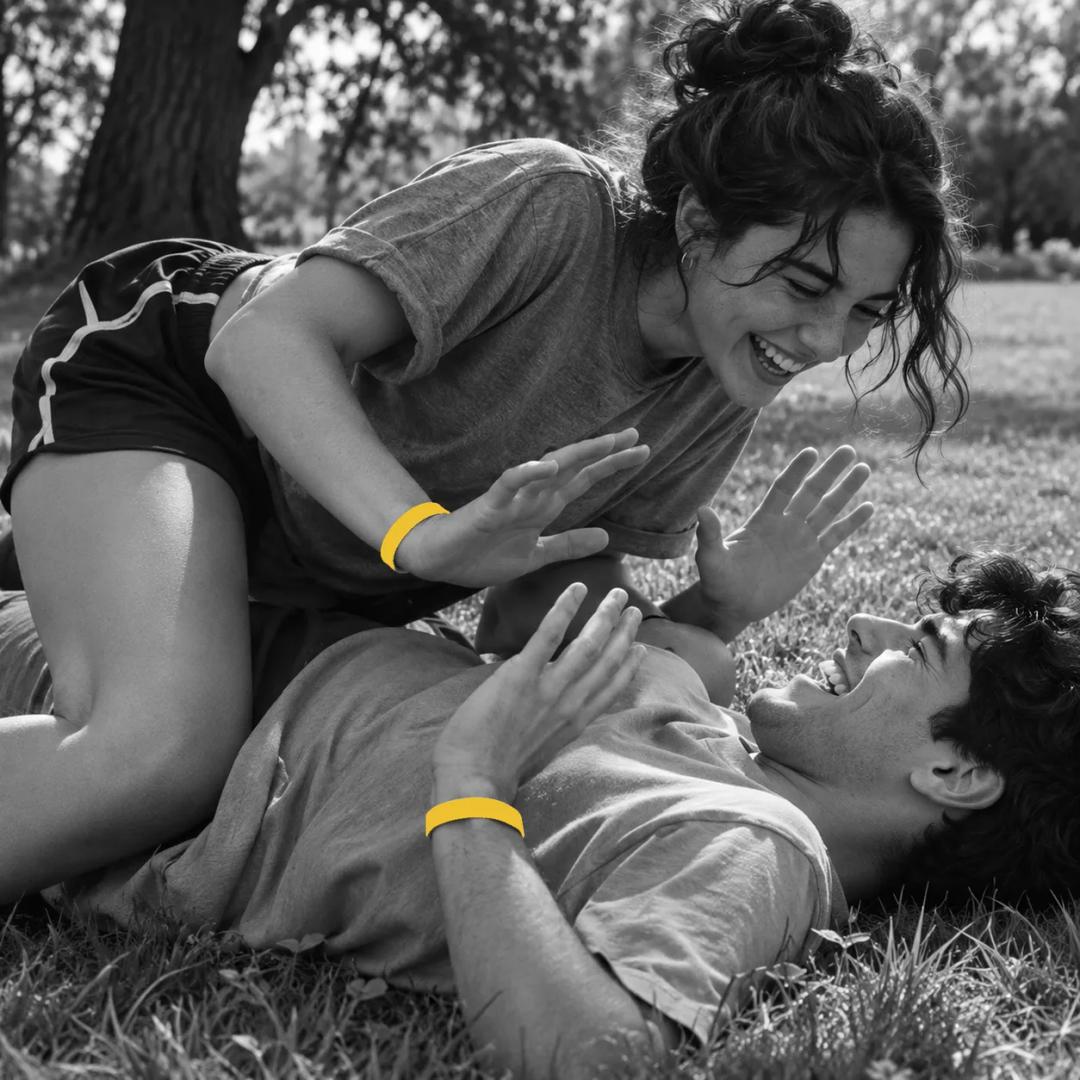
A cue that tells a partner that rough contact is not an attack.
What it is
Animals that play-fight need a way to show that a bite or a shove is not meant seriously. Robin Dunbar treats human laughter as a modified form of the play calls of apes, and Marina Davila Ross and colleagues found that tickle-induced calls in great apes and humans share a common origin. Steven Pinker argues that laughter still works as a signal that a remark is not a threat.
In effect
In the article on why we laugh, it links human laughter to the panting play calls of other apes.
What it does not say
It is an account of where laughter came from. It does not claim that every laugh signals play.
Sources
- Davila Ross, M., Owren, M. J., & Zimmermann, E. (2010). The evolution of laughter in great apes and humans. Communicative & Integrative Biology, 3(2), 191-194.
- Dunbar, R. I. M. (2022). Laughter and its role in the evolution of human social bonding. Philosophical Transactions of the Royal Society B, 377(1863), 20210176.
- Pinker, S. When Everyone Knows That Everyone Knows.