The Semmelweis Reflex
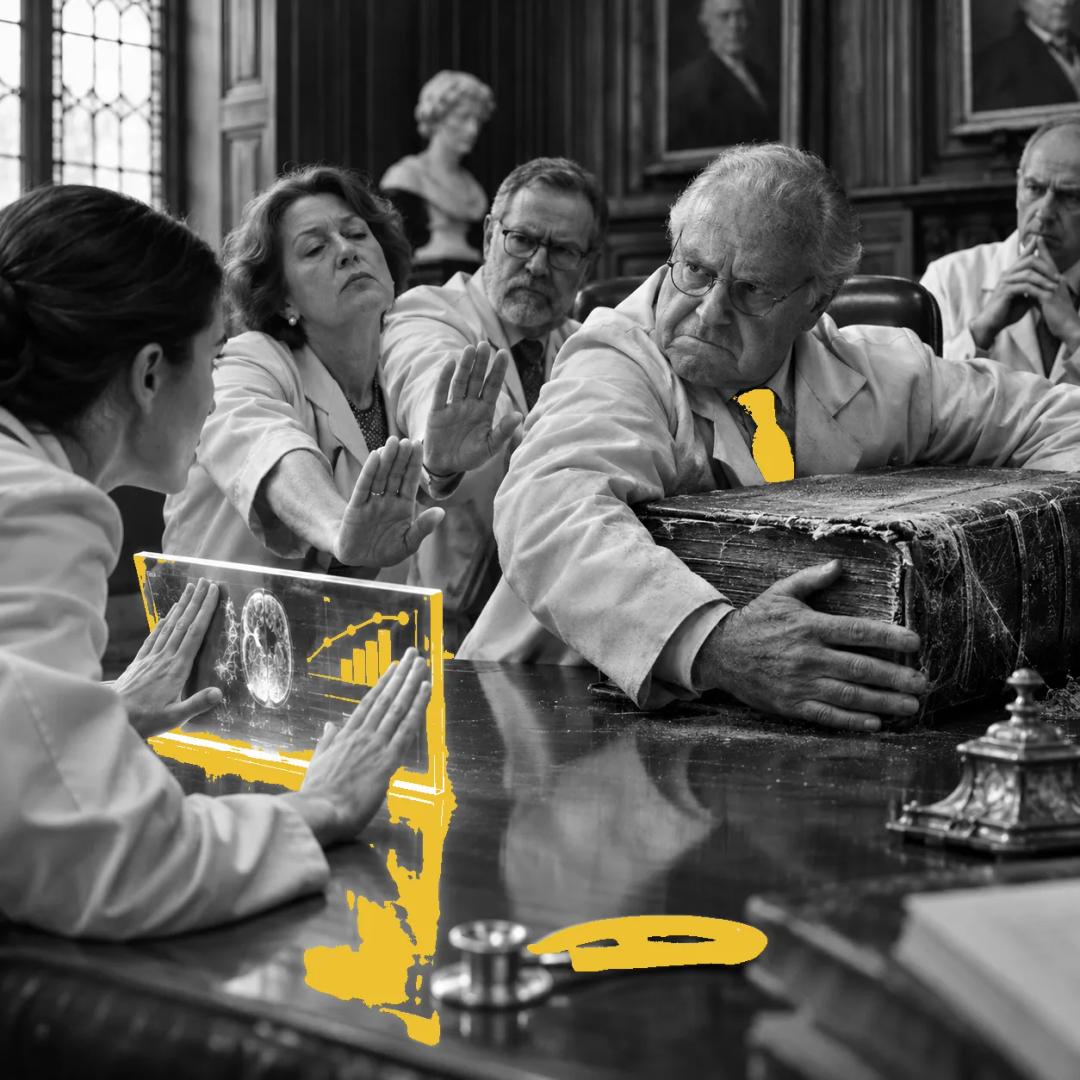
Rejecting new evidence because it contradicts established practice.
What it is
The term is named after the reception of Ignaz Semmelweis's work. In 1847 he introduced hand washing in chlorinated lime at an obstetric clinic in Vienna, and his ideas were not widely accepted until after his death. Historians and philosophers have revisited the case, and Tulodziecki argued in 2013 that the standard account of the episode should be revised.
In effect
In the article on when experts reject the evidence, the label is set beside the story as usually told and what historians and studies support, including research on how people weigh evidence that challenges their views and on how fields change after the early death of a prominent scientist.
What it does not say
It is a label, not a measured effect, and it does not explain the historical episode on its own; the sources point to several factors in how the work was received.
Sources
- Risse, G. B. Semmelweis, Ignaz Philipp. In Complete Dictionary of Scientific Biography (2008).
- Dunn, P. M. (2005). Ignac Semmelweis (1818-1865) of Budapest and the prevention of puerperal fever. Archives of Disease in Childhood: Fetal and Neonatal Edition, 90(4), F345-F348.
- Tulodziecki, D. (2013). Shattering the myth of Semmelweis. Philosophy of Science, 80(5), 1065-1075.
- Lord, C. G., Ross, L., & Lepper, M. R. (1979). Biased assimilation and attitude polarization: The effects of prior theories on subsequently considered evidence. Journal of Personality and Social Psychology, 37(11), 2098-2109.
- Azoulay, P., Fons-Rosen, C., & Graff Zivin, J. S. (2019). Does science advance one funeral at a time? American Economic Review, 109(8), 2889-2920.