The Studio Model
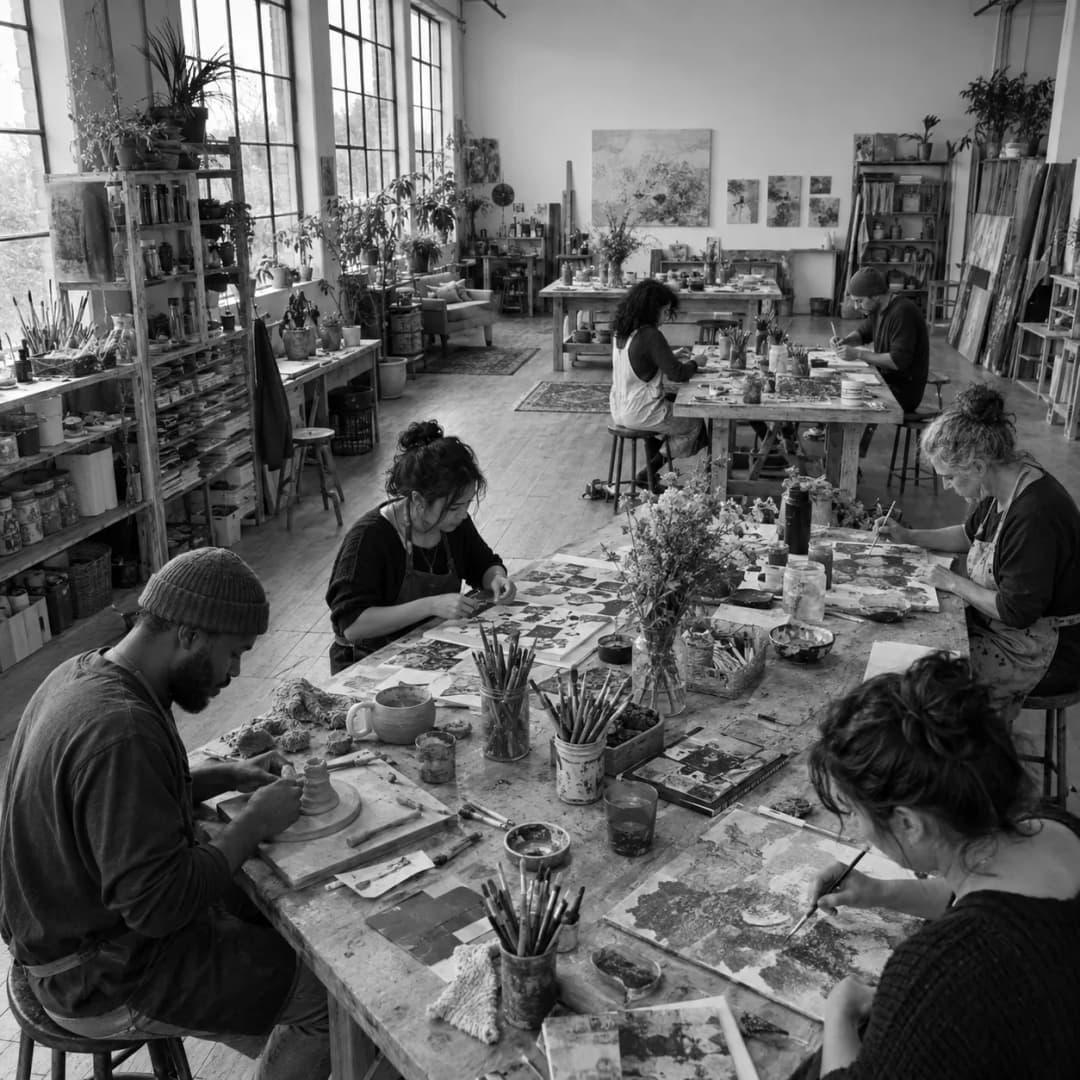
The studio model is the position that in art therapy the space, not the technique, does the primary work: an open studio with materials to hand, other people making things, and a facilitator who makes art too. It shifts the therapist from interpreter to host. Pat B. Allen set it out in Art Is a Way of Knowing in 1995, with Bruce Moon as a parallel voice. It is a practice model rather than a research claim, and this vault holds it as a useful corrective and an untested one.
What it is
The claim is about where the work happens. In the interpretive tradition the patient makes an image and the therapist helps read it, so the technique and the reading carry the therapy. The studio model says the room carries it: materials within reach, no appointment shape, other people working alongside you, and a facilitator at the next table who is also making something rather than watching you make something.
That last detail is the one that changes the role. A facilitator who is painting cannot simultaneously be interpreting, and the model treats that as a feature. The therapist becomes a host.
Credit goes to Pat B. Allen, whose Art Is a Way of Knowing appeared in 1995, together with the open studio work built around it. Bruce Moon's studio-based writing runs in parallel and is usually cited alongside her. Neither is named as coining the phrase in the book this vault drew the note from, and the attribution here is this publication's identification rather than the source's.
The model was built to resist something specific, which is clinification: the drift of art therapy toward the postures, language and setting of clinical medicine. Read that way the studio model is an argument inside a profession about what the profession is for, and not a general claim about art.
In effect
Its clearest everyday expression is the community open studio: paint and clay set out three afternoons a week, anyone can come, the facilitator works at the next table, and nobody interprets anyone's picture.
The commercial cousin is the maker space or the pottery cafe, which sells the room rather than the lesson, and which arrived at the same design without any of the theory. That convergence is interesting and it is not evidence. A business model that works and a therapeutic model that works are different claims, and only the first has been demonstrated.
The broader family the idea belongs to is the one that says setting carries behaviour: third places, environment design, and in the psychoanalytic literature the transitional space. Anyone finding the studio model persuasive is probably already persuaded by that family, which is worth noticing before treating the agreement as independent support.
What it does not say
It does not say the studio model works better than interpretive art therapy. The outcome literature on open studios is small and mostly qualitative, and no comparison of the kind that claim would need has been done.
It does not say interpretation is harmful. It says interpretation is not where the model locates the active ingredient, which is a different and much weaker statement than the one usually made on its behalf.
It does not carry any health claim at all. This is a design philosophy for running a room. Held as that, it is useful. Held as a treatment claim, it has nothing behind it.
Sources
- Allen, P. B. (1995). Art Is a Way of Knowing. The open studio position. Not read here.
- Moon, B. Studio-based writing, cited as the parallel voice.
- McNiff, S. (2004). Art Heals. Shambhala. Ch. 2, "The Creative Space", presents the space as the primary agent, via Allen and Moon. The book does not name the model as a coinage; the attribution to Allen is this publication's identification and is held at medium confidence.