The Zero Price Effect
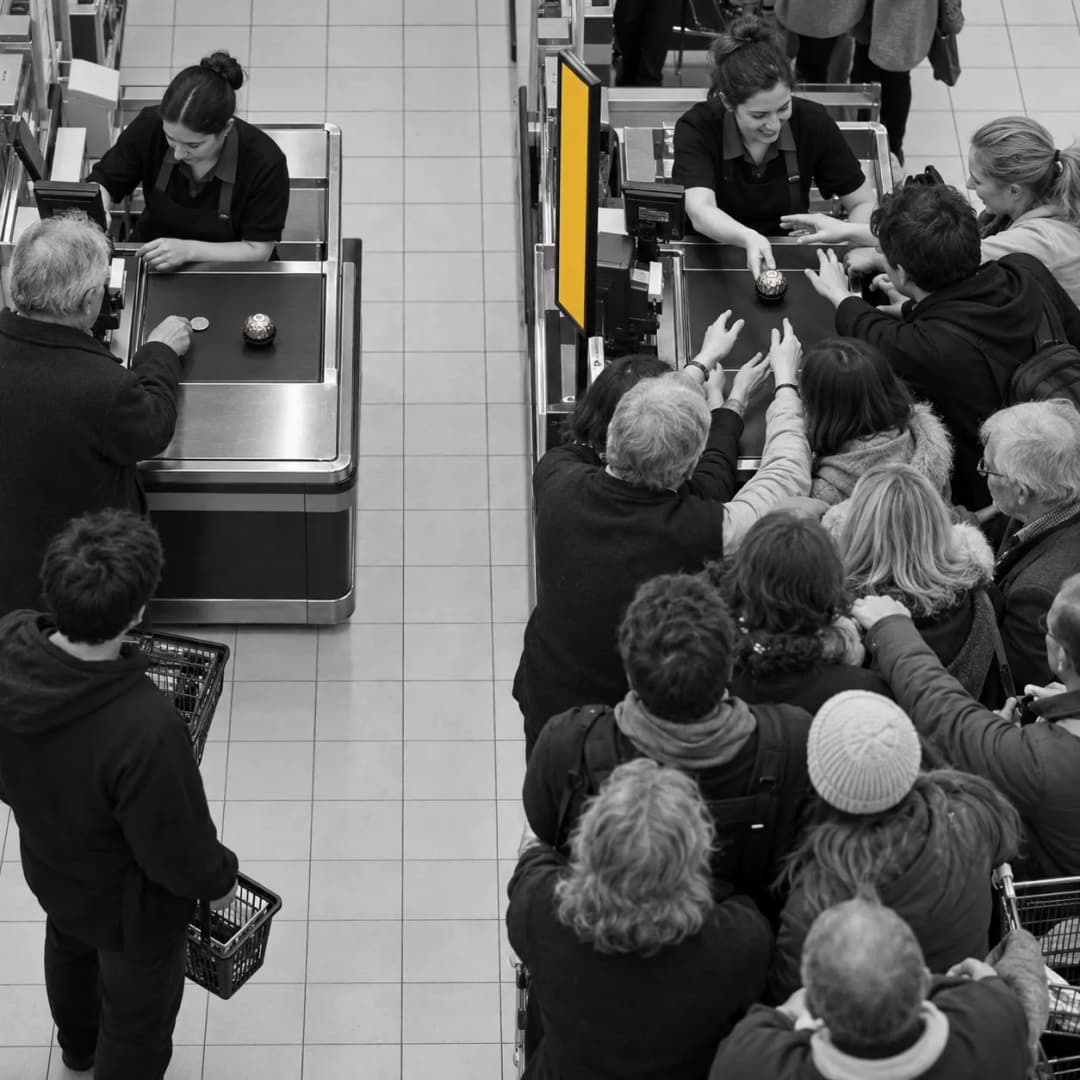
The zero price effect is the jump in demand when a price falls to nothing, larger than the same fall between two positive prices. Moving a chocolate from two cents to one cent barely changed what people chose. Moving it from one cent to free changed it a great deal. The standard account is that zero works as a category of its own rather than as a very low price, and the 2007 paper that named it points to affect as the most likely reason.
What it is
Standard economics says people choose the option with the largest gap between benefit and cost. On that rule, a price falling by one cent should pull demand by the same amount wherever on the scale it happens. Kristina Shampanier, Nina Mazar and Dan Ariely proposed that it does not. In their 2007 paper in Marketing Science, "Zero as a Special Price: The True Value of Free Products", they argue that for free products people do not simply subtract costs from benefits. They perceive the benefits of a free product as higher, as if zero pricing not only decreases its cost but adds to its benefits.
The design held the price difference between two goods constant and moved both prices, once with the cheaper good at a low positive price and once at zero. In the zero condition dramatically more people chose the cheaper good and dramatically fewer chose the dearer one. The version most readers know comes from Ariely's Predictably Irrational (2008), Chapter 3, which reports five runs. With a Lindt truffle at 15 cents and a Hershey's Kiss at 1 cent, 73 per cent took the truffle. With the truffle at 14 cents and the Kiss free, 69 per cent took the Kiss. A ladder run priced the Kiss at 2 cents, 1 cent and nothing, the truffle at 27, 26 and 25. Two cents to one left the split where it was, and one cent to nothing moved it. That run is the cleanest evidence in the chapter, because it separates zero from cheapness.
The other runs push the same point. A cafeteria version at MIT put the chocolates at the cashier, so students could add one to lunch without a separate payment, which was built to rule out the idea that free is simply easier. A Halloween version had children choose between a free small Snickers and a large one that cost a single Kiss, and about 70 per cent took the free one, the worse trade. A gift-certificate version offered a free $10 certificate or a $20 certificate for $7, and most took the free one. Raising both prices by $1 reversed the majority.
The paper tested three explanations: social norms, mapping difficulty and affect. Its abstract says affect emerges as the most likely. Ariely's account in the book is loss aversion, that a free item carries no risk of having chosen badly, which he offers with a hedge.
In effect
For a seller, the effect says that a free item and a nearly free item are not neighbours. A study of a two-part tourism product, published in 2011, found that when the cheaper option included a free breakfast, demand rose for it and fell for the dearer option people had leaned towards, so the effect reaches components of a bundle and not only single goods.
For a policymaker, the closest evidence comes from health. In a Kenyan field experiment by Jessica Cohen and Pascaline Dupas, uptake of anti-malarial bed nets dropped by 75 per cent when the price rose from nothing to $0.75. That result shows how steeply demand falls at the bottom of the scale. It compares zero with one positive price, so it cannot show that zero is special against one cent.
For a shopper, the practical step is to do the arithmetic on the surplus. In the gift-certificate run the free $10 certificate left $10 of surplus and the $20 certificate for $7 left $13, and most people took the smaller one. Asking what each option leaves you with, and not whether one of them is free, undoes the pull.
What it does not say
It does not say which mechanism is right. The paper names affect the most likely of three it tested, and Ariely's book offers loss aversion. The book's runs do not set the two against each other.
It does not give sample sizes. The book reports none for any of the five runs, so the percentages are best read as the shape of the result and the designs as the evidence. This page was written from the paper's abstract and the book's chapter, and the paper itself was not read in full.
It does not say free is a bad deal. Where the free item is also the better value, choosing it is correct. The experiments show the pull in cases where the free item was the worse deal.
It does not cover probabilistic free offers. A 2017 paper led by Mazar found that a chance of getting a whole purchase free beat a sure discount of equal value, and that the zero price effect was likely not behind it. A 2025 study found such offers win mainly when the sure discount is or seems trivial.
Sources
- Shampanier, K., Mazar, N., & Ariely, D. (2007). "Zero as a Special Price: The True Value of Free Products." Marketing Science, 26(6), 742-757. doi:10.1287/mksc.1060.0254. Abstract read at the publisher record; the paper was not read in full.
- Ariely, D. (2008). Predictably Irrational. HarperCollins (revised edition 2009). Chapter 3, pp. 49-65. Read from the vault's source notes.
- Nicolau, J. L., & Sellers, R. (2012). "The Free Breakfast Effect: An Experimental Approach to the Zero Price Model in Tourism." Journal of Travel Research, 51(3), 243-249. doi:10.1177/0047287511418370. Abstract read.
- Cohen, J., & Dupas, P. (2010). "Free Distribution or Cost-Sharing? Evidence from a Randomized Malaria Prevention Experiment." Quarterly Journal of Economics, 125(1), 1-45. doi:10.1162/qjec.2010.125.1.1. Abstract read.
- Mazar, N., Shampanier, K., & Ariely, D. (2017). "When Retailing and Las Vegas Meet: Probabilistic Free Price Promotions." Management Science, 63(1), 250-266. doi:10.1287/mnsc.2015.2328. Abstract read.