Truth-Bias
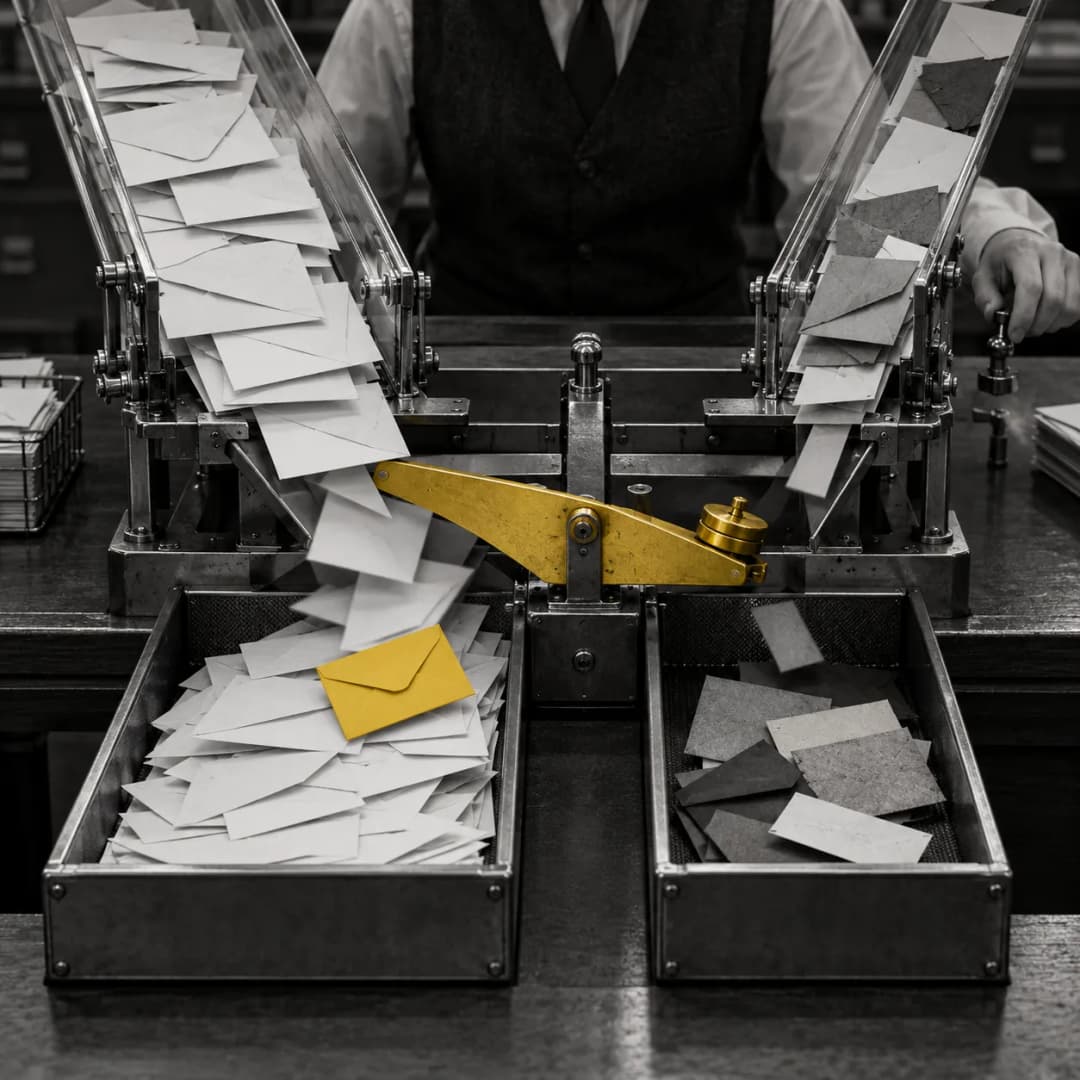
Truth bias is the tendency to judge other people's messages as honest more often than the facts justify. In Bond and DePaulo's 2006 meta-analysis of 206 documents, judges rated about 55 to 57 per cent of messages as truthful, and they recognised 61 per cent of truths against 47 per cent of lies. The lean towards belief explains why average accuracy is only 54 per cent. Timothy Levine argues in Duped (2020) that it is a sensible default and not a flaw, a view this site treats as his interpretation.
What it is
When a person hears a statement from another person, they have to decide, usually without stopping to think about it, whether to take it as true. Truth bias is the finding that the decision tilts towards yes. Judges in deception experiments say "truthful" more often than the proportion of truthful messages would warrant, and they do so whether the message is honest or not.
The best-measured form of the finding is in Bond and DePaulo's 2006 paper in Personality and Social Psychology Review, which pooled 206 documents and 24,483 judges. The weighted mean share of messages judged truthful was about 55 per cent and the unweighted mean was about 57 per cent. The authors describe a pattern in which people are more inclined to judge deceptive messages as truthful than truthful messages as deceptive. It shows up in the accuracy split: judges identified 61 per cent of truths and 47 per cent of lies, which averages to 54 per cent.
The bias is not a separate result from the accuracy figure. It is the main reason the figure looks the way it does. A judge who accepts most messages will be right nearly every time the speaker is honest and wrong nearly every time the speaker is lying, so the overall score depends on the mix of lies and truths in the material. The 54 per cent average belongs to laboratory studies in which the mix was close to even.
The same paper offers a related observation. People who are motivated to be believed look deceptive whether or not they are lying, which means the bias does not erase suspicion; it sits alongside it. The authors also propose that people construe others' lies more critically than their own, a double standard in evaluating lies that they suggest explains much of the accumulated literature.
In effect
In the laboratory
The 2006 table is the standard illustration. Of every ten lies, judges missed more than five. Of every ten truths they accepted six. Because of the lean, the same judges would be expected to score far lower on a set filled with lies, and far higher on a set filled with truths. Levine's account in Duped builds on this point: accuracy rises in a straight line with the share of honest messages, so 54 per cent holds only for the roughly even lab base rate. The formal model behind that claim, the Park-Levine probability model, follows from truth bias plus the share of lies. Its empirical tests were run mostly in Levine's own lab and the vault's audit of the book found no independent checks, so the arithmetic is sound and the tests are the author's.
In ordinary life
Everyday conversation is the setting Levine has in mind when he calls truth bias adaptive. Most of what people say to each other is honest, so believing it is usually right, and a listener who treated every text, tweet or remark as a possible lie would spend most of the day doubting true statements. On this reading the cost of the bias is paid in the rare case of a liar, and the benefit is collected in every honest exchange. That argument is Levine's framing and is not a result of the meta-analysis.
In fraud
The same default is what a confidence trick relies on. Aja Raden's The Truth About Lies sorts lies into nine named cons, among them the Big Lie, Three-Card Monte and the Bait and Switch, and tells each from the con artist's side. The marks in those stories are people whose default of belief is working as designed. The book does not discuss truth bias as a finding, but its subject is the setting in which the finding bites.
What it does not say
It does not say that people believe everything. Judges in the pooled studies called a large share of messages deceptive, and the same paper found that motivated honest speakers can look deceptive. The claim is about the direction of the lean, not about gullibility.
It does not say the bias is irrational. That is a separate argument, made by Levine, and the site holds the evidence for the adaptive reading as his framework: his own lab produced much of it, and independent replication of its parts is incomplete. The attribution of the term to its original authors was not checked for this page, and no origin is claimed here.
It does not say that raising suspicion fixes the problem. A judge who leans the other way becomes more accurate on lies and less accurate on truths, which changes where the errors fall and not how many there are.
Who developed it
The measurement used on this site is Charles Bond and Bella DePaulo's 2006 synthesis. The adaptive interpretation and the base-rate arithmetic are Timothy Levine's, set out in his 2020 book Duped (University of Alabama Press).
Sources
- Bond, C. F., Jr., & DePaulo, B. M. (2006). "Accuracy of deception judgments." Personality and Social Psychology Review, 10(3), 214-234. doi:10.1207/s15327957pspr1003_2
- Levine, T. R. (2020). Duped: Truth-Default Theory and the Social Science of Lying and Deception. Tuscaloosa: University of Alabama Press. Source of the adaptive reading and the base-rate model, treated here as the author's framework.
- Raden, A. (2021). The Truth About Lies. Used for its structure of nine named cons only.
- Vault note: [[Truth-Bias]].