Two-Stage Purchase Decision
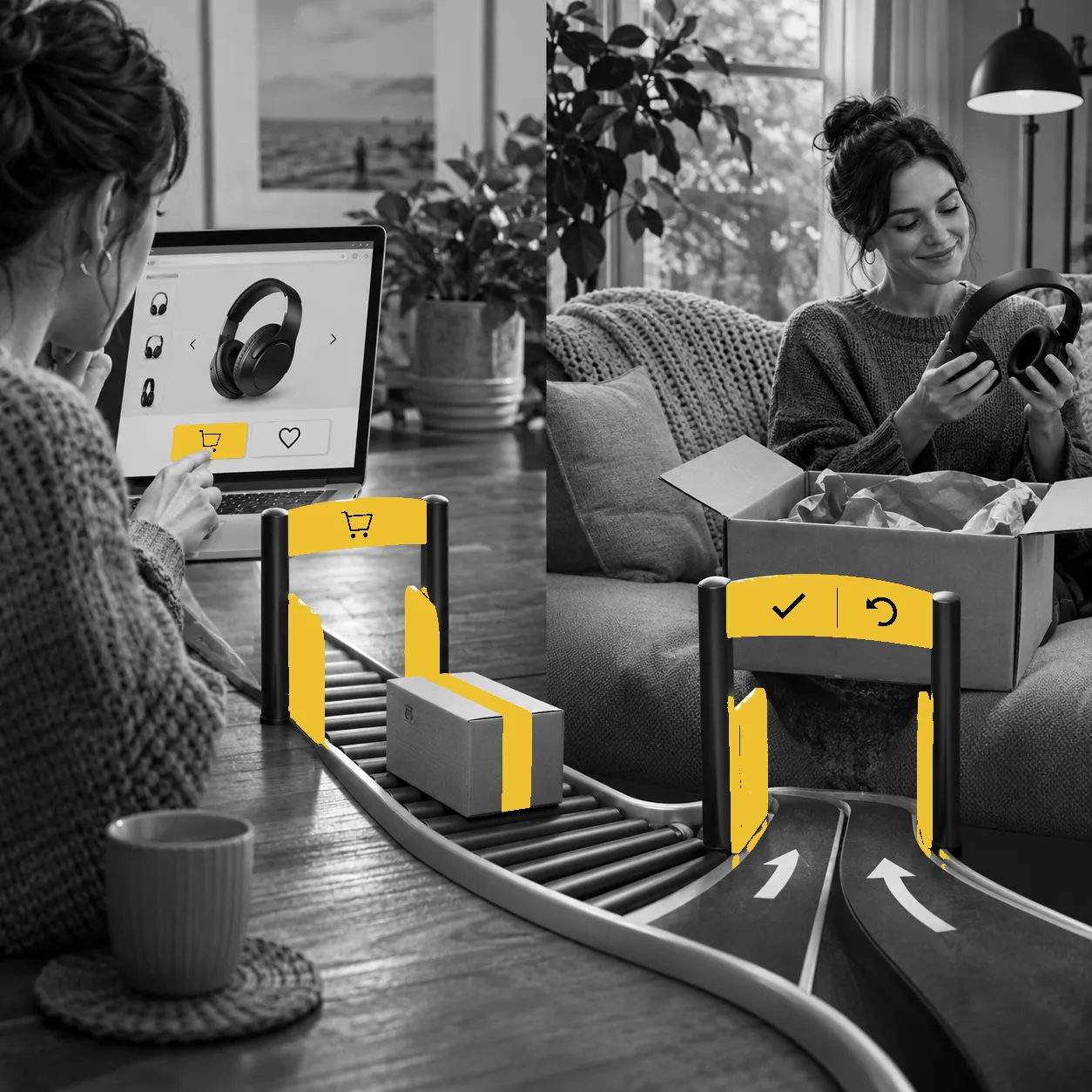
In remote buying, the split between the choice to order and the later choice, after delivery, to keep or return.
What it is
Stacy Wood described the two stages in 2001: the details that settle the second choice arrive only after the first, so early uncertainty raises the perceived risk of ordering. A lenient return policy can ease that risk, and Wood argued that the endowment effect gives sellers an advantage from lenient terms, since a buyer who has the item at home may value it more than before it arrived.
In effect
In the article on easy returns and buying, the two stages explain why a shopper who cannot touch a product carries a risk that a shopper in a store does not.
What it does not say
It does not say a lenient policy removes the second decision; buyers still choose whether to keep or return, and some return more under lenient terms.
Sources
- Wood, S. L. (2001). Remote purchase environments: The influence of return policy leniency on two-stage decision processes. Journal of Marketing Research, 38(2), 157-169.
- Janakiraman, N., Syrdal, H. A., & Freling, R. (2016). The effect of return policy leniency on consumer purchase and return decisions: A meta-analytic review. Journal of Retailing, 92(2), 226-235.