Unit Bias
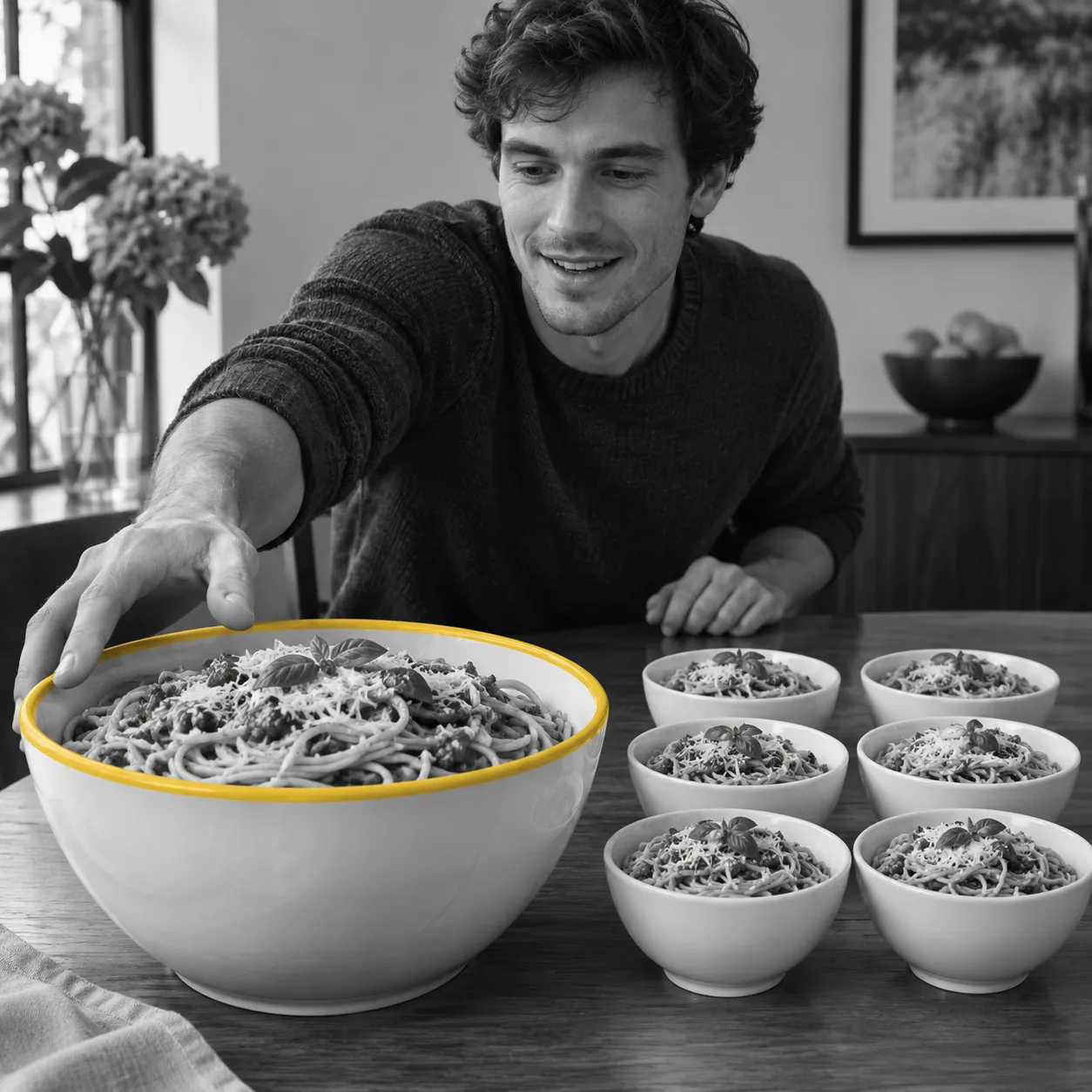
The tendency to treat one unit of something as the appropriate amount.
What it is
Geier, Rozin and Doros proposed unit bias in 2006 after people who could take as many as they liked took more when each unit was large than when it was small, and took more with a large serving spoon than with a small one. The authors discuss consumption norms among its possible origins and argue that it is a general feature of human choice. Raynor and Wing reported in 2007 that in a take-home study the total amount supplied mattered while the size of each package did not, so the unit seems to matter most where people take pieces one at a time.
In effect
In the article on why one portion feels like the right amount, unit bias is the core idea: the unit on offer sets the sense of how much is enough.
What it does not say
It makes no claim about health or diet; the studies describe how the size of a unit shapes how much people take.
Sources
- Geier, A. B., Rozin, P., & Doros, G. (2006). Unit bias: A new heuristic that helps explain the effect of portion size on food intake. Psychological Science, 17(6), 521-525.
- Raynor, H. A., & Wing, R. R. (2007). Package unit size and amount of food: Do both influence intake? Obesity, 15(9), 2311-2319.
- Zlatevska, N., Dubelaar, C., & Holden, S. S. (2014). Sizing up the effect of portion size on consumption: A meta-analytic review. Journal of Marketing, 78(3), 140-154.
- Wilson, B. The Way We Eat Now.