Universal Design
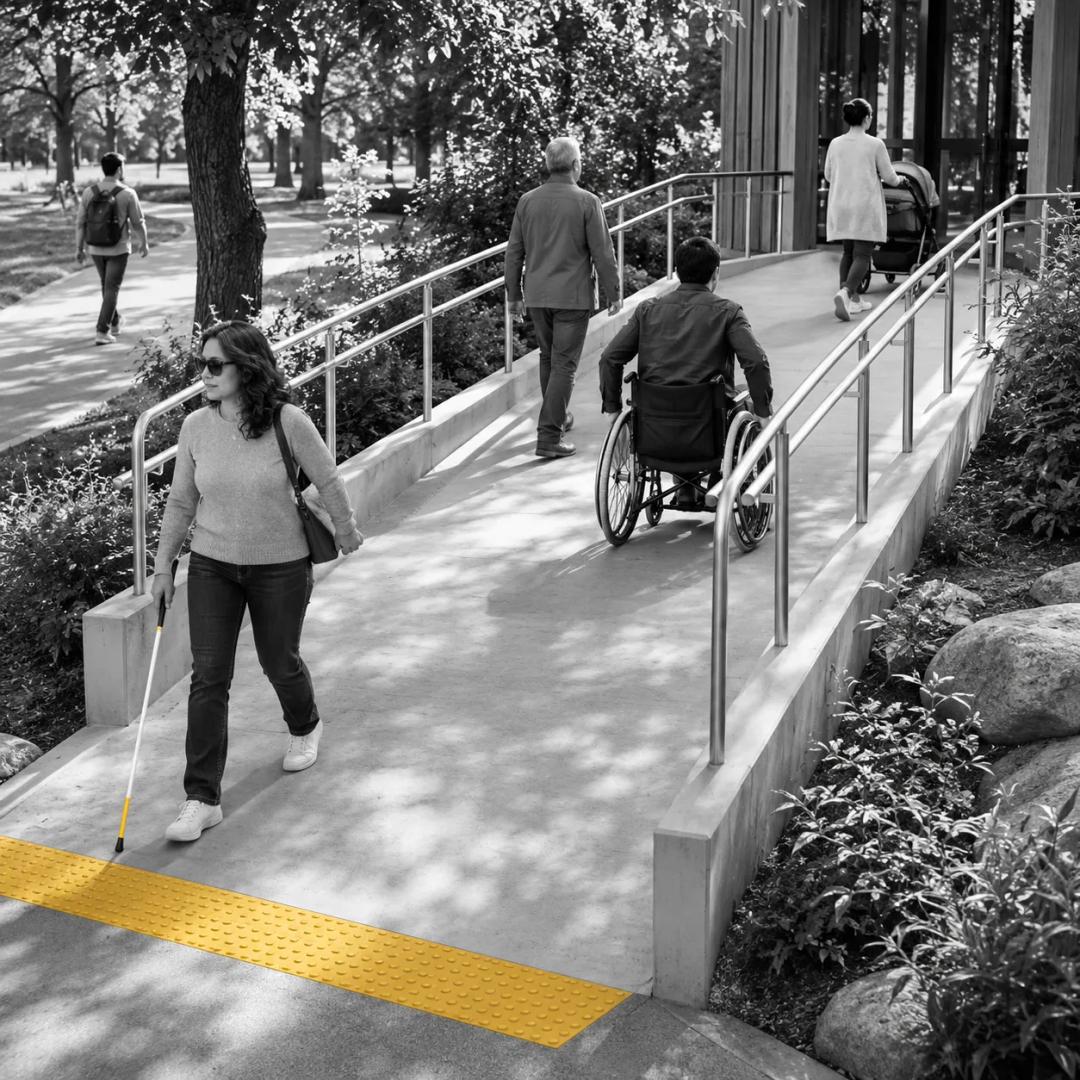
Universal design means designing one product or space to work for as many people as possible without adaptation.
What it is
Universal design aims at a single design that serves the widest range of users from the start, in place of separate versions for separate groups. Don Norman places it on his observation in The Design of Everyday Things that features made for special needs usually help everyone, and that there is no average person to design for.
It overlaps with inclusive design but starts from a different place. Universal design aims for one design for as many people as possible, while inclusive design starts from the people a design currently excludes.
In effect
The approach produces designs in which nobody has to declare a need. A built-in ramp, a caption track anyone can switch on and a high-contrast setting share that quality, and it is one reason they spread. It also underlies universal design for learning, which plans lessons from the start for the full range of students.
Cliff Kuang, in User Friendly, makes the same argument at length against designing for an average.
What it does not say
The term does not promise that one design suits every person. It states an aim. The evidence on this site comes from specific cases, such as captions, accessible websites and teaching, and in teaching the 2017 meta-analysis found no demonstrated effect on educational outcomes. The page makes no claim about diet or health.
Sources
- Norman, D. The Design of Everyday Things.
- Kuang, C., with Fabricant, R. User Friendly.
- Capp, M. J. (2017). The effectiveness of universal design for learning: A meta-analysis of literature between 2013 and 2016. International Journal of Inclusive Education, 21(8), 791-807. https://doi.org/10.1080/13603116.2017.1325074