Visual Complexity
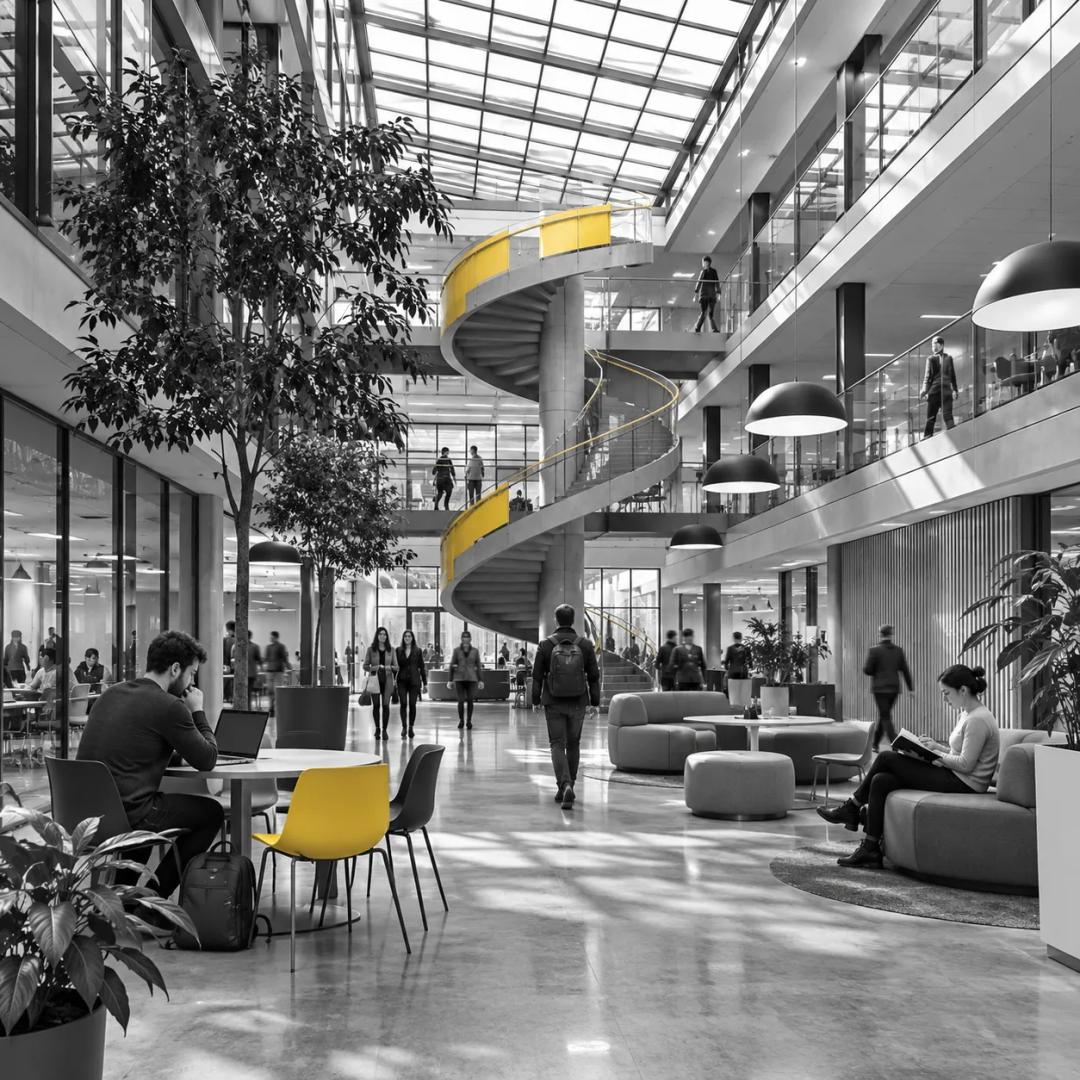
Visual complexity is how much is going on in an image. Aesthetics research treats it as at least three properties: the amount and variety of elements, how they are organised, and how symmetrical the arrangement is.
What it is
Marcos Nadal, Enric Munar, Gisèle Marty and Camilo José Cela-Conde set out the three-part split in 2010 in Empirical Studies of the Arts. Studies relating complexity to beauty had produced divergent results. They argued that differences in how studies defined, manipulated and measured complexity explain why earlier findings disagree.
Their own study found that complexity taken as a whole showed no meaningful influence on beauty ratings across stimulus types.
In effect
The split gives a way to read designs with many parts. A wall of sweet jars is varied, which raises the first dimension, and arranged in rows, which gives the second. Sprinkles are many but similar in size. In Why Joyful Objects Lift Us, the split is used to compare Lee's abundance aesthetic, which sits mostly on amount and variety, with her harmony aesthetic, which supplies organisation.
Our view is that ordered abundance reads as plenty and disordered abundance as mess. The article presents that as a reading of the framework and the complexity research together.
What it does not say
The paper does not show that more complexity is liked, or that less is. It shows that treating complexity as a single property hides the differences between its parts. It was not a test of Lee's aesthetics of joy or of packaging. The page makes no claim about wellbeing or health.
Sources
- Nadal, M., Munar, E., Marty, G., & Cela-Conde, C. J. (2010). Visual Complexity and Beauty Appreciation: Explaining the Divergence of Results. Empirical Studies of the Arts, 28(2), 173-191. https://doi.org/10.2190/EM.28.2.d
- Lee, I. F. Joyful. Seed book.