Amotz Zahavi
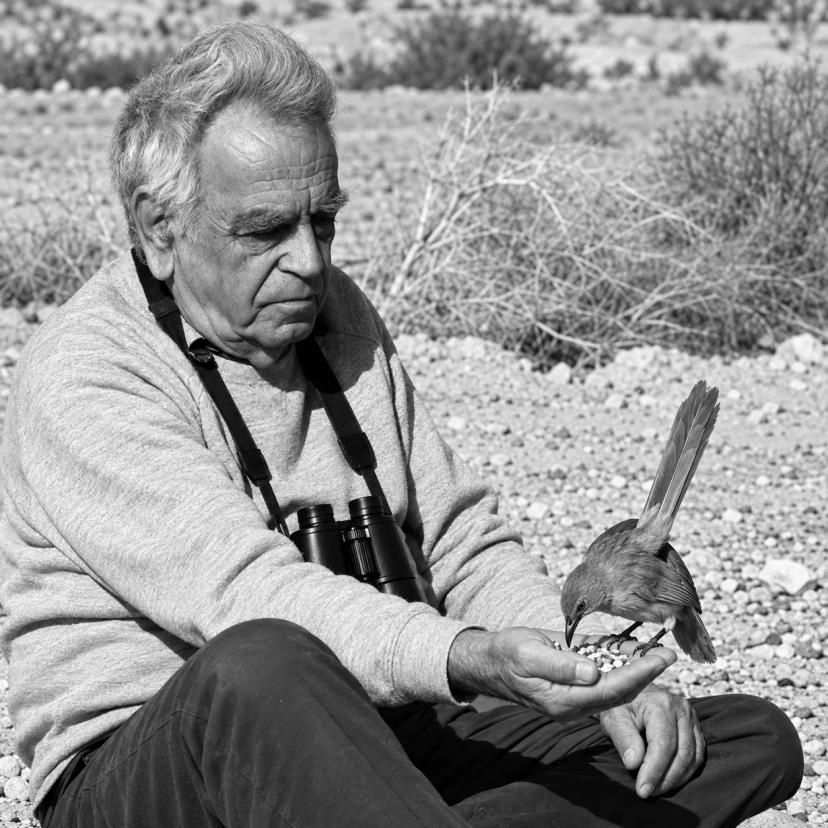
Amotz Zahavi proposed the handicap hypothesis in a 1975 paper on mate selection: the idea that a costly display can be an honest signal because of its cost.
Who they are
Zahavi is a biologist whose 1975 paper in the Journal of Theoretical Biology gave behavioural ecology the handicap hypothesis. Later work by other authors formalised and tested the idea, and he is credited with originating the biological form of costly signalling.
Penn and Számadó's 2020 review describes the 1975 paper as the proposal of the handicap hypothesis and traces how Zahavi clarified it afterwards, introducing the ideas of waste and signal selection and, in 1977, an account in which males adjust how much they invest in a signal according to their condition.
Key papers
Zahavi (1975), Mate selection: A selection for a handicap, Journal of Theoretical Biology, 53(1), 205-214.
Key ideas
The handicap hypothesis holds that a signal is believable because it is costly to produce. Alan Grafen's 1990 model gave it a formal statement as an evolutionarily stable strategy and reported that honest signalling is stable when the marginal cost of advertising is lower for the better signaller.
Penn and Számadó's 2020 review argues that the later ideas of waste and signal selection are logically flawed, and that Grafen's models support the 1977 trade-off idea and not the handicap principle. Grafen's paper presents its result as a vindication of Zahavi's main claims. The two papers disagree, and the article What is costly signalling? sets them side by side.
Sources
- Zahavi, A. (1975). Mate selection: A selection for a handicap. Journal of Theoretical Biology, 53(1), 205-214. doi:10.1016/0022-5193(75)90111-3 https://doi.org/10.1016/0022-5193(75)90111-3
- Grafen, A. (1990). Biological signals as handicaps. Journal of Theoretical Biology, 144(4), 517-546. doi:10.1016/S0022-5193(05)80088-8 https://doi.org/10.1016/S0022-5193(05)80088-8
- Penn, D. J., & Számadó, S. (2020). The Handicap Principle: how an erroneous hypothesis became a scientific principle. Biological Reviews, 95(1), 267-290. doi:10.1111/brv.12563 https://doi.org/10.1111/brv.12563