Basima Tewfik
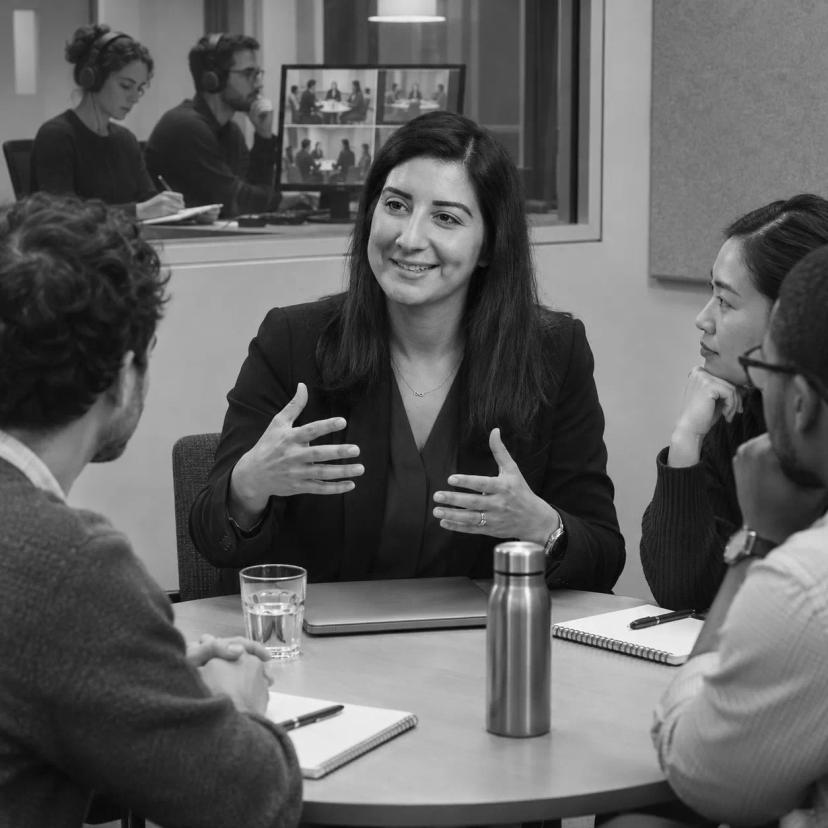
Basima A. Tewfik is the author of a 2022 paper in the Academy of Management Journal on workplace impostor thoughts and interpersonal effectiveness at work. Her studies link such thoughts, among employees and physician trainees, to higher ratings of interpersonal effectiveness.
Who they are
Basima A. Tewfik is a researcher at the MIT Sloan School of Management, according to the Crossref record of her 2022 paper and the MIT News account of the study. MIT News described her as an assistant professor at the time of publication. This page records what her paper reports and does not add later roles.
Key papers
The paper, The Impostor Phenomenon Revisited: Examining the Relationship between Workplace Impostor Thoughts and Interpersonal Effectiveness at Work, appeared in the Academy of Management Journal, volume 65, issue 3, in June 2022. According to the MIT News account, it draws on a survey of employees at an investment management firm, a study of physician trainees and two online experiments with randomly assigned participants.
In the firm, employees who reported more impostor thoughts were rated by supervisors as more interpersonally effective two months later, with no loss in productivity. Trainees who reported more of them were rated by patients as better listeners. In the experiments, participants with such thoughts asked more questions and were rated by hiring managers as more interpersonally effective.
Key ideas
Tewfik proposed that workplace impostor thoughts turn a person's attention towards others, which supports interpersonal skills. She noted that the benefit depends on contact with other people, so it may not carry over to work done alone. The MIT News account also reports that such thoughts can fade as people become established in a role.
The work addresses one outcome, interpersonal effectiveness. A separate systematic review of 62 studies linked the pattern to lower job performance and job satisfaction, which measure different outcomes with different designs. Imposter syndrome in this literature is a self-assessment pattern and not a diagnosis.
Sources
- Tewfik, B. A. (2022). The impostor phenomenon revisited: Examining the relationship between workplace impostor thoughts and interpersonal effectiveness at work. Academy of Management Journal, 65(3). https://doi.org/10.5465/amj.2020.1627
- Dizikes, P. (2022, 15 April). Study finds an unexpected upside to workplace impostor thoughts. MIT News. https://news.mit.edu/2022/imposter-syndrome-upside-0415
Studies on this site by Tewfik
- The impostor phenomenon revisited: Examining the relationship between workplace impostor thoughts and interpersonal effectiveness at work
Tewfik (2022) · Academy of Management Journal
Articles that cite Basima Tewfik
- What is imposter syndrome?
A review by Bravata and colleagues put the prevalence of imposter syndrome anywhere from 9 to 82 per cent. The range says as much about the questionnaire as about the people.
Concepts on this site
- Imposter Phenomenon
The imposter phenomenon is the pattern in which demonstrably high achievers fail to internalise their own accomplishments: persistent self-doubt, success attributed to luck or timing rather than…