Bruce Lipton
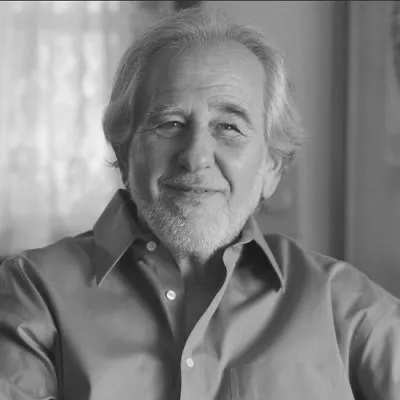
Bruce Lipton is an American cell biologist and author. He holds a doctorate in developmental biology from the University of Virginia, awarded in 1971, was a faculty member in anatomy at the University of Wisconsin School of Medicine from 1973, and later held a research fellowship at Stanford University School of Medicine, where he worked on cell biology and muscle cell cloning. He is best known for the trade book The Biology of Belief, first published in 2005, which argues that the cell membrane rather than the nucleus is the cell's brain and that beliefs and thoughts shape gene expression and therefore health. The observation the argument starts from is textbook biology. The step it takes from there has no primary support.
Who they are
The credentials are genuine and this site says so plainly. A real doctorate from a real university, a real medical-school faculty post, a real Stanford fellowship, and real published cell-biology research behind him. Implying otherwise would be a failure of our own standard.
The first part of his thesis is standard cell biology. Gene expression is regulated by signals from the cellular environment, and cell fate is shaped by what surrounds the cell. If that were the whole claim there would be nothing here to record, and the credit for stating it clearly to a general reader is his.
The part with no support is the extension. That conscious belief directly reprogrammes cellular behaviour and overrides genetic predisposition to disease has no backing in the epigenetics literature, which deals in measurable physical and chemical exposures rather than in beliefs. The associated directed-mutation claim runs against the evidence from Luria and Delbrück onward. No peer-reviewed work demonstrates belief alone reprogramming gene expression in the way the book describes. The problem is the inference rather than the man.
Two further items belong on the published record. On that record he has not published original research in a peer-reviewed medical journal for about thirty years. And Katherine Ellison, writing in Frontiers in Ecology and the Environment in 2010, recorded that he remains on the sidelines of conventional discussions of epigenetics, quoting him as saying that mainstream science had basically ignored him.
There is a separate structural point, and it is about how his work travels rather than about him. The Biology of Belief recurs as an authority across three books in the same genre, published sixty-one years apart, alongside the same small set of other names. Three authors drawing on the same four sources is not independent convergence, it is one source counted three times. In this collection his appearance is also a case of source-class inflation: a Hay House title typeset identically to a peer-reviewed review, with nothing on the page to tell a reader which is which.
Key papers
The Biology of Belief: Unleashing the Power of Consciousness, Matter and Miracles, first published 2005. The trade book his public standing rests on. It has not been read here, and this site holds it through the books that cite it rather than directly.
Ellison, K. (2010), Frontiers in Ecology and the Environment. Records that he sits outside conventional discussions of epigenetics, and carries his own published account of that position.
His early cell-biology research is real published work. This site has not catalogued it and will not list papers it has not checked.
Key ideas
The cellular environment regulates gene expression. This is textbook biology and it is where his argument correctly begins.
The step from environment to conscious belief is the one with no primary support, from him or from anyone.
The directed-mutation claim runs against the experimental evidence from Luria and Delbrück onward.
Credentials and claims are separate questions. A genuine doctorate does not underwrite a thesis, and a weak thesis does not retract a doctorate.
Source-class inflation. The reason he appears in this collection at all is that a trade title sits in the same typographic class as a peer-reviewed review in books that cite both.
One source counted three times is not convergence. His recurrence across a small closed set of popular books is a citation pattern rather than an accumulation of evidence.
Sources
- Lipton, B. H. (2005), The Biology of Belief: Unleashing the Power of Consciousness, Matter and Miracles, Hay House. Not read here.
- Ellison, K. (2010), Frontiers in Ecology and the Environment.
- Hardy, B., Personality Isn't Permanent. Opens its environment chapter, chapter 6, with The Biology of Belief.
- Vault note: [[Bruce Lipton]], which records the verification pass of 11 September 2026 on the doctorate, institution, year, faculty post and fellowship.