Charles Ferster
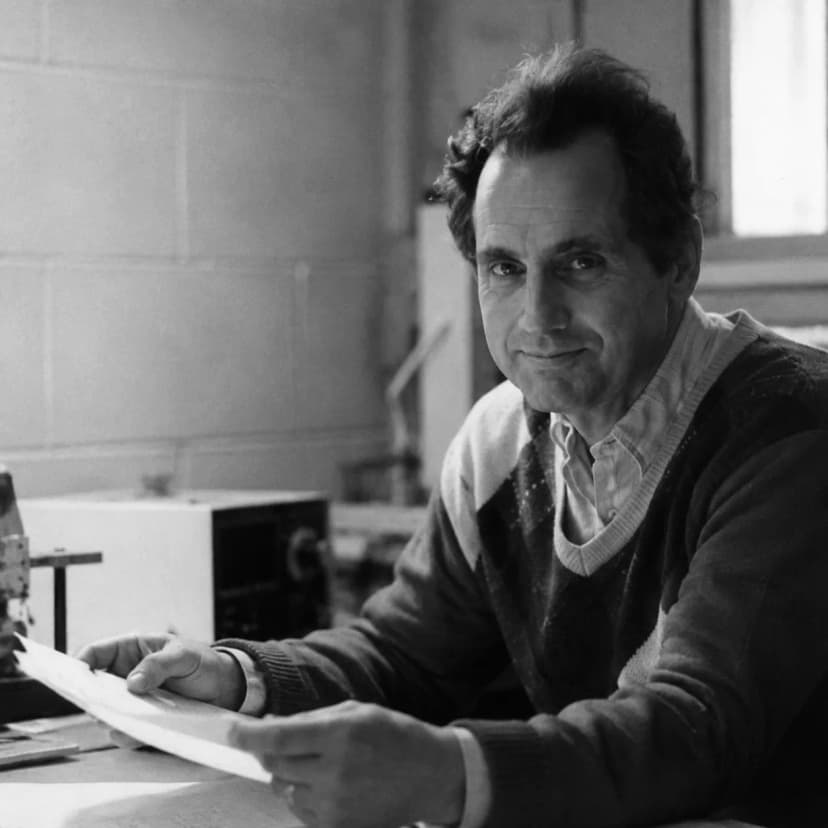
Charles Ferster, 1922 to 1981, was a behavioural psychologist and, with B. F. Skinner, the co-author of Schedules of Reinforcement, published in 1957. That book is the seven-hundred-page catalogue of what different payout rules do to behaviour, and it is the source of the variable-ratio argument that runs under every modern account of why a feed is hard to put down. He is first author on it. The work is routinely attributed to Skinner alone.
Who they are
The schedules programme asked a narrow question and answered it exhaustively. Given a lever, an animal and a rule for when pressing it pays, what does the rule do to the rate and the persistence of pressing? The answer is that the rule matters more than the reward, and that the least predictable rules produce the most persistent behaviour. That result is now applied to slot machines, to notification streams and to scrolling, and the application is a fair one.
The attribution is where this site takes an interest. Ferster is the first author of the 1957 book and the citation is routinely wrong, which is the same shape as several other cases held here: the more famous of two names absorbs the credit for the work of the first author. Correcting it costs nothing and is simply accurate.
He later worked on applying behavioural methods clinically, including in autism and in depression, and he founded the Journal of the Experimental Analysis of Behavior, the journal in which Fred Keller's appreciation of him appeared.
Key papers
Ferster, C. B., & Skinner, B. F. (1957), Schedules of Reinforcement, Appleton-Century-Crofts. The catalogue of reinforcement schedules and their effects on rate and persistence of responding. Ferster is first author.
Keller, F. S., Journal of the Experimental Analysis of Behavior. An appreciation of Ferster published in the journal he founded, and the reference this site uses for his life.
Key ideas
Variable-ratio reinforcement. Reward delivered on an unpredictable number of responses produces the highest and most persistent response rates of any schedule. Jointly his.
The schedule matters more than the reward. What is being given is less important to the behaviour than the rule governing when it arrives.
Ferster is first author of the book the slot-machine argument comes from. Cite him first.
The clinical extension is his too. Behavioural methods applied to autism and to depression came out of the same programme.
Sources
- Ferster, C. B., & Skinner, B. F. (1957), Schedules of Reinforcement, Appleton-Century-Crofts.
- Keller, F. S., appreciation of Charles Ferster, Journal of the Experimental Analysis of Behavior.
- Vault note: [[Charles Ferster]], which records the first-author correction.