Cláudia Feitosa-Santana
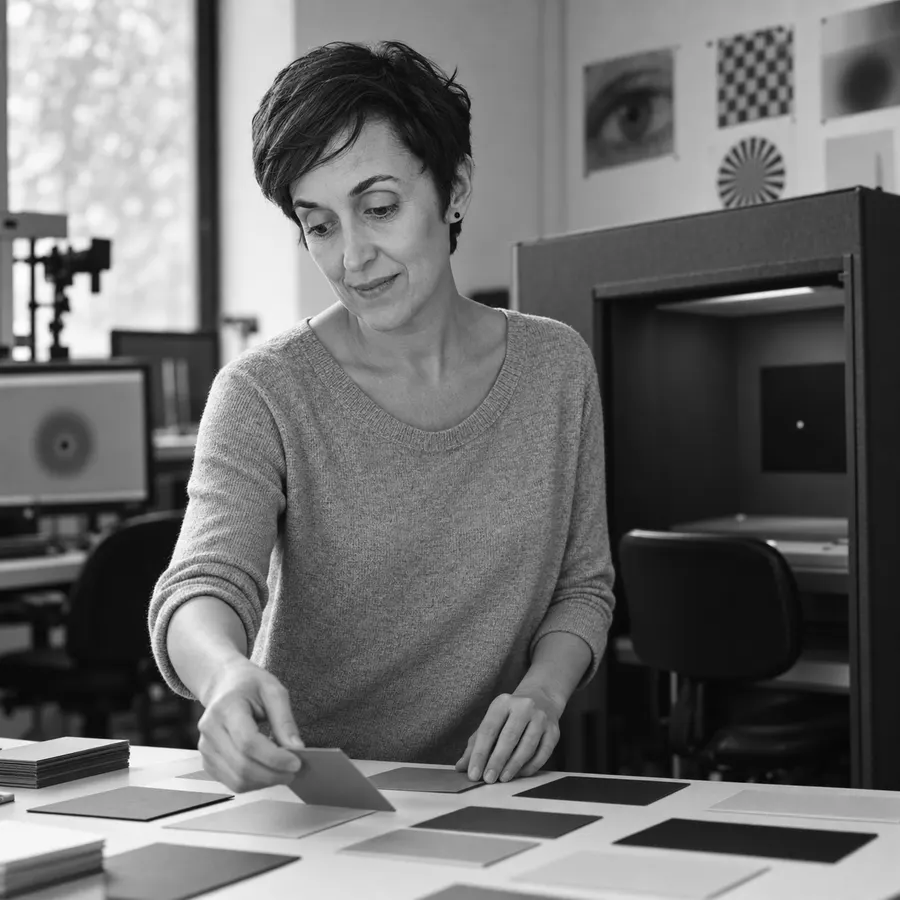
Vision scientist who assessed the dress using standard clinical colour vision tests.
Who they are
Fifty-two observers went through colour naming, colour matching, anomaloscope settings, unique white settings and colour preference tasks, and their chronotypes were recorded as well.
Roughly two in five saw white and gold, three in ten saw blue and black, and the rest saw some other combination.
Key papers
Feitosa-Santana, C., Lutze, M., Barrionuevo, P. A., & Cao, D. (2018). Assessment of #TheDress with traditional color vision tests: perception differences are associated with blueness. i-Perception, 9(2).
Key ideas
Every difference reaching significance involved blue percepts.
Observers who saw white and gold required more blue in a light before they would call it white.
Colour matches to the bright region formed two nearly distinct clusters along the range of chromaticities that daylight takes, with a clear cutoff between the two groups.
Concepts on this site
Sources
- doi:10.1177/2041669518764192