Craig Haney
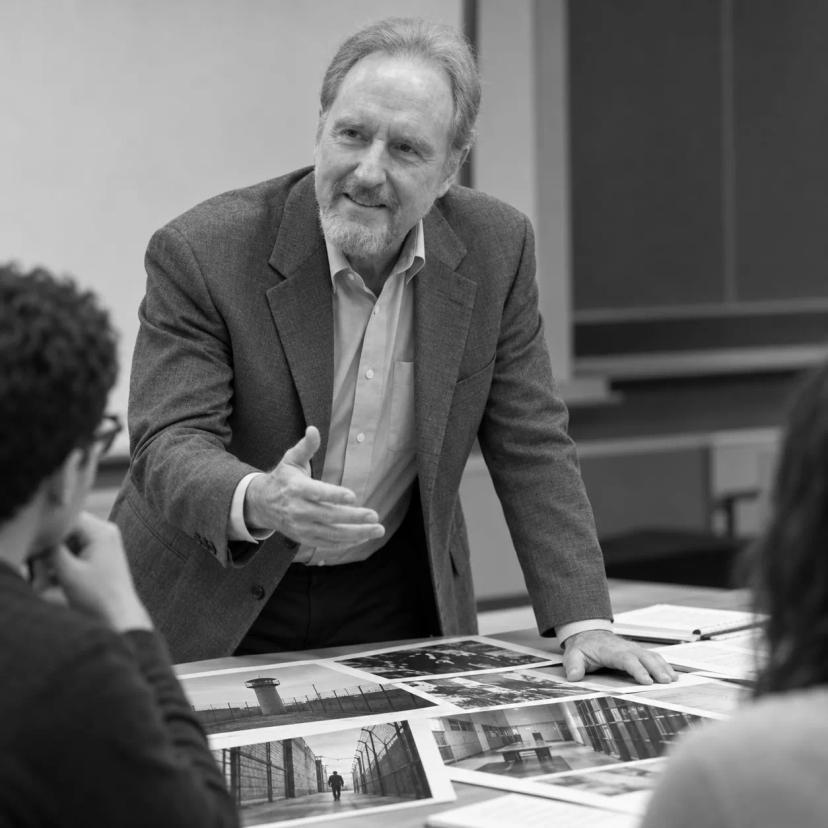
Craig Haney was a co-investigator, with Philip Zimbardo and Curtis Banks, on the 1971 Stanford Prison Experiment. He is also one of four signatories of the joint statement of 28 August 2018, with Zimbardo, Alexander Haslam and Stephen Reicher, which called for open and respectful debate about what newly available information on the study means.
Who they are
The sources used for this site name Haney as a co-investigator on the Stanford study and as the contact for inquiries about the experiment listed on Zimbardo's site, and they give no reliable account of his position, so this page does not state one. The vault's note on the experiment lists him with Curtis Banks as a co-investigator and records that the 1973 report in the criminology literature carried the names Haney, Banks and Zimbardo.
He is therefore one of the people closest to the study, and his part in the current debate carries weight for that reason.
Key papers
The 1973 report of the study carries the names of Haney, Banks and Zimbardo, and is cited in the vault's sources for the experiment; its exact publication details were not re-checked for this page.
Zimbardo's site lists a 2020 comment by Zimbardo and Haney in American Psychologist that replies to the 2019 critiques of Haslam, Reicher and Van Bavel and of Thibault Le Texier. The details of that comment were not opened for this page, and it is described here only as the site describes it.
Key ideas
Two positions need to be set side by side. The first is the one Haney shares with Zimbardo: that dehumanising environments are powerful. The 2020 comment, as listed, continues to make that case.
The second is the 2018 joint statement, which Haney signed. It welcomed new information about the study. It said that information suggests traditional accounts understate how much the experimenters intervened, that their leadership helped drive the guards' brutality, and that people may not slip into roles as easily as once thought. It asked for debate that stays with ideas and not personalities, and it pointed to public online archives so that anyone can take part.
Those positions are compatible, and both are on the record. This page does not decide which of the critics' conclusions is stronger. What the record supports is narrower than either the older textbook account or the sharpest critiques. Le Texier's archive study reports that the guards were briefed on the aim of producing powerlessness, the BBC Prison Study produced a different outcome without such instruction, and Robert Sapolsky reads the whole as leaving a modest residue: that many more normal people than predicted do awful things, and that some always resist (Behave, pp. 468-469).
Sources
- University of St Andrews (28 August 2018). Researchers call for open and respectful debate around Stanford Prison Experiment.
- philipzimbardo.com, page on the Stanford Prison Experiment, read 2026-10-25.
- Vault note on the Stanford Prison Experiment, which lists the co-investigators.
- Le Texier, T. (2019). American Psychologist, 74(7), 823-839. https://doi.org/10.1037/amp0000401
- Sapolsky, R. M. (2017). Behave. Penguin Press. Pages 468-469 of the Vintage 2018 edition.