David Cummings
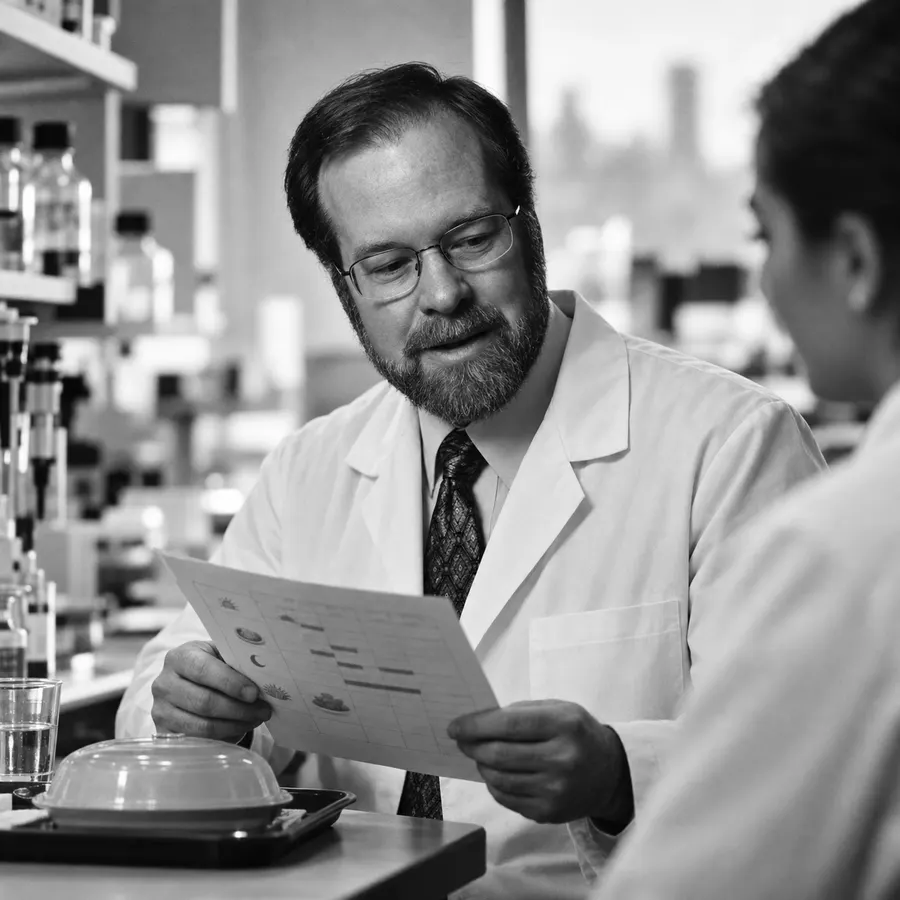
David E. Cummings is the first author of the 2001 paper in Diabetes that showed ghrelin, a hormone made mostly in the stomach that makes people feel hungry, climbs sharply in the period before each of a person's habitual meals and falls back within about an hour of eating. The study followed ten people on fixed meal schedules. What makes the result interesting is the timing. The hormone does not wait for an empty stomach. It anticipates the clock.
Who they are
Cummings is an endocrinologist and clinical researcher working on the hormones that govern appetite and body weight. No current institutional post is claimed on this page. The vault checked the paper and its reported design rather than his biography, and house practice is to leave an affiliation blank rather than guess at one.
A later study from the same group, in 2004, looked at what happens when people eat without time cues. It is held here at listing level only, which means the reference has been recorded and the paper has not been read.
Key papers
Cummings, D. E., Purnell, J. Q., Frayo, R. S., Schleicher, K., Breen, P. A., & Weigle, D. S. (2001). "A preprandial rise in plasma ghrelin levels suggests a role in meal initiation in humans", Diabetes, 50(8), 1714 to 1719. First author. Ten participants on fixed meal schedules. Ghrelin in the blood rose in the period before each expected meal and fell within roughly an hour of eating. Abstract and reported design read.
Cummings, D. E., et al. (2004). American Journal of Physiology: Endocrinology and Metabolism. The same group, looking at people eating without time cues. Held at listing level only.
Key ideas
The trap in the result is the best thing about it. The rise tracks the times a person usually eats. So the hunger hormone is as much evidence for learning as for pure physiology. If the body starts preparing at one o'clock because one o'clock is when you always eat, then appetite has a memory.
Ten participants on a fixed schedule describes a pattern. It does not explain anybody's afternoon, and it should not be stretched into advice.
The finding sits underneath conditioned hunger. It is the hormonal counterpart to Harvey Weingarten's work showing that a learned cue can start a meal in an animal that is already full.
Concepts on this site
Sources
- Cummings, D. E., et al. (2001). Diabetes, 50(8), 1714 to 1719.
- Cummings, D. E., et al. (2004). American Journal of Physiology: Endocrinology and Metabolism. Listing only.
- Vault note, 2026-09-11. Affiliation deliberately not asserted.