Donald Broadbent
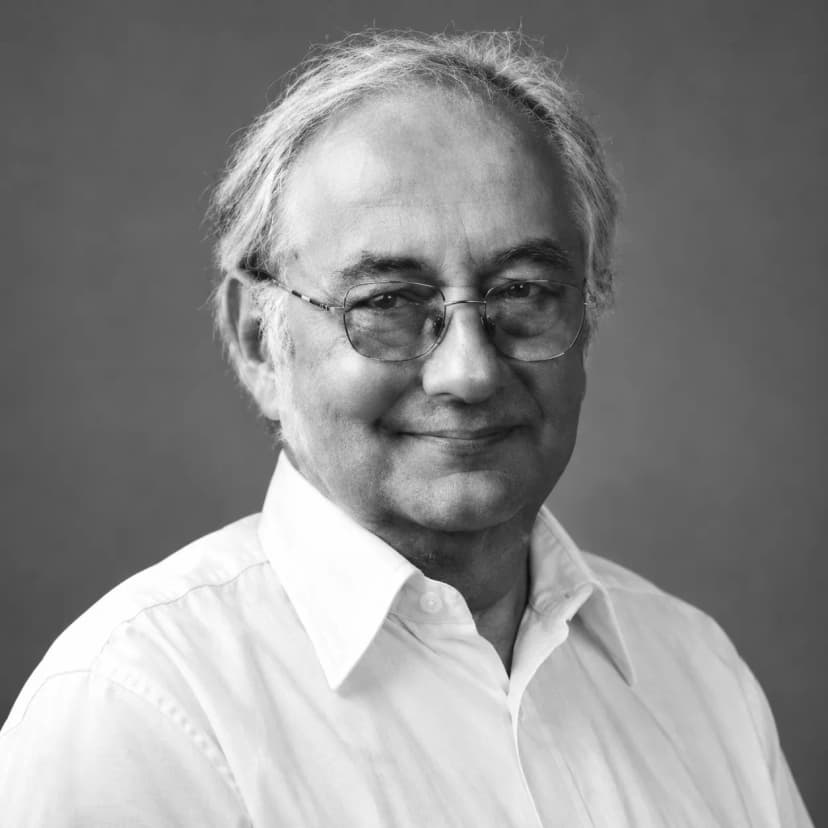
British psychologist (1926 to 1993) whose 1958 book Perception and Communication set out filter theory, the account in which the message being ignored is blocked early, before its meaning is analysed.
Who they are
Donald Eric Broadbent was born in Birmingham on 6 May 1926 and died on 10 April 1993. He studied experimental psychology at the University of Cambridge under Frederic Bartlett, graduated in 1949 and joined the Medical Research Council's Applied Psychology Unit at Cambridge the same year. He became its director in 1958. In 1974 he moved to the Department of Experimental Psychology at Oxford and became a fellow of Wolfson College.
His attention research grew from a practical problem, improving communication between aircraft and control centres, and the unit he led advised government and worked on noise and technology. He is credited with bridging Bartlett's pre-war approach and the cognitive psychology that emerged in the late 1960s. A 2002 survey in the Review of General Psychology ranked him the 54th most cited psychologist of the twentieth century. He received a CBE in 1974 and was a Fellow of the Royal Society. His students included Patrick Rabbitt, Graham Hitch, Fergus Craik and Susan Gathercole.
Key papers
Broadbent, D. E. (1958). Perception and Communication. Pergamon Press. doi:10.1037/10037-000.
His later books include Behaviour, Decision and Stress and In Defence of Empirical Psychology. At Oxford his group developed the Cognitive Failures Questionnaire.
Key ideas
The filter model of attention places a filter between sensory input and short-term memory. It selects one auditory message on physical characteristics such as pitch and loudness, and it is an early selection model because irrelevant messages are filtered out before their meaning is processed. Broadbent paired it with a single channel hypothesis that combined his accounts of selective attention and short-term memory.
His dichotic listening experiments had participants hear three pairs of digits at once, one set per ear, and they usually recalled the digits ear by ear rather than pair by pair.
The model has difficulty with the finding in Neville Moray's 1959 study that a listener's own name can break through from an ignored message. That difficulty prompted Anne Treisman's attenuation theory. See Filter Theory and Attenuation Theory.
Sources
- Broadbent (1958), Perception and Communication, doi:10.1037/10037-000.
- Biographical details are from his encyclopaedia entry. Moray, N. (1959), Quarterly Journal of Experimental Psychology, 11(1), 56-60.