Frederic Brochet
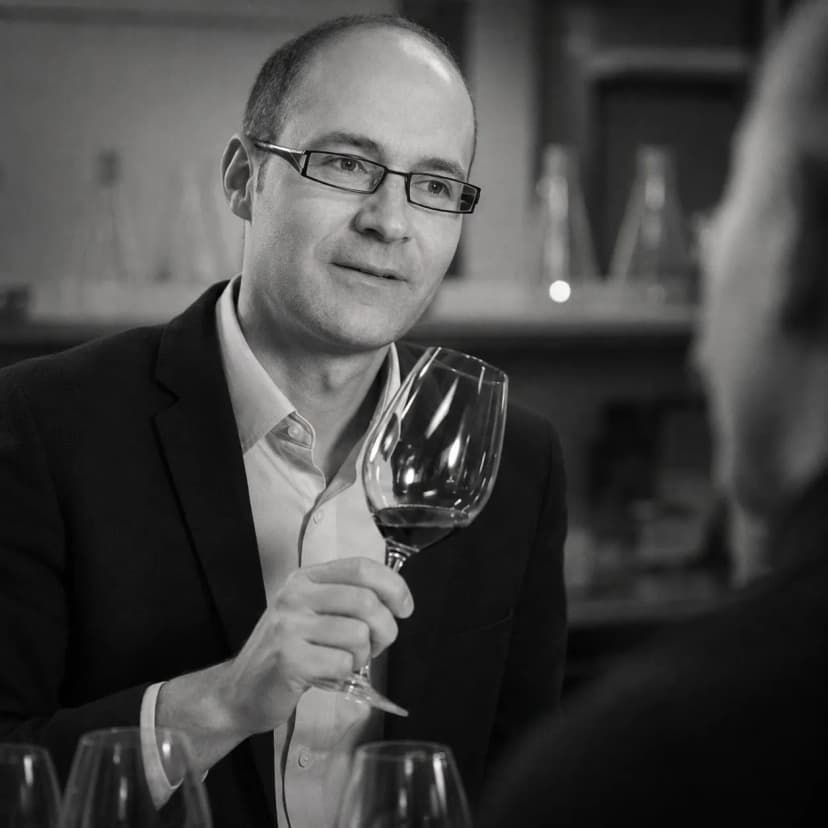
Frédéric Brochet is a French oenologist who, as a doctoral candidate at the Faculty of Oenology, University of Bordeaux II, under Denis Dubourdieu, ran the experiment that dyed a white wine red and had trained tasting students describe it using red-wine vocabulary. The result sits in his 2001 doctoral thesis, not in a standalone peer-reviewed paper. He also co-authored two related papers on colour and language in wine perception. He later founded the Ampelidae wine estate and now works as a winemaker rather than a researcher.
Who they are
Brochet conducted his landmark work as a doctoral candidate at the Faculty of Oenology, University of Bordeaux II, supervised by Denis Dubourdieu. His best-known result, sometimes called the dyed-wine experiment, is often retold as though it lives in a single peer-reviewed paper. It does not. The experiment, in which an odourless red dye was added to a white wine and trained oenology students described the disguised wine using red-wine vocabulary, sits inside his 2001 doctoral thesis, "Aspects cognitifs de la dégustation."
Two related, genuinely peer-reviewed papers came out of the same period of work, and are worth keeping distinct from the thesis. Brochet and Dubourdieu (2001), published in Brain and Language, examined how wine-descriptive language tracks the cognitive specificity of chemical senses. Morrot, Brochet and Dubourdieu (2001), also in Brain and Language, is the paper most often cited alongside the dyed-wine story; it ran 54 subjects and found that colour biases how tasters describe a wine's odour. Gil Morrot, not Brochet, is first author on that paper, a detail that gets dropped in most retellings of the anecdote.
After his doctoral research, Brochet moved from the laboratory into winemaking, founding the Ampelidae estate. His current work is producing wine rather than studying how people describe it, a career arc that runs opposite to how most of the researchers referenced on this site are introduced. He has published no books.
Key papers
Brochet has published no books. His output is a doctoral thesis and two peer-reviewed papers from the same period of research.
Brochet, F. (2001). "Aspects cognitifs de la dégustation" (doctoral thesis). Faculty of Oenology, University of Bordeaux II. Contains the dyed-white-wine experiment; not published as a standalone peer-reviewed paper.
Brochet, F., & Dubourdieu, D. (2001). "Wine descriptive language supports cognitive specificity of chemical senses." Brain and Language, 77, 187-196.
Morrot, G., Brochet, F., & Dubourdieu, D. (2001). "The Color of Odors." Brain and Language, 79(2), 309-320. N = 54. Gil Morrot is first author; this is the paper most often cited alongside the dyed-wine anecdote.
The anecdote and the citation are not the same document. The thesis contains the dyed-wine demonstration itself; the Brain and Language paper most people cite alongside it studied a related but distinct effect, colour biasing how tasters describe a wine's odour, with Morrot as first author rather than Brochet.
Key ideas
Brochet's work is the sensory twin to Hilke Plassmann's neural evidence: where Plassmann showed a price tag changing brain activity, Brochet showed that a visual cue, red dye in a white wine, changes the descriptive vocabulary trained tasters reach for, even though their training exists specifically to let them taste past this kind of interference. Expertise did not protect the students in his study. If anything, it gave them a richer vocabulary to rationalise the wrong answer with. The finding also supplies a clean case of declared versus revealed preferences: the students declared expertise, but their revealed descriptions tracked the fake colour, not the liquid.
Concepts on this site
The context effect, the sensory-perception case, alongside Plassmann's neural one
Find them elsewhere
Nothing confirmed. A search was run and no website or account could be tied to this person with enough certainty to publish. A name match on its own is not evidence, and a wrong link here would be worse than none.
No website or social account could be confirmed as his rather than a namesake, so none is recorded
Checked 2026-09-10. Handles and affiliations go out of date, so treat this block as a snapshot rather than a standing fact.
Sources
- Brochet, F. (2001). "Aspects cognitifs de la dégustation" (doctoral thesis). Faculty of Oenology, University of Bordeaux II.
- Brochet, F., & Dubourdieu, D. (2001). "Wine descriptive language supports cognitive specificity of chemical senses." Brain and Language, 77, 187-196.
- Morrot, G., Brochet, F., & Dubourdieu, D. (2001). "The Color of Odors." Brain and Language, 79(2), 309-320.