Gary Gaeth
psychologist; co-author of the 1988 ground beef study and the 1998 framing typology. Appears on this site in connection with Attribute Framing and Framing.
Who they are
Gary J. Gaeth is co-author, with Irwin Levin, of the 1988 ground beef framing study and, with Levin and Sandra Schneider, of the 1998 typology of framing effects.
Main work
Gaeth is affiliated with the University of Iowa. His publications cover framing, consumer choice and decision making. With Irwin Levin, Judy Schreiber and Marco Lauriola he wrote A New Look at Framing Effects: Distribution of Effect Sizes, Individual Differences, and Independence of Types of Effects (Organizational Behavior and Human Decision Processes, 2002), which follows the 1998 typology. With the same group he wrote A Tale of Two Pizzas, on building up from a basic product versus scaling down from a fully loaded one (Marketing Letters, 2002), and with Levin and others, Consumer evaluation of multi-product bundles: An information integration analysis (Marketing Letters, 1991).
Earlier work covers how people use information. Reducing the influence of irrelevant information on experienced decision makers (Organizational Behavior and Human Performance, 1984) was written with James Shanteau. The cognitive processing of misleading advertising in young and old adults (Journal of Consumer Research, 1987) was written with Timothy Heath. Best Value, Price-Seeking, and Price Aversion (Journal of Marketing, 1990) was written with Gerard Tellis, and Consumer perceptions of hybrid (bi-national) products (Journal of Consumer Marketing, 1991) with Richard Ettenson.
The 1998 typology, All Frames Are Not Created Equal: A Typology and Critical Analysis of Framing Effects, was written with Irwin Levin and Sandra Schneider and published in Organizational Behavior and Human Decision Processes.
Key papers
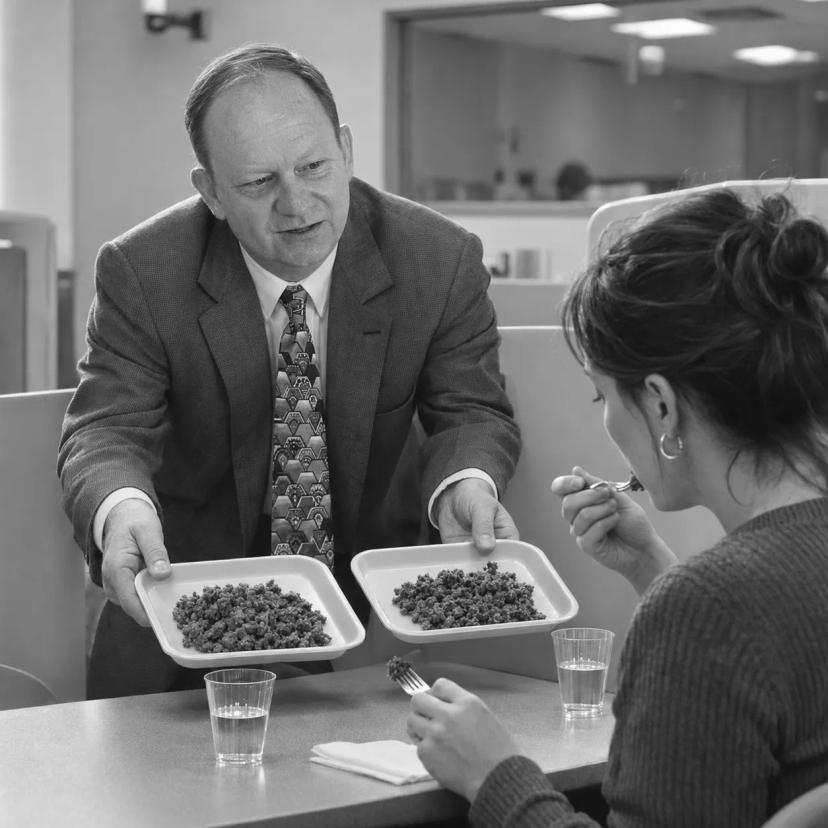
Levin and Gaeth had consumers rate ground beef labelled 75 per cent lean or 25 per cent fat. Ratings were more favourable for the lean label, and the framing effect was smaller after tasting, explained by an averaging model in which product experience dilutes the frame. Only the label percentages are used.
Key ideas
Attribute Framing: Attribute framing is wording that changes how one feature of an object or event is judged, while the object stays the same.
Framing: The finding that identical information produces different judgments and different choices depending on how it's presented: as a gain or a loss, at a high price or a low one, next to an expensive option or a cheap one.
Sources
- Gary J. Gaeth is co-author, with Irwin Levin, of the 1988 ground beef framing study and, with Levin and Sandra Schneider, of the 1998 typology of framing effects.
Articles that cite Gary Gaeth
- Psychology in Marketing: 10 Principles That Drive Sales
Ten principles with strong research records, from social proof to fluency. Each comes with one verified finding in plain words and one honest way to use it.
Concepts on this site
- Attribute Framing
Attribute framing is wording that changes how one feature of a thing is judged while the thing itself stays the same. Beef labelled 75 per cent lean is rated more favourably than the same beef…
- Framing
Framing is the finding that identical information produces different judgements and different choices depending on how it is presented. Daniel Kahneman and Amos Tversky formalised the general…