Giovanni Sala
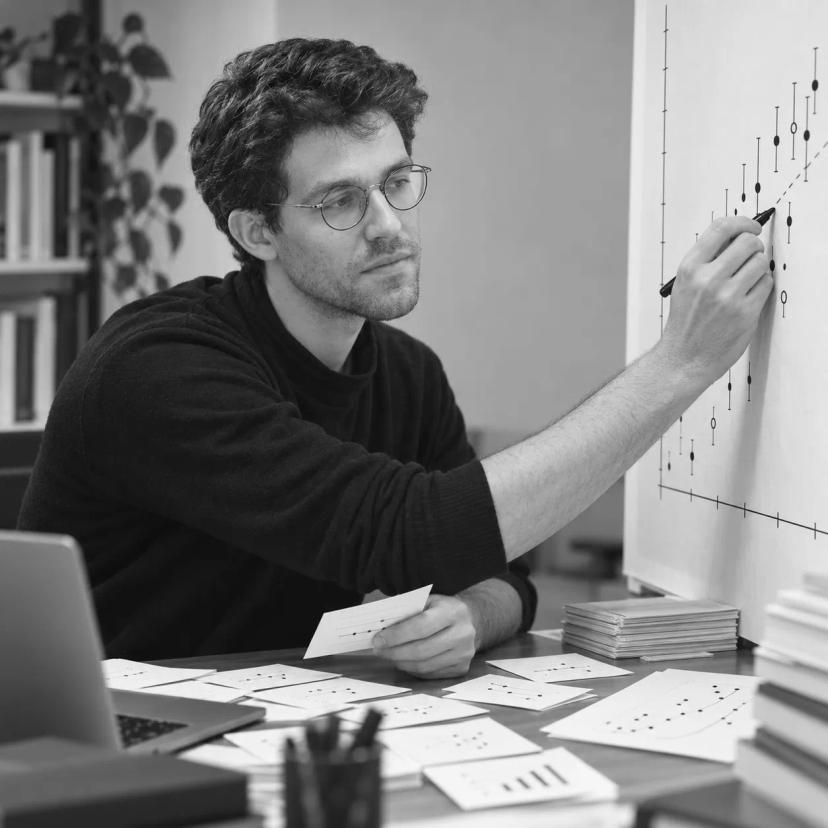
Giovanni Sala is a psychologist and meta-analyst who works on cognitive training, and the first author of Near and far transfer in cognitive training: A second-order meta-analysis, published in Collabra: Psychology in 2019 with Fernand Gobet. The paper pooled existing meta-analyses of working memory training, video games, music, chess and exergames. It found near-transfer effects whose size depended on the age group, and far-transfer effects that were small or null. Once placebo effects and publication bias were controlled, the overall far-transfer effect and its true variance both came out at zero.
Who they are
Sala's work is almost entirely meta-analytic. He takes a body of training research, pools it, corrects for the ways published literatures flatter themselves, and reports what is left. His affiliations over his career have included the University of Liverpool, Osaka University and Japan's National Center for Geriatrics and Gerontology. His current post could not be confirmed when this page was written, and this site does not guess at one.
He appears here as a first author alongside Fernand Gobet, and the two have published repeatedly on the same question. A paper titled Does far transfer exist? Negative evidence from chess, music, and working memory training, published in Current Directions in Psychological Science in 2017, ran two meta-analyses of the cognitive and academic effects of chess and music instruction and a third of working memory training. It found small to moderate effects overall, and larger effects in studies with weaker designs, such as those without active control groups. The authors took that pattern to cast doubt on the benefits of all three and extended the concern to spatial training, brain training and video games, concluding that far transfer rarely occurs.
Key papers
Sala, G., & Gobet, F. (2019). Near and far transfer in cognitive training: A second-order meta-analysis. Collabra: Psychology, 5(1), 18.
A second-order meta-analysis is a meta-analysis of meta-analyses. Instead of pooling individual experiments, it pools the pooled estimates, which allows the question of whether a whole literature's apparent effect survives correction. The paper ran three models. The first covered working memory training and near transfer to memory. The second covered working memory training and far transfer to reasoning, speed and language. The third extended the second with six meta-analyses of other programmes, namely video games, music, chess and exergames. Each model also tested whether the population, whether children, adults or older adults, moderated the effects.
Working memory training produced near-transfer effects, and the population moderated their size. Far-transfer effects were small or null across the second and third models. With placebo effects and publication bias accounted for, the overall far-transfer effect and its true variance were both zero. The authors concluded that far-transfer effects are absent regardless of population or training programme, and described the lack of skill generalisation as an invariant of human cognition.
Sala, G., & Gobet, F. (2017). Does far transfer exist? Negative evidence from chess, music, and working memory training. Current Directions in Psychological Science, 26(6), 515 to 520.
Key ideas
Two corrections at once. People who expect to improve tend to improve on the outcome test, and studies that find nothing are less likely to be published. A literature can look like it shows an effect because of either. Applying both corrections together is the demanding part of the paper, and it is the reason the zero is notable: it is what remains, not a raw average.
Near and far are different questions. The analysis does not find that practice does nothing. Getting better at the trained task, and at tasks close to it, is established, and the population matters. The conclusion is limited to far transfer, the claim that training one thing improves general thinking.
Fair limits. A meta-analysis is only as good as the literature it combines, and the bias-correction methods used have critics. A field can also answer a null result with better-designed trials. The result is strongest as a statement about the existing evidence, and it agrees with the large single trial by Adrian Owen and colleagues and with the 2016 review led by Daniel Simons, which reached the same position by different routes.
Timing. The Distracted Mind was published in 2016, three years before this paper, and could not cite it. Its optimism about training reads as of its time and not as an error.
Sources
- Sala, G., & Gobet, F. (2019). Collabra: Psychology, 5(1), 18. This site has read the published abstract as held in the University of Liverpool repository, not the full paper.
- Sala, G., & Gobet, F. (2017). Current Directions in Psychological Science, 26(6), 515 to 520, as described in the London School of Economics research repository.
- A 2023 article by the same pair describing cognitive training as a field in search of a phenomenon is recorded in this site's earlier notes and is not relied on here.
Studies on this site by Sala
- Near and Far Transfer in Cognitive Training: A Second-Order Meta-Analysis
Sala (2019) · Collabra: Psychology
Articles that cite Giovanni Sala
- Do Brain Training Games Work
Brain training reliably improves the game you practise. The largest trial found no carry-over to untrained tests, a flyer promising improvement was enough to produce a gain on two intelligence…
Concepts on this site
- Cognitive Load
Cognitive load theory is John Sweller's account of why learning breaks down: working memory can only handle a small amount at once, so how material is presented changes how much of it is learned…
- Cognitive Training
Cognitive training is doing structured mental exercises, usually on a screen and usually adaptive so they get harder as you improve, in the hope of raising a general ability such as attention…
- Neuroplasticity
Neuroplasticity is the adult brain's capacity to reorganise itself, structurally and functionally, in response to how it is used. Michael Merzenich demonstrated it in monkeys in 1968, against an…
- The Replication Crisis
Through the 2010s it became clear that a large share of published psychology, and plenty of work in medicine and economics, does not survive being run again with bigger samples and a pre-registered…
- Transfer
Transfer is the question of whether learning one thing improves your ability at another thing you did not train. Near transfer, improvement on tasks close to what was practised, is ordinary and…
- Working Memory
Working memory is the small, temporary store that holds whatever you are currently thinking about, and everything that reaches long-term memory passes through it first. That makes its size the…