James Flynn
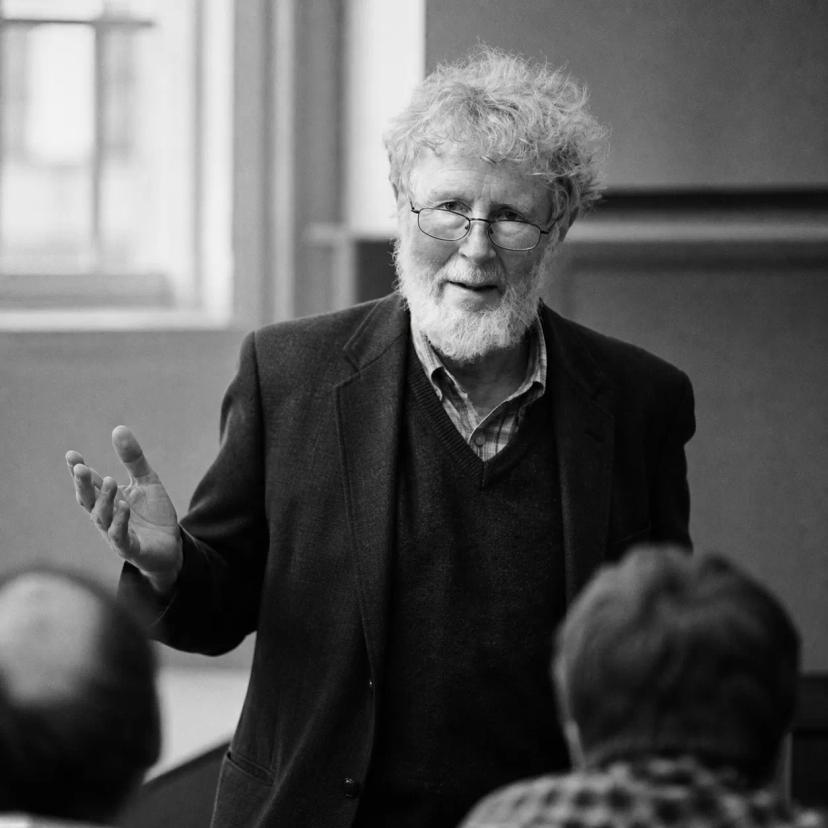
James Flynn, 1934 to 2020, was a moral philosopher and political scientist based in New Zealand, at the University of Otago, who documented one of the most awkward findings in twentieth-century psychology: measured IQ rose, steadily and substantially, across many countries and across decades. The effect carries his name, though he did not give it to it. What makes him more interesting than the headline is his own account of what the rise was made of, which is considerably more modest than the version most people have heard, and which he was careful never to inflate into a claim that the twentieth century made people cleverer.
Who they are
Flynn's finding is easy to state and hard to explain away. Across many countries, over the greater part of a century, scores on intelligence tests went up, generation after generation, at a rate far too fast for any account resting on inheritance. The gains were real, sustained and international.
He did not name them. Richard Herrnstein and Charles Murray named the effect after him in The Bell Curve (1994), which is a tidy instance of a finding being labelled by people other than the person who found it, and one this site notices because the same thing happens routinely at the level of individual papers.
His own interpretation, set out at length in What Is Intelligence? (2007), is the part worth carrying, because it is a claim about what the tests measure rather than about how clever anyone is. The gains are not spread evenly across the things IQ tests ask. They cluster heavily in abstract, nonverbal, classificatory reasoning, the subtests that ask what a set of things have in common or how a pattern continues. Vocabulary and general knowledge, the parts that look most like accumulated learning, stayed roughly flat. So the change is not a general uplift in mental power. It is a change in the kind of thinking people are fluent in.
Flynn's explanation is that the twentieth century taught people to wear the same scientific spectacles the test designers wore. A century of formal schooling, technical work and abstract categories trains a habit of treating questions hypothetically and of classifying things by shared abstract properties rather than by their concrete uses. That habit is exactly what an intelligence test rewards, because the people who designed the tests had it. On his account, the rise in scores is in large part the spread of that way of seeing.
That reading is why he appears on this site at all. The Flynn effect is the obvious counter-evidence to any argument that modern media are degrading human cognition, and it is the one such argument has to answer rather than avoid. Nicholas Carr does answer it, honestly, and he answers it with Flynn's own analysis: if the gains are concentrated in abstract visual classification while vocabulary, general knowledge and reading scores are flat or falling, then rising IQ is not evidence that nothing has been lost. It is evidence that we are smart in different ways than our grandparents were. Whether that fully disposes of the objection is arguable, and it is a legitimate use of the research rather than a dodge, which is more than can be said for how most inconvenient findings are handled.
Two things follow from Flynn for anyone reading this literature. The first is that a large, well-documented change in a psychological measure can be a change in what the measure captures rather than in the underlying thing, and telling those apart is most of the work. The second is that Flynn himself, who had every incentive to let his effect stand as a story about human progress, spent his career explaining why it was narrower than that.
Books
Flynn, J. R. (2007), What Is Intelligence? His own account of the effect that carries his name: the twentieth-century gains concentrated in abstract and classificatory reasoning, with vocabulary and general knowledge broadly flat.
Key papers
No journal papers are recorded here. The vault holds Flynn through his own book and through the secondary accounts that use it, so this page lists what it has read rather than a bibliography it has not.
Flynn, J. R. (2007). What Is Intelligence? His own account of the effect that carries his name. The twentieth-century gains concentrate in abstract, nonverbal and classificatory reasoning, while vocabulary and general knowledge stayed broadly flat, and his reading of that pattern is the spread of a scientific and industrial habit of mind rather than a general rise in mental power.
Herrnstein, R. J., & Murray, C. (1994). The Bell Curve. Where the effect was named after him, by other people.
Carr, N. (2010, afterword 2020). The Shallows. The route by which the effect reaches this site's argument, and an honest use of it: Carr concedes the rise and answers it with Flynn's own analysis of what rose.
Key ideas
The Flynn effect: measured IQ rose steadily across many countries through the twentieth century, far too quickly to be explained by inheritance.
The gains are uneven. Abstract, nonverbal, classificatory reasoning rose; vocabulary and general knowledge did not.
His own reading: the century taught people to think in the abstract categories the tests reward, the "scientific spectacles" of a scientific and industrial culture, rather than making them generally cleverer.
A rising score is not automatically a rising capacity. It can be a shift in which capacity is being measured.
He did not name the effect. Herrnstein and Murray did, in The Bell Curve (1994).
Concepts on this site
Find them elsewhere
Lifespan: 1934 to 2020. No social accounts, and none are claimed on their behalf.
Deceased since December 2020, so no social accounts are recorded. Reference is the International Society for Intelligence Research tribute
Checked 2026-09-10. Handles and affiliations go out of date, so treat this block as a snapshot rather than a standing fact.
Sources
- Flynn, J. R. (2007), What Is Intelligence?
- Herrnstein, R. J., & Murray, C. (1994), The Bell Curve. (Where the effect was named after him.)
- Carr, N. (2010), The Shallows: What the Internet Is Doing to Our Brains, W. W. Norton. Tenth-anniversary edition with new afterword, 2020. (Concedes the Flynn effect and adopts Flynn's own explanation of it, including the "scientific spectacles" formulation.)