John Darley
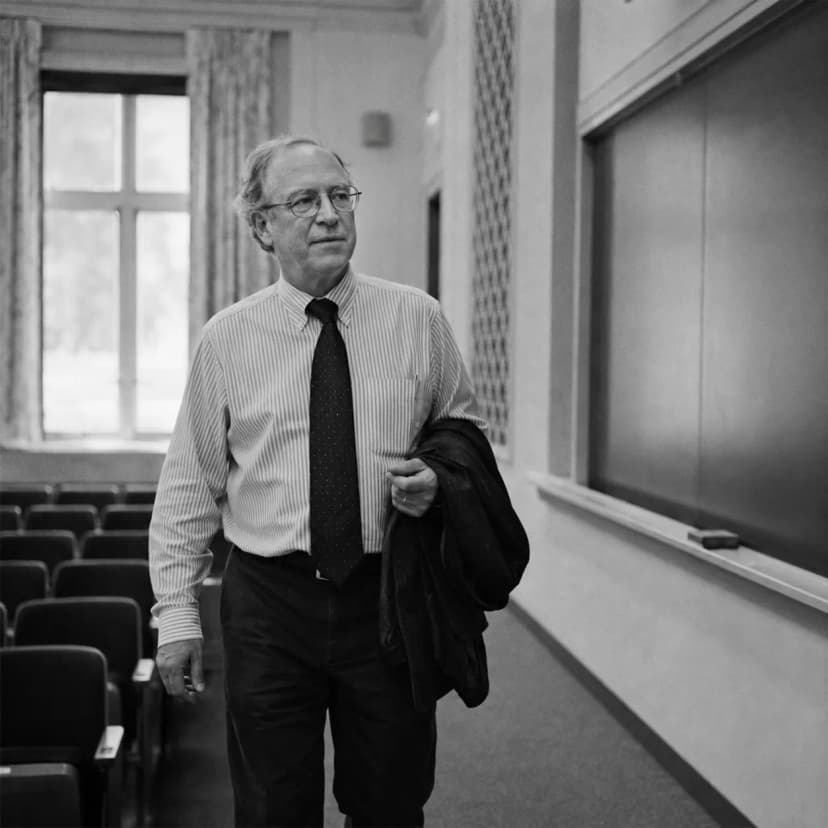
John Darley, 1938 to 2018, was an American social psychologist who, with Bibb Latané, ran the experiments that established the bystander effect. The experiments were prompted by newspaper coverage of the murder of Kitty Genovese. That coverage was substantially wrong. The experiments were not, and this site keeps the two apart with some care.
Who they are
The research question Darley and Latané asked was a good one and it did not depend on the newspaper story being accurate. Does the presence of other people change whether an individual helps, and if so, why.
Their designs were ingenious. In the intercom study a participant hears another person, apparently in a neighbouring booth, begin what sounds like a seizure, and the only variable is how many other people the participant believes are listening. In the smoke study a participant sits filling in a questionnaire while smoke begins to come into the room, alone or with others who have been told to ignore it. In both, the more people present, the less likely and the slower any one person was to act.
Their explanation was diffusion of responsibility, which is the part that has lasted. Responsibility to act is not a fixed quantity each witness holds in full. It is divided by the number of people who could act, so each individual carries less of it. The laboratory effect has replicated and it is sound experimental psychology.
Two qualifications belong on the same page as the effect, and both are about scope rather than validity.
The first is the Genovese case itself. The parable of the 38 witnesses, which prompted the work and which textbooks attached to it for forty years, does not survive the archive. The 2007 reconstruction by Rachel Manning, Mark Levine and Alan Collins found no support for the figure, for the claim that witnesses observed the attack, or for the claim that nobody acted. That correction is about the newspaper, not about Darley and Latané.
The second is what happens outside a laboratory. Philpot and colleagues in 2020 coded surveillance footage of 219 real public conflicts in Amsterdam, Cape Town and Lancaster, and found that someone intervened in about nine cases in ten, usually more than one person, and that more bystanders present went with a greater chance somebody acted. That is the opposite of what the individual-level effect leads people to expect, and it is not a contradiction of it: the laboratory result is about the probability that any one person acts, and the field result is about the probability that anyone does. Both are true, and only the second answers the question a person in trouble would ask.
Key papers
Darley, J. M., & Latané, B. (1968). The bystander intervention experiments, including the intercom-seizure and smoke-filled-room designs. The founding work, jointly his, and the origin of diffusion of responsibility as an explanation. The laboratory effect has replicated.
Manning, R., Levine, M., & Collins, A. (2007). "The Kitty Genovese Murder and the Social Psychology of Helping: The Parable of the 38 Witnesses." American Psychologist, 62(6), 555-562. The archival correction to the story that prompted the research. It leaves the experiments untouched.
Philpot, R., Liebst, L. S., Levine, M., Bernasco, W., & Lindegaard, M. R. (2020). "Would I Be Helped? Cross-National CCTV Footage Shows That Intervention Is the Norm in Public Conflicts." American Psychologist. The field evidence, and the boundary on how far the laboratory result should be generalised.
Key ideas
The bystander effect: the presence of other people reduces the probability that any one individual intervenes.
Diffusion of responsibility: responsibility to act is divided among those who could act rather than held in full by each of them.
The experiments and the anecdote are separable, and separating them is the whole job on this subject. The story attached to the work was false. The work was not.
The individual-level question and the victim-level question have different answers. Any one person is less likely to help when others are present, and a person in a real public conflict is very likely to be helped.
Sources
- Darley, J. M., & Latané, B. (1968). The bystander intervention experiments.
- Manning, R., Levine, M., & Collins, A. (2007). American Psychologist, 62(6), 555-562.
- Philpot, R., Liebst, L. S., Levine, M., Bernasco, W., & Lindegaard, M. R. (2020). American Psychologist. N = 219 incidents in Amsterdam, Cape Town and Lancaster; intervention in about nine of ten; more bystanders associated with greater likelihood of intervention.
- Vault note: [[John Darley]], which records the standing instruction to separate his work from the parable. Reference is Princeton University's obituary notice.