Josef Falkinger
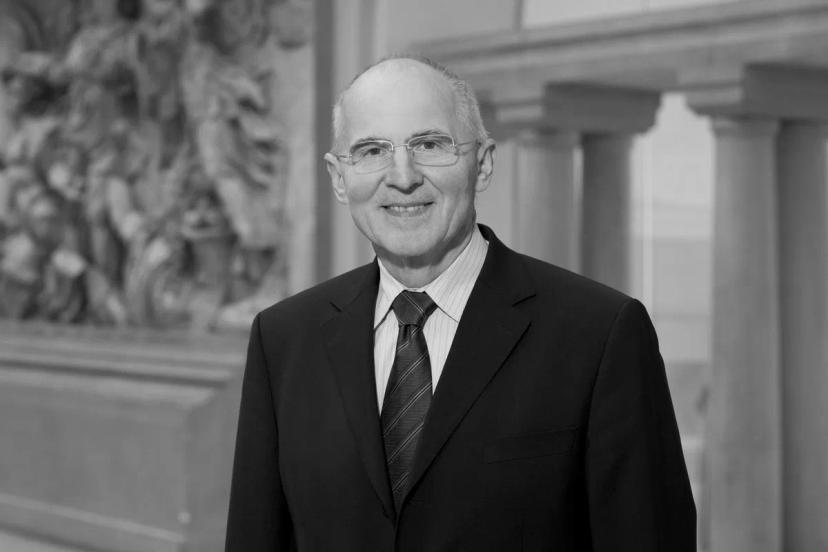
Josef Falkinger is an economist listed by IZA as professor of public finance and macroeconomics at the University of Zurich. His 2008 paper in the Economic Journal, Limited attention as a scarce resource in information-rich economies, models how consumers' limited attention shapes competition between firms. For this site it is the economic model of the firm's side of the attention economy.
Who they are
IZA's record lists Falkinger as professor of public finance and macroeconomics at the University of Zurich, with a term as dean of the faculty of economics, business administration and information technology beginning in 2008, and as an IZA research fellow since May 2004. He took doctorates at the University of Linz in technical mathematics in 1979 and in economics in 1982. His earlier posts included economist at the Chamber of Commerce from 1979 to 1982, assistant professor and lecturer at the University of Linz from 1982 to 1990, professor of public economics at the University of Graz from 1991 to 1994, and professor of industrial economics and foreign trade theory at the University of Regensburg from 1995 to 2000.
His research fields include macroeconomics, especially employment, distribution and growth, public goods and public finance, and globalisation and inequality. His publications include the book A Theory of Employment in Firms (2002) and papers with co-authors on trade regimes and political systems, on land ownership and development, and on education.
Key papers
Falkinger, J. (2008). Limited attention as a scarce resource in information-rich economies. Economic Journal, 118(532), 1596-1620.
The paper applies established findings from the psychology of attention to ask how consumers' limited attention affects competition between firms. Its model treats an economy as information-rich or information-poor as an outcome of the analysis rather than an assumption. When consumers have spare attention, the economy behaves like a conventional competitive equilibrium. The paper then examines how better information technology, greater international integration and the media affect product diversity and the amount of attention-seeking activity, and considers welfare, efficiency and whether policy intervention is warranted. An earlier version circulated as an IZA discussion paper, number 1538, under a slightly different title, Limited attention as the scarce resource in an information-rich economy.
Key ideas
Whether an economy is information-rich or information-poor is something a model can explain rather than assume, and it depends on how much attention consumers have to spare.
The paper is a model, so its results describe the model's economy rather than a measured market. This site cites it as one of the economic treatments of limited attention that sit alongside Simon's scarcity argument, Goldhaber's case for the name and Wu's history.
Sources
- Falkinger, J. (2008). Limited attention as a scarce resource in information-rich economies. Economic Journal, 118(532), 1596-1620.
- IZA Institute of Labor Economics. Josef Falkinger, fellow profile. iza.org.