Keith Payne
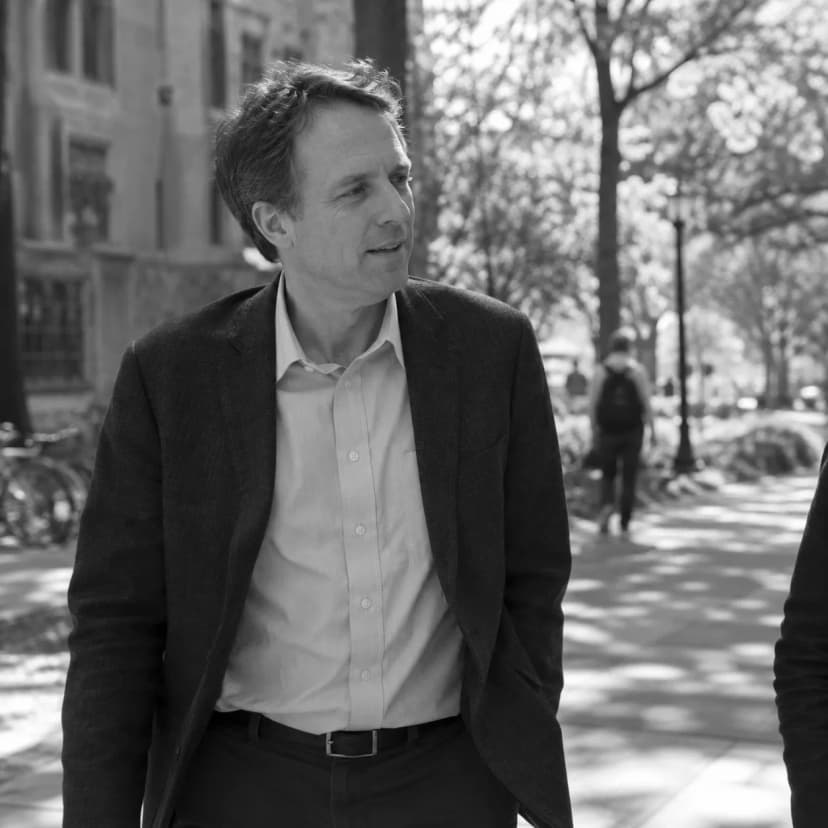
B. Keith Payne is a social psychologist at the University of North Carolina at Chapel Hill and first author of the best evidence that primes do influence behaviour. Six experiments, 988 participants, a gambling task in which each person made many decisions, and the primes shifted choices under uncertainty. It is the study the design objection predicts should work, and it does.
Who they are
Payne is best known outside this literature for the weapon-identification task and for work on implicit bias and economic inequality. Within it, his 2016 paper with Jazmin Brown-Iannuzzi and Chris Loersch does something the priming debate had mostly failed to do: it separates two questions that the public argument had fused together.
The first is whether primes influence behaviour at all. The second is whether a one-shot, between-subjects design can detect it. Those have different answers, and confusing them produced fifteen years of people talking past each other.
Their design answers the first. Within subjects, across many trials, a prime shifts the decisions people make when the right answer is uncertain. The effect is there and it reproduces.
What the design cannot do is say why, and this site treats that limit as central rather than as a footnote. David Shanks showed the following year that the same data are reproduced by a model containing no distinction between automatic and controlled processing at all: on that account the prime changes what information is available to a deliberate judgment, rather than driving behaviour beneath awareness. Both models fit the data. Neither is refuted by them.
The consequence runs in both directions, and it is easy to state it in only one. Payne's result cannot be claimed for the automaticity thesis, which is the thesis that made social priming famous. It equally cannot be claimed against it. What it establishes is that the sensitive instrument detects something, and that nobody has yet built the study which would say what.
One correction worth carrying: the preregistration status of these experiments is not established, and this site does not describe them as preregistered.
Key papers
Key papers
Payne, B. K., Brown-Iannuzzi, J. L., & Loersch, C. (2016). Journal of Experimental Psychology: General, 145(10), 1269-1279. First author. Six experiments and 988 participants, using a gambling task in which each person made many decisions, so the prime could be tested within subjects rather than once per person. Primes shifted the choices people made where the right answer was uncertain, and the effect reproduced. This is the study the design objection to social priming predicts should work, and it is the strongest evidence that primes influence behaviour at all.
Shanks, D. R. (2017). Journal of Experimental Psychology: General, 146(8), 1216-1222. The reply, and the reason the 2016 result cannot be claimed for the automaticity thesis. Shanks reproduces the same pattern with a model containing no distinction between automatic and controlled processing: on that account the prime changes what information is available to a deliberate judgement. Both models fit the data, and neither is refuted by it.
One correction this site carries. The preregistration status of the 2016 experiments is not established, and they are not described here as preregistered.
Key ideas
Two questions, not one. Whether primes work, and whether a given design can see them working, are separable, and the priming debate collapsed them.
Within subjects is the sensitive instrument. Many measurements per person removes the between-person variance that buries a small effect.
Detection is not explanation. A result that both competing models predict does not choose between them.
Concepts on this site
Sources
- Payne, B. K., Brown-Iannuzzi, J. L., & Loersch, C. (2016). Journal of Experimental Psychology: General, 145(10), 1269-1279.
- Shanks, D. R. (2017). Journal of Experimental Psychology: General, 146(8), 1216-1222. The model that reproduces the same pattern without automaticity.