Maggie Watson
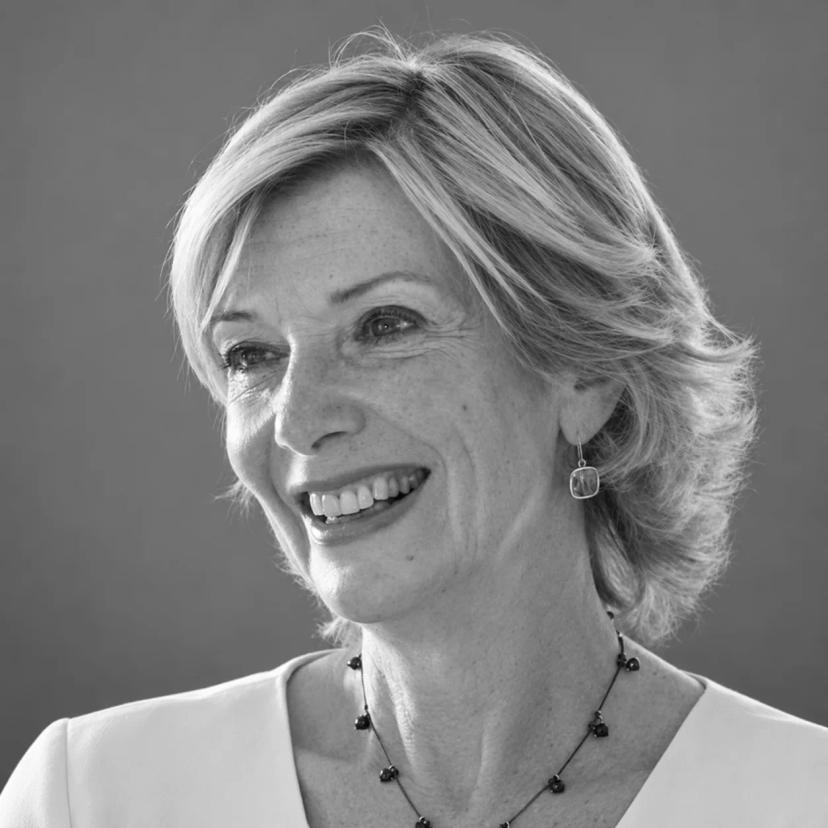
Maggie Watson is first author of the ten-year follow-up of a population-based cohort of women with early breast cancer, in which psychological response at diagnosis was set against later survival. At ten years, helplessness and hopelessness continued to predict worse disease-free survival, with an adjusted hazard ratio of 1.53. A high fighting spirit conferred no survival advantage. Her own recommendation was that clinicians may wish to screen for helplessness around diagnosis in order to target psychological care resources.
Who they are
Watson is a psycho-oncology researcher. Her 2005 paper in the European Journal of Cancer reports the ten-year follow-up of a population-based cohort of women with early-stage breast cancer in whom psychological response, including helplessness and hopelessness, fighting spirit and depression, had been assessed and recorded.
Two results came out of the longer follow-up, and they point in different directions. From the abstract, verbatim: after 10 years, there is a continuing effect of helplessness/hopelessness on disease-free survival, adjusted hazard ratio 1.53, 95 per cent confidence interval 1.11 to 2.11, but not of depression, adjusted hazard ratio for overall survival for cases 2.43, 95 per cent confidence interval 0.97 to 6.10; and longer follow-up also indicates that a high fighting spirit confers no survival advantage. Her own statement of what remains open is part of the same abstract: further large studies, with similarly prolonged follow-up, are needed to replicate this effect and clarify its mechanism of action.
What her work contributes to our article is an asymmetry arriving from a fourth literature. The positive pole did not predict survival. Something at the negative pole did predict worse disease-free survival. That is the same pattern as the consortium reanalysis of the optimism questionnaire, the subscale split in the big longevity cohort, and the genetic composite result, and it is the reason the article's claim concerns the pessimistic end rather than the optimistic one.
What must not be read into it matters more than what can. This is an observational association between a psychological response measured around the time of diagnosis and a survival outcome recorded years later. It does not establish a direction, and undetected differences in disease severity at the point of assessment are exactly the kind of confounding the design cannot exclude. Nothing here implies that a patient's attitude determines whether they recover, that a positive outlook improves cancer outcomes, or that anybody whose illness progressed did not try hard enough. Her own recommendation is about services: screen for helplessness so that psychological support can be directed to the people who need it.
The surrounding literature is worth stating because it is routinely misremembered. The idea that attitude or group therapy extends cancer survival traces to a 1989 trial that was not designed to test survival, and the trials that followed it have not replicated the survival finding; the later and larger tests, including one by the original investigators' own group, reach this publication through press coverage rather than through the papers, and the figures circulating from them are withheld here for that reason rather than printed. Emotional wellbeing did not predict survival in a large head and neck cancer sample, with the design and figures reaching us only through an American Cancer Society release. Optimism did not predict survival in a lung cancer trial reported by Schofield and colleagues. And a structural fact frames all of it: the 2019 cardiovascular meta-analysis excluded studies of patients with cancer by design, to avoid confounding secondary to terminal sickness, so the pooled optimism and mortality estimate that everybody quotes contains no cancer patients at all.
The published sentence that belongs beside hers is Schofield's, because it is the ethical point made by a cancer researcher rather than by us: that we should question whether it is valuable to encourage optimism if it results in the patient concealing his or her distress in the misguided belief that this will afford survival benefits.
Our read of her paper is its abstract, read in full at an institutional repository that prints it entire. The full text was not read. The 1999 paper from the same cohort was not read and is recorded for its existence only. Her affiliation is left blank here rather than guessed.
Key papers
Watson is a working researcher and clinician whose relevant output here is journal articles rather than books.
Watson, M., Homewood, J., Haviland, J. S., & Bliss, J. M. (2005). "Influence of psychological response on breast cancer survival: 10-year follow-up of a population-based cohort." European Journal of Cancer 41(12), 1710-1714, doi:10.1016/j.ejca.2005.01.012. Abstract read in full for this article; full text not read.
Watson, M., and colleagues (1999), The Lancet. The five-year report from the same cohort. Not read by this publication; recorded for its existence only.
Key ideas
At ten years, helplessness and hopelessness assessed around diagnosis continued to predict worse disease-free survival, hazard ratio 1.53.
A high fighting spirit conferred no survival advantage.
Depression's association with overall survival did not reach significance, with an interval from 0.97 to 6.10.
Her recommendation is that clinicians may wish to screen for helplessness in order to target psychological care resources, which is a point about directing support rather than about adjusting attitude.
Replication with similarly long follow-up, and clarification of the mechanism, are needed. She says so herself.
Sources
- Watson, M., Homewood, J., Haviland, J. S., & Bliss, J. M. (2005). European Journal of Cancer 41(12), 1710-1714, doi:10.1016/j.ejca.2005.01.012. Abstract only.
- Schofield, P., and colleagues (2004). "Optimism and survival in lung carcinoma patients." Cancer 100(6), 1276-1282, doi:10.1002/cncr.20076. Not read; the design and the quoted sentence reach us through repository records and a review.
- Rozanski, A., Bavishi, C., Kubzansky, L. D., & Cohen, R. (2019). JAMA Network Open 2(9), e1912200, doi:10.1001/jamanetworkopen.2019.12200. Read in full. Cited here for the exclusion of cancer patients by design.
- Spiegel, D., Bloom, J. R., Kraemer, H. C., & Gottheil, E. (1989), The Lancet; Goodwin, P. J., and colleagues (2001), New England Journal of Medicine; Coyne, J. C., Pajak, T. F., and colleagues (2007), Cancer 110(11). None read. Their figures reach this publication only through press coverage and press releases, and are withheld rather than printed.
- No affiliation is stated for her because none is recorded in the material read. No other biographical detail is asserted here.