Malinda Carpenter
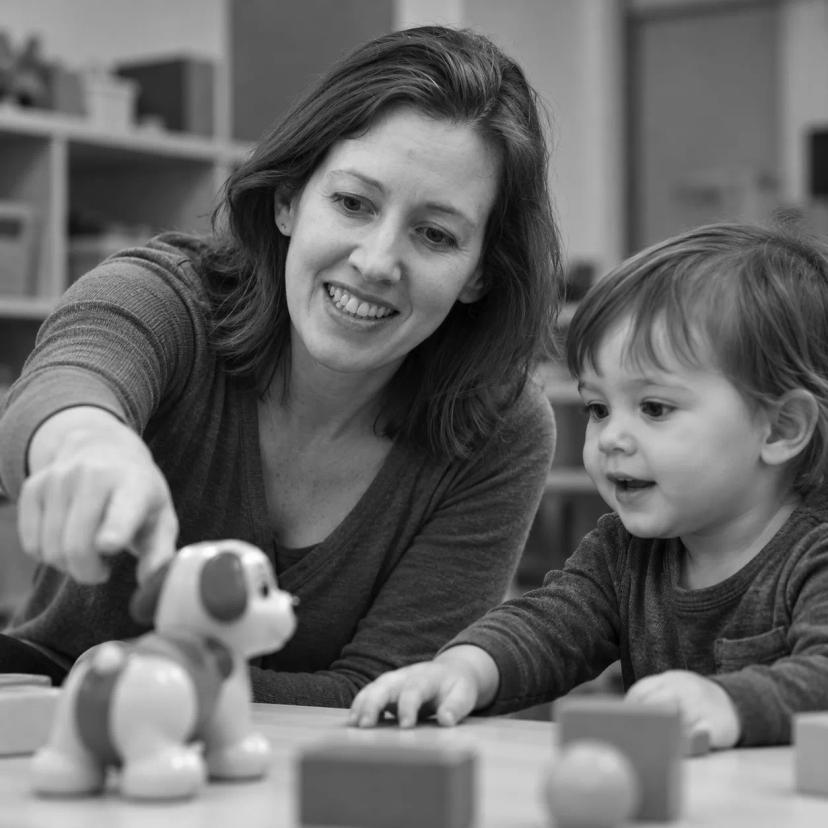
Malinda Carpenter is the co-author, with Harriet Over, of a 2009 study in Developmental Science on how 5-year-olds respond after watching a shape being left out of a group.
Who they are
Malinda Carpenter is a developmental psychologist whose work concerns social cognition in young children, including imitation and the social motives behind it. At the time of the 2009 study she was affiliated with the Max Planck Institute for Evolutionary Anthropology in Leipzig. Her 2013 review with Harriet Over, The social side of imitation, lists both authors at the School of Psychology and Neuroscience at the University of St Andrews, in its Centre for Social Learning and Cognitive Evolution.
Key papers
Over, H., & Carpenter, M. (2009), Priming third-party ostracism increases affiliative imitation in children, Developmental Science, 12(3), F1-F8. https://doi.org/10.1111/j.1467-7687.2008.00820.x The study found that children who watched the exclusion video imitated a model more closely.
Over, H., & Carpenter, M. (2013), The social side of imitation, Child Development Perspectives, 7(1), 6-11. https://doi.org/10.1111/cdep.12006 The review argues that imitation in children is shaped by social motives and pressures, and links imitation research to work on mimicry, conformity, norms and group identity.
Key ideas
Witnessed exclusion was enough to increase affiliative imitation in 5-year-olds.
Children often imitate in order to belong and to bond, and not only to learn how something is done.
Sources
- Over, H., & Carpenter, M. (2009), Priming third-party ostracism increases affiliative imitation in children, Developmental Science, 12(3), F1-F8. https://doi.org/10.1111/j.1467-7687.2008.00820.x