Mark Muraven
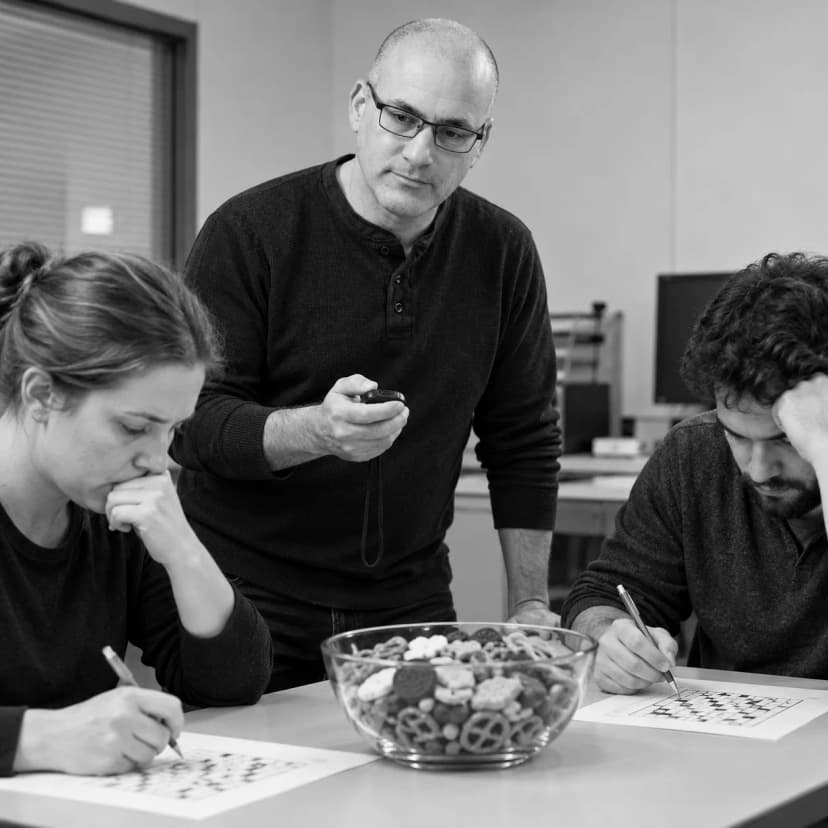
Mark Muraven is a psychologist who studies self-control. He was a co-author of the original 1998 ego depletion paper and first author of a 2003 study, with E. Slessareva, which found that depleted participants with higher motivation performed better on a later self-control test than depleted participants with lower motivation. That result is claimed by both resource and cost-benefit accounts of why effort fails.
Who they are
Muraven is a psychologist working on self-control. He appears twice in the story of decision fatigue. In 1998 he was a co-author, with Roy Baumeister, Ellen Bratslavsky and Dianne Tice, of "Ego depletion: Is the active self a limited resource?", the paper that proposed that self-control draws on a limited resource. No affiliation is confirmed for this page, so none is given.
In 2003 he was first author, with E. Slessareva, of "Mechanisms of self-control failure: Motivation and limited resources", in Personality and Social Psychology Bulletin, volume 29, issue 7, pages 894 to 906. The study tested whether motivation changes what depletion does. Depleted participants who were more motivated, because they believed the task would help others or benefit them, performed better on a later self-control test than depleted participants who were less motivated. A third experiment found that depletion affected only tasks that require self-control. The authors concluded that depleted individuals may compensate for their lack of self-control resources when sufficiently motivated.
The finding matters because it is the nearest early test of a contrast that later accounts made explicit. A resource account reads it as compensation. A cost-benefit account, such as the opportunity cost model of effort, reads it as reallocation of effort when the payoff rises. The result fits both, so it does not decide between them.
What the record shows
The abstract of the 2003 paper by Muraven and Slessareva reports three experiments. Individuals lower in self-control strength because of earlier exertion perform more poorly on later tests of self-control, and the studies suggest that motivation moderates this. Depleted individuals who believed the task would help others (experiment 1) or that their efforts could benefit them (experiment 2) performed better on a later self-control test than depleted individuals who were less motivated.
The third experiment replicated these findings and suggested that depletion affects only tasks that require self-control; tasks that are difficult without requiring self-control were not affected. The authors conclude that depleted individuals may compensate for a lack of self-control resources when sufficiently motivated. A resource account reads this as compensation; a cost-benefit account can read it as reallocation of effort.
Key papers
Baumeister, R. F., Bratslavsky, E., Muraven, M., & Tice, D. M. (1998). Ego depletion: Is the active self a limited resource? Journal of Personality and Social Psychology, 74(5), 1252-1265. The paper that proposed the depletion account.
Muraven, M., & Slessareva, E. (2003). Mechanisms of self-control failure: Motivation and limited resources. Personality and Social Psychology Bulletin, 29(7), 894-906. Motivation moderated depletion effects. No books are listed for this author on this page.
Key ideas
Self-control may draw on a limited resource, the proposal of the 1998 paper.
Motivation can moderate the effect: more motivated depleted participants performed better than less motivated ones.
The motivation result is compatible with both resource and cost-benefit accounts.
Sources
- Baumeister, R. F., Bratslavsky, E., Muraven, M., & Tice, D. M. (1998). Ego depletion: Is the active self a limited resource? Journal of Personality and Social Psychology, 74(5), 1252-1265.
- Muraven, M., & Slessareva, E. (2003). Mechanisms of self-control failure: Motivation and limited resources. Personality and Social Psychology Bulletin, 29(7), 894-906.