Maryanne Wolf
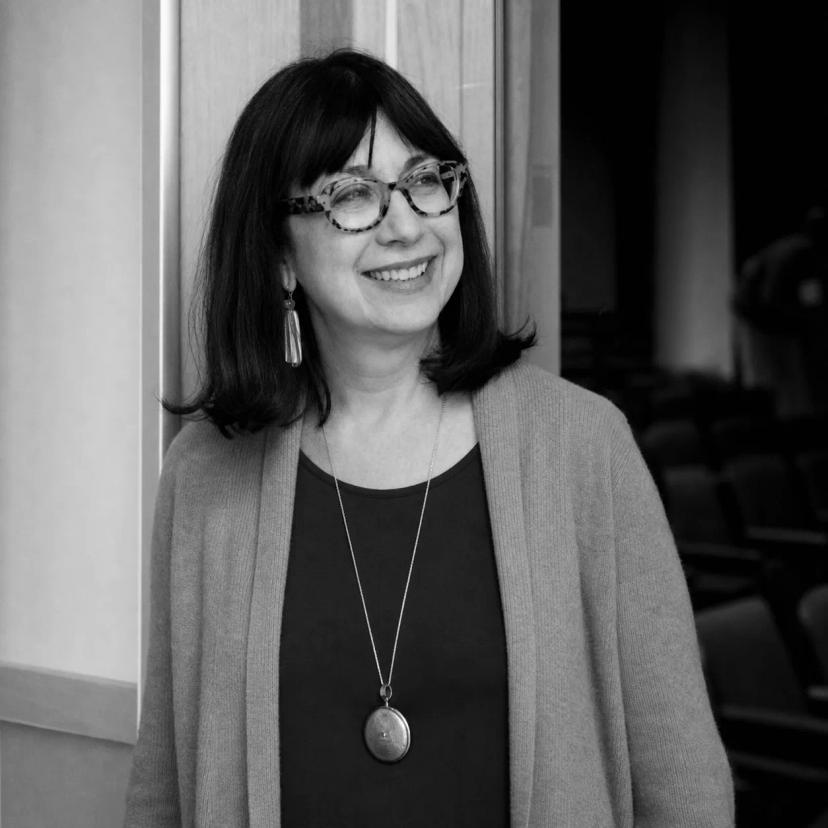
Maryanne Wolf is a cognitive neuroscientist and reading researcher, director of the Center for Dyslexia, Diverse Learners, and Social Justice at UCLA and formerly director of the Center for Reading and Language Research at Tufts. Her central claim is the one worth keeping from the whole literature on reading and attention: reading is not innate. There is no reading gene and no reading region. The brain assembles a circuit for it out of parts that evolved for other purposes, which is why reading has to be taught, and why the form a text takes changes what the circuit does. That makes deep reading a cultural achievement rather than a human default, and therefore something a culture can stop maintaining.
Who they are
Wolf works on the neuroscience of reading and on dyslexia, and the two are the same subject seen from opposite sides. If reading were a built-in faculty, failing to acquire it would be a defect. If reading is a circuit the brain constructs, out of visual, auditory, language and executive components that were doing other jobs first, then variation in how easily that construction happens is what you would expect, and dyslexia looks less like a fault than like a different assembly of the same parts.
The consequence that reaches beyond the laboratory is the one this site cares about. A capacity that is assembled rather than inherited depends on the conditions under which it is assembled. Change the text, and you change the circuit. The historical evidence for this is unusually clean. Classical Greek and Latin were written in scriptura continua, without spaces between words, which made reading a decoding puzzle rather than a fluent act, and kept it largely oral. Augustine records his astonishment at watching Ambrose of Milan read without moving his lips, because silent reading was rare enough to be worth writing down. Word separation spread through the early medieval period and was established by the thirteenth century. Once decoding stopped consuming the reader's capacity, that capacity could be spent on meaning instead. Fluency made contemplation possible, and not the other way round.
Nicholas Carr took this argument from Proust and the Squid and made it the historical spine of The Shallows (2010). It is the half of that book that has aged best. Two of the studies Carr leaned on for the neuroscientific half, the Google effect and the smartphone brain-drain finding, have since failed at scale. Nothing that happened to those studies touches Wolf's claim, because her claim is not about the internet. It is about what kind of thing reading is, and the evidence for it is developmental, neurological and historical rather than a single striking experiment.
Where Carr does overreach, it is his overreach rather than hers. His assertion that an ancient reader's entire cortex would have been buzzing with neural activity is an inference drawn from a historian's textual argument, not a measurement. Wolf's own position is more careful, and it is worth being precise about what follows from it. That deep reading is built does not establish that anything is currently unbuilding it. The claim that screens are destroying the capacity is not evidenced. What is evidenced is much narrower: screen inferiority, the small paper advantage on comprehension found by Pablo Delgado and colleagues across 54 studies and 171,055 participants at g = -0.21, which holds for expository text under time pressure and disappears for narrative. That is a real effect about a reading condition. It is not a claim about brains being rewired.
The distinction Wolf's work makes available is between damage and disuse, and it is the most useful thing anyone has contributed to this argument. A capacity that was never guaranteed cannot be damaged in the way a limb is damaged. It can, however, stop being built, if the conditions that built it stop being supplied. That reframing is what separates a testable worry, are we still teaching and practising sustained reading, from an untestable one, are our brains being ruined. This site follows the first.
Books
Both titles and years are recorded in the vault. Publishers are not, and are left blank rather than filled in from memory. The vault may not hold her complete bibliography, and this table does not claim to be exhaustive.
Key papers
Wolf's contribution reaches this site through two trade books rather than through journal articles, and the supporting historical and meta-analytic evidence is other people's.
Wolf, M. (2007), Proust and the Squid: The Story and Science of the Reading Brain. The argument that reading is assembled rather than inherited, and the underlying source for the built-capacity claim.
Wolf, M. (2018), Reader, Come Home. The later statement of the same case, turned toward what happens when the conditions that build the circuit change.
Saenger, P. (1997), Space Between Words: The Origins of Silent Reading, Stanford University Press. Not hers, and cited here because the historical argument about unspaced text rests on it.
Delgado, P., Vargas, C., Ackerman, R., & Salmerón, L. (2018), "Don't throw away your printed books: A meta-analysis on the effects of reading media on reading comprehension," Educational Research Review, 25, 23-38. Also not hers, and the evidenced narrow claim that sits where the broad one is usually made.
Verified 2026-09-01. Publishers for both of her books are unrecorded in the vault and are not supplied here. The vault may not hold her complete bibliography and this list does not claim to be exhaustive.
Key ideas
Reading is not innate. There is no reading gene and no dedicated reading region. The circuit is assembled from components that evolved for vision, hearing, language and executive control.
Because it is assembled, it must be taught, and because it must be taught, the conditions of teaching and practice determine what gets built.
The form of the text changes the circuit. Unspaced script produced a decoding reader; word separation produced a fluent one; a fluent reader can spend attention on meaning.
Deep reading is a cultural achievement, not a default. It can therefore be lost through disuse rather than damaged through injury, which is a different and more tractable worry.
Dyslexia as variation rather than deficit, which follows directly from reading being constructed rather than inherited.
Concepts on this site
Deep Reading, the capacity her work explains
Screen Inferiority, the measured and bounded version of the modern worry
The Linear Mind, Carr's larger historical thesis, built on her account of reading
Sources
- Wolf, M. (2007), Proust and the Squid: The Story and Science of the Reading Brain. The underlying source for the built-capacity argument.
- Wolf, M. (2018), Reader, Come Home.
- Carr, N. (2010), The Shallows: What the Internet Is Doing to Our Brains, W. W. Norton. Chapter 4 supplies the history drawn from Wolf, chapter 7 the alarm that does not follow from it. Tenth-anniversary edition with new afterword, 2020.
- Saenger, P. (1997), Space Between Words: The Origins of Silent Reading, Stanford University Press. The historical argument about unspaced text.
- Delgado, P., Vargas, C., Ackerman, R., & Salmerón, L. (2018), "Don't throw away your printed books: A meta-analysis on the effects of reading media on reading comprehension," Educational Research Review, 25, 23-38.
- Verified 2026-09-01. Publishers for both books are unrecorded in the vault and are not supplied here.