Muzafer Sherif
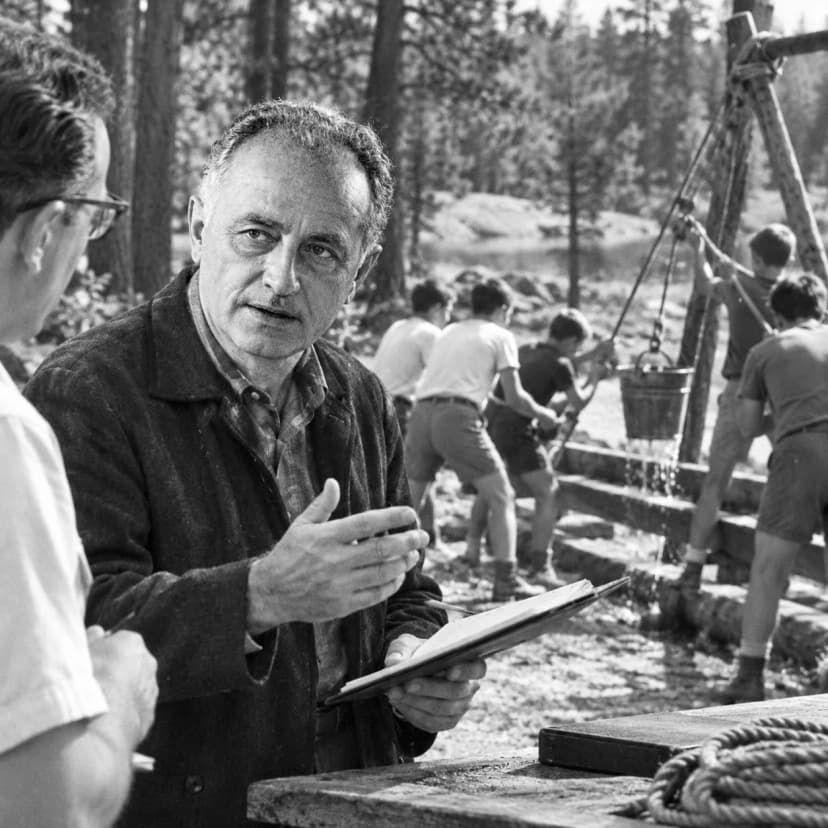
Muzafer Sherif was a Turkish-American social psychologist and one of the founders of the experimental study of social norms. His 1935 monograph, A Study of Some Social Factors in Perception, reported experiments in which participants judged the apparent drift of a light in a dark room alone and in groups, and showed people converging on a shared estimate that persisted when they later judged alone.
Who they are
Sherif is described in the vault as a Turkish-American social psychologist and a founder of the experimental study of social norms. A library record for the 1935 work lists him as the author, with New York as the place of publication and R. S. Woodworth as the publisher of the series, and gives the length as 60 pages. The monograph appeared in the series Archives of Psychology as number 187. Its acknowledgments thank Gardner Murphy of Columbia University and G. W. Allport of Harvard University.
This page is a neutral profile built from the 1935 monograph and the vault's notes. Biographical detail beyond that, such as dates and positions, has not been verified here and is left out. The vault also records that The Choice Factory credits him as the first to document social proof, and that the seed book for the article Why do people conform, Jonah Berger's Invisible Influence, names him among the researchers whose work it discusses.
Key papers
The main paper is Sherif's 1935 monograph, A Study of Some Social Factors in Perception. It reports a set of experiments built on the autokinetic effect, the apparent drift of a stationary light in a dark room. The first range experiment used 19 participants, a second intensive range experiment used four, and 40 took part in group experiments. A separate experiment on direction used 36. All were psychologically naive male students aged between 19 and 30, and each gave 100 judgements per session.
Key ideas
The monograph reports experiments on how judgements made in an unstructured situation come to be shared in a group. It used four conditions: judging alone, judging in a group, judging in a group after solo sessions, and judging alone after group sessions.
Judging alone, each participant settled on a personal range and a typical value, and these differed widely between people. People who began in a group converged almost at once and held the shared level across later sessions. Members who had been in a group kept a norm close to the group's when they were later tested alone, while people who began alone and were then put together moved closer but less tightly. Only about a quarter of participants believed other people's judgements had influenced them.
These results are the basis of the page on the autokinetic effect, and they are the cleanest example of informational influence, the use of other people as evidence about the world, in the article Why do people conform.
Sources
- Sherif, M. (1935), A study of some social factors in perception, Archives of Psychology, no. 187, New York.
- The Choice Factory, which credits Sherif with the first documentation of social proof.
- Berger, J. (2016), Invisible Influence, which names Sherif among the researchers it discusses.