Nachman Ben-Yehuda
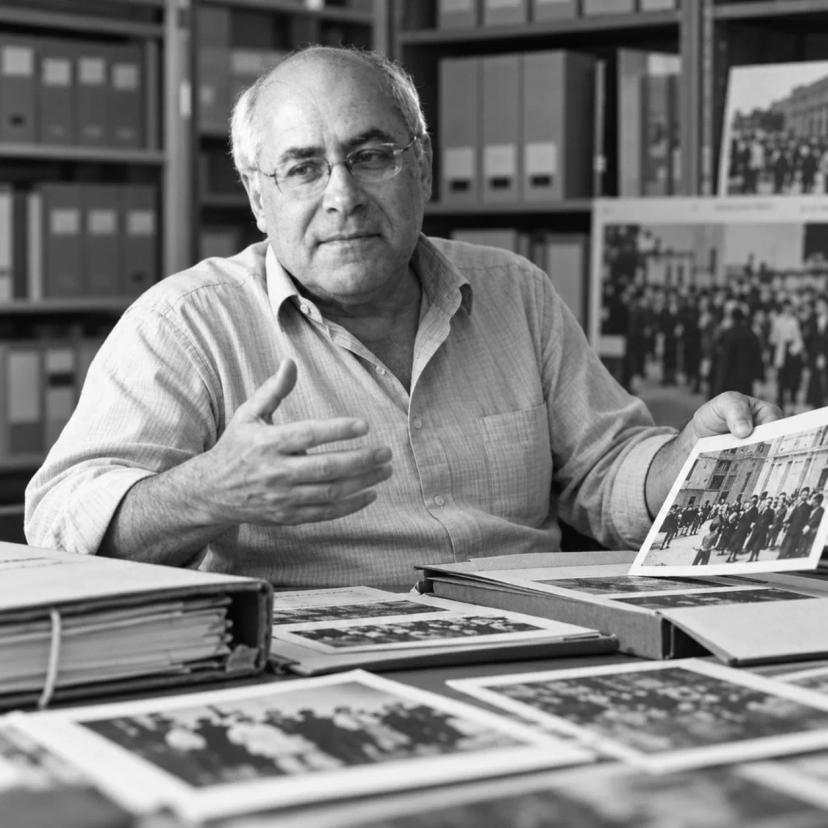
Nachman Ben-Yehuda is an Israeli sociologist, professor emeritus at the Hebrew University of Jerusalem, and co-author with Erich Goode of Moral Panics and the 1994 Annual Review of Sociology article that gave the moral panic its five criteria and three accounts of origin.
Who they are
Ben-Yehuda was born on 8 March 1948. He is professor emeritus at the Hebrew University of Jerusalem and was dean of its Department of Sociology and Anthropology. These details come from a secondary encyclopaedia entry, which mentions no other university and gives no dates for his appointments.
His other research is a useful reminder of what a constructionist sociologist of deviance studies. Sacrificing Truth: Archaeology and the Myth of Masada (2002) examines how the story of the fall of Masada in 73 CE was shaped by early Israeli state myth and archaeology. Atrocity, Deviance, and Submarine Warfare: Norms and Practices during the World Wars (University of Michigan Press, 2013) studies deviance in wartime naval conduct. Fraud and Misconduct in Research: Detection, Investigation, and Organizational Response, written with Amalya Oliver-Lumerman (University of Michigan Press, 2017), covers research misconduct.
The encyclopaedia entry does not list the moral panic book, so its authorship rests on the book and the review article themselves, which carry both names.
Key papers
Goode, E., & Ben-Yehuda, N. (1994). Moral Panics: The Social Construction of Deviance. Blackwell.
Goode, E., & Ben-Yehuda, N. (1994). Moral panics: Culture, politics, and social construction. Annual Review of Sociology, 20, 149-171.
Ben-Yehuda, N. (2002). Sacrificing Truth: Archaeology and the Myth of Masada. Humanity Books.
Ben-Yehuda, N. (2013). Atrocity, Deviance, and Submarine Warfare. University of Michigan Press.
Key ideas
With Goode, Ben-Yehuda is credited here with a practical contribution: five criteria that must all be present before a social reaction counts as a moral panic. These are heightened concern, hostility toward the group as an enemy, a wide consensus, disproportion between the alarm and the evidence of harm, and volatility, meaning that the reaction erupts and subsides quickly though the rules it leaves behind usually stay.
The pair also set out three accounts of where a panic begins: grassroots fear, elite engineering and interest-group campaigns. The same article separates panics from fads.
The framework's known weakness is disproportionality. Saying a reaction is out of scale needs an agreed measure of harm, and for most of the cases the concept covers no such measure exists or the measure is itself disputed.
Sources
- Biographical details: encyclopaedia entry for Nachman Ben-Yehuda, read 24 October 2026; secondary.
- Goode and Ben-Yehuda (1994), Annual Review of Sociology, 20, 149-171: abstract read.