Patricia Greenfield
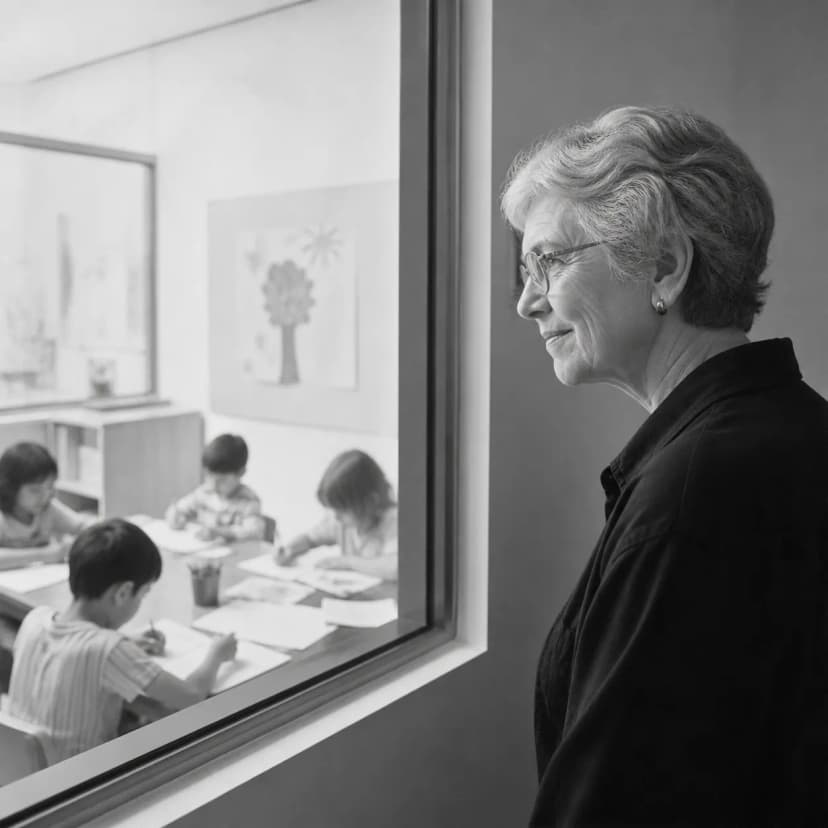
Patricia Greenfield is an American developmental psychologist, distinguished professor of psychology at UCLA and director of the Children's Digital Media Center, whose subject is how cultural and technological change shapes cognitive development. Writing in Science, she attributed the twentieth-century rise in measured IQ, the Flynn effect, to urbanisation and rising societal complexity rather than to any increase in intelligence as such. Her wider position is the one this site finds most useful in the media-and-attention argument: different media develop different cognitive skills, so visual and spatial abilities can rise while sustained reading and reflection fall. That is a trade rather than a decline, and it is closer to what the evidence supports than either camp's headline.
Who they are
Greenfield's work sits on the developmental side of a question that is usually argued on the neurological side. The common framing asks what a medium does to a brain. Hers asks what a cognitive environment selects for while a person is growing up in it, which is a question about what gets practised rather than about what gets damaged.
The clearest published instance in the vault is her account of the Flynn effect. Measured IQ rose across the twentieth century at roughly three points per decade in nearly every country with long-run test data. That rise is the standing counter-argument to any claim that modern life is making people less intelligent, and every serious participant in the argument has to say something about it. Greenfield's answer, in Science, locates the cause in urbanisation and rising societal complexity: the environment began demanding more of the abstract, classificatory reasoning that intelligence tests were built to measure, and people got better at supplying it.
That is not the same explanation as James Flynn's own, and the difference matters more than it first appears. Flynn's account is that the century taught people to wear the same scientific spectacles as the test designers, which puts the change inside the style of thinking. Greenfield's puts it in the demands of the environment. Both accept the rise as real, both deny that it means people have become innately cleverer, and both are compatible with the observation that the gains concentrate in abstract, nonverbal, pattern-and-classification tasks while vocabulary, general knowledge, arithmetic and reading scores stay flat or fall. The effect itself is settled. What produced it is not, and this site treats that as genuinely open rather than picking a side for tidiness.
Nicholas Carr cites her in The Shallows at the point where he addresses the Flynn effect, which is the most intellectually honest passage in that book. He concedes the rise, accepts the figures, and reinterprets rather than dodges. Greenfield's Science argument fits his case, because a rise driven by environmental complexity is not a rise in the capacities he says are being lost.
The use is fair as far as it goes, and it goes less far than her own position. Carr needs a story in which one mode of thought displaces another, with the displacement running in a single direction. Greenfield's account is symmetrical: media build the skills they demand practice in, so a shift in media produces gains and losses at once. Visual and spatial abilities can rise while sustained reading and reflection fall. Neither half of that is a headline, which is presumably why neither camp in the screen-time argument quotes it much. It is also the version that survives contact with the evidence, because the measured findings in this area point the same way. Screen inferiority, the paper advantage on comprehension, is real, small, and bounded to expository text under time pressure. The sweeping claims on both sides are not evidenced, and techno-panic is a recurring genre with a five-hundred-year history rather than a finding.
The trade framing is also what makes the question answerable. If media change is a trade, the useful work is to ask which skills a given environment is practising and which it is not, and to decide deliberately which of them are worth keeping. That is a question a school, a parent or a publisher can act on. Whether brains are being ruined is not.
Books
The vault records no books by Greenfield. It records her as a working developmental psychologist whose output here is journal work, and one article specifically. Her actual bibliography is very likely larger than this page can show, and nothing has been added to it from memory. The single verified item is listed below.
Key papers
Greenfield, P. M., in Science, attributing the twentieth-century rise in measured IQ to urbanisation and rising societal complexity. The vault records the venue and the argument but not the title, year, volume or page numbers, so none are given here. This is an incomplete citation, and it is left incomplete rather than filled in.
Key ideas
Different media develop different cognitive skills. A change of medium is a change in what gets practised, so it produces a redistribution of ability rather than a uniform gain or loss.
Media change is therefore a trade, not a decline. Visual and spatial abilities can rise while sustained reading and reflection fall, and both halves have to be reported.
The Flynn effect as an environmental result. Urbanisation and rising societal complexity increased the demand for the abstract reasoning that IQ tests measure. The rise is real and it is not a rise in innate intelligence.
Cognitive development is situated in a culture, which makes the unit of analysis the environment a child grows up in rather than the individual brain.
Concepts on this site
The Flynn Effect, where her explanation sits alongside Flynn's own
Techno-Panic, the genre her trade framing declines to join
Digital Loneliness, one of the claims her symmetry argument bears on
Sources
- Greenfield, P. M., in Science. Attributing the twentieth-century IQ rise to urbanisation and rising societal complexity. Citation incomplete in the vault; see the note above.
- Carr, N. (2010), The Shallows: What the Internet Is Doing to Our Brains, W. W. Norton. The Flynn digression runs pp. 144 to 148, and cites Greenfield. Tenth-anniversary edition with new afterword, 2020.
- Flynn, J. R. (2007), What Is Intelligence? Flynn's own account, including the "scientific spectacles" explanation.
- Delgado, P., Vargas, C., Ackerman, R., & Salmerón, L. (2018), "Don't throw away your printed books: A meta-analysis on the effects of reading media on reading comprehension," Educational Research Review, 25, 23-38.
- Verified 2026-09-01. This is a thin page by design. The vault holds one paper of hers, incompletely specified, and no books, and nothing has been added beyond that.