Paul Seli
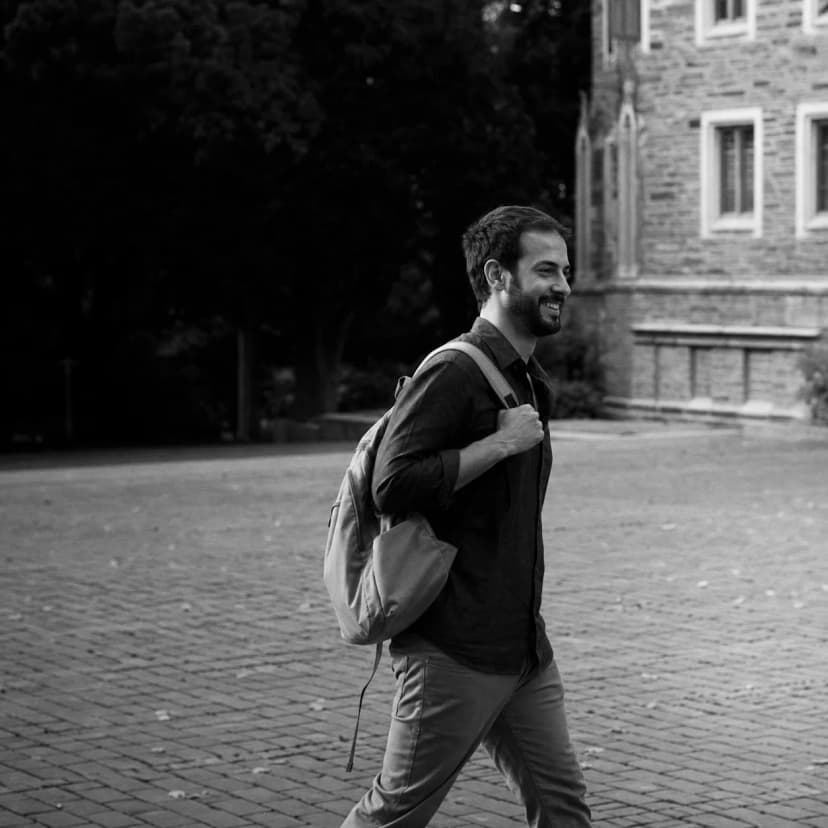
Paul Seli is a cognitive scientist at Duke University who works on mind wandering, and in particular on whether the field's headline numbers mean what they are taken to mean. His argument, made with colleagues in 2018, is that prevalence estimates of the kind produced by Matthew Killingsworth's sampling work are hard to interpret without heavy qualification, because they are built by asking people to give a yes-or-no answer about an inner state that does not divide into yes and no. He is not saying minds do not wander. He is saying nobody knows how to count it.
Who they are
Seli is in the Department of Psychology and Neuroscience at Duke University, where he directs the Mind at Large Lab. He took his PhD at the University of Waterloo in 2015, in a research group with a long track record on attention lapses and sustained-attention failure, and his work has stayed close to the measurement end of the field: what the probes actually capture, what respondents are actually doing when they answer, and what follows from the difference.
The argument that brings him onto this site is a methodological one. Experience sampling asks a person, at a random moment, whether their mind was on the task. That question presumes a clean boundary. Seli and his co-authors argue that attention is graded rather than binary, that a probe forcing a dichotomous judgment therefore imposes a division the experience does not have, and that the resulting prevalence figures inherit assumptions about how people make such judgments which have not themselves been tested. The critique is aimed at the number, not at the phenomenon.
The positive half of his programme is the family-resemblances view, developed with a large group of mind-wandering researchers and published the same year in Trends in Cognitive Sciences. Rather than defining mind wandering by a single necessary feature, it treats the term as covering a family of related states which overlap on some dimensions and not others, and asks researchers to say which member of the family they are studying instead of using the umbrella word and hoping it lands. That is a demand for precision rather than a rejection of the construct, and it is the more constructive way to read the 2018 objection.
Key papers
Seli, P., Beaty, R. E., Cheyne, J. A., Smilek, D., Oakman, J., & Schacter, D. L. (2018), "How pervasive is mind wandering, really?," Consciousness and Cognition, 66, 74-78. The argument that quantitative prevalence estimates are misleading, and potentially meaningless, without serious qualification, because they rest on dichotomous judgments of a graded inner experience.
Seli, P., Kane, M. J., Smallwood, J., Schacter, D. L., Maillet, D., Schooler, J. W., & Smilek, D. (2018), "Mind-Wandering as a Natural Kind: A Family-Resemblances View," Trends in Cognitive Sciences, 22(6), 479-490. The proposal that mind wandering is a heterogeneous, graded construct held together by overlapping features rather than a single definition.
Key ideas
Prevalence estimates of mind wandering are only as good as the probe that produced them, and the standard probe forces a binary answer about something graded.
The objection is to the measurement, not to the phenomenon. Seli's own research programme takes mind wandering seriously enough to argue about how it is counted.
Mind wandering is better treated as a family of related states than as one thing with one definition, which means researchers should name the specific variety they are studying.
Intentional and unintentional mind wandering behave differently, so lumping them together in a single figure obscures more than it reveals.
Concepts on this site
Find them elsewhere
The Scholar profile shows a verified duke.edu email and lists mindatlargelab.com as its homepage, matching the Duke faculty database. The @MindatLargeLab X account is a lab account not linked from any Duke page, so it was not recorded
Checked 2026-09-10. Handles and affiliations go out of date, so treat this block as a snapshot rather than a standing fact.
Sources
- Seli, P., Beaty, R. E., Cheyne, J. A., Smilek, D., Oakman, J., & Schacter, D. L. (2018), "How pervasive is mind wandering, really?," Consciousness and Cognition, 66, 74-78. (Cited for the methodological argument only. The abstract and published summaries have been read here, not the full text, so no figure from this paper is carried anywhere on this site.)
- Seli, P., Kane, M. J., Smallwood, J., Schacter, D. L., Maillet, D., Schooler, J. W., & Smilek, D. (2018), "Mind-Wandering as a Natural Kind: A Family-Resemblances View," Trends in Cognitive Sciences, 22(6), 479-490.
- Killingsworth, M. A., & Gilbert, D. T. (2010), "A Wandering Mind Is an Unhappy Mind," Science, 330(6006), 932. (The prevalence estimate the critique is aimed at.)