Richard Philpot
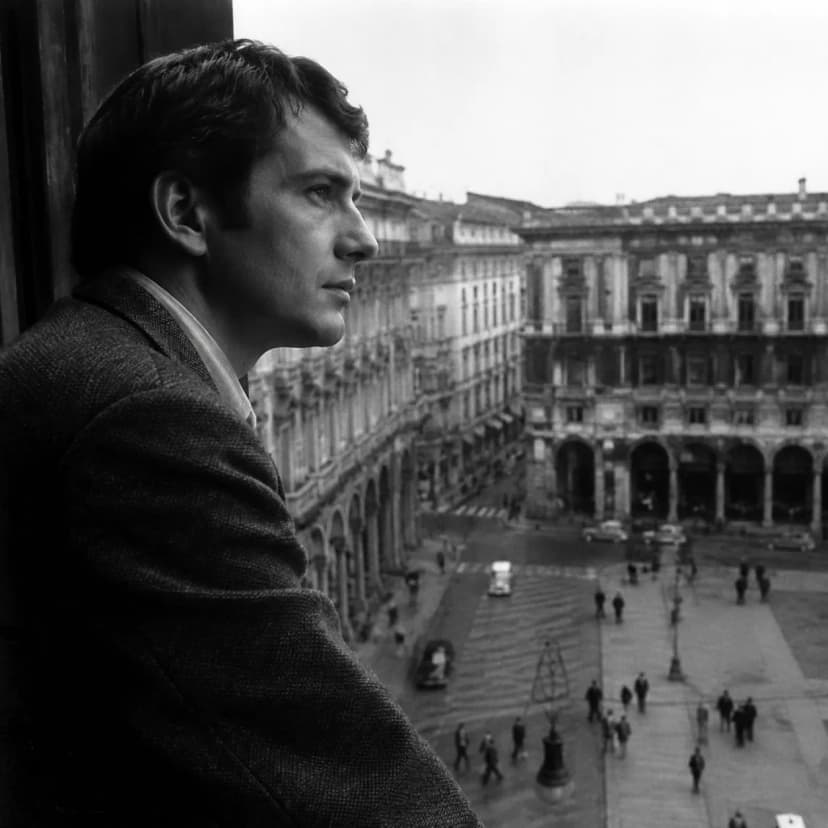
Richard Philpot is a psychologist at Lancaster University and the first author of the 2020 study in American Psychologist that coded closed-circuit television footage of 219 real public conflicts in Amsterdam, Cape Town and Lancaster. Someone intervened in roughly nine out of ten of them, usually several people, and a larger group of bystanders made intervention more likely rather than less. That is the reverse of the popular version of the bystander effect, and it is field evidence rather than laboratory evidence.
Who they are
Philpot works on helping behaviour at Lancaster University, and the paper this site cites him for did something the field had largely not done: it looked at what happens on the street rather than in a laboratory.
The design is the contribution. With Lasse Suonperä Liebst, Mark Levine, Wim Bernasco and Marie Rosenkrantz Lindegaard, Philpot obtained closed-circuit television recordings of 219 real public conflicts from the entertainment and business districts of three cities, Amsterdam, Cape Town and Lancaster, chosen because they differ sharply in how safe their public space is perceived to be. The team coded what bystanders actually did. At least one bystander intervened in about nine out of ten incidents, usually more than one, and the rate held across all three cities despite the differences between them. More bystanders present was associated with a greater likelihood that somebody stepped in.
Read against the textbook account, that looks like a contradiction. It is not. Darley and Latané measured the probability that a particular person acts, and that probability does fall as the group grows: in the staged-seizure study, eighty-five per cent of participants responded when they believed they were the only listener, against thirty-one per cent in a six-person group. Philpot and colleagues measured the probability that anybody acts, and that rises, because a larger group is more likely to contain somebody who will move. Both are true at once, and the arithmetic is the reconciliation.
The limit belongs with the finding, and this site carries it. The footage records outcomes and almost nothing about the people producing them. It cannot say who had been drinking, who knew the parties involved, or who worked the door for a living. Intervention turns out to be common, and after this study it remains unexplained. Something distinguishes the person who moves from the person standing beside them, and the design cannot say what.
Key papers
Philpot, R., Liebst, L. S., Levine, M., Bernasco, W., & Lindegaard, M. R. (2020). "Would I Be Helped? Cross-National CCTV Footage Shows That Intervention Is the Norm in Public Conflicts." American Psychologist. Two hundred and nineteen real public conflicts in Amsterdam, Cape Town and Lancaster; at least one bystander intervening in roughly nine out of ten; more bystanders associated with a greater likelihood of intervention. Philpot is first author.
Lindegaard and colleagues extended the approach to the danger level of the incident in 2022. The vault records the extension without a full citation, so none is supplied here.
Key ideas
Intervention is the norm in real public conflicts, at roughly nine in ten, and it held in three cities that feel very different to be in.
The group effect runs the other way in the field. More bystanders meant a greater chance that somebody stepped in.
Both literatures are right, and they are measuring different things. The odds that a particular person acts, against the odds that anybody does.
The design cannot see the people. Outcomes are recorded; drinking, prior acquaintance and occupation are not. The honest position after this paper is that intervention is common and unexplained.
Sources
- Philpot, R., Liebst, L. S., Levine, M., Bernasco, W., & Lindegaard, M. R. (2020). "Would I Be Helped? Cross-National CCTV Footage Shows That Intervention Is the Norm in Public Conflicts." American Psychologist.
- Darley, J. M., & Latané, B. (1968). The staged-seizure experiments: eighty-five per cent responding alone, sixty-two per cent with one other listener believed present, thirty-one per cent in a six-person group.
- Manning, R., Levine, M., & Collins, A. (2007). "The Kitty Genovese Murder and the Social Psychology of Helping: The Parable of the 38 Witnesses." American Psychologist, 62(6), 555-562. The archival correction that precedes this work.
- Lancaster University, Department of Psychology faculty page. Affiliation and post.
- Vault note: [[Richard Philpot]], which records the design limit carried above.