Richard Zeckhauser
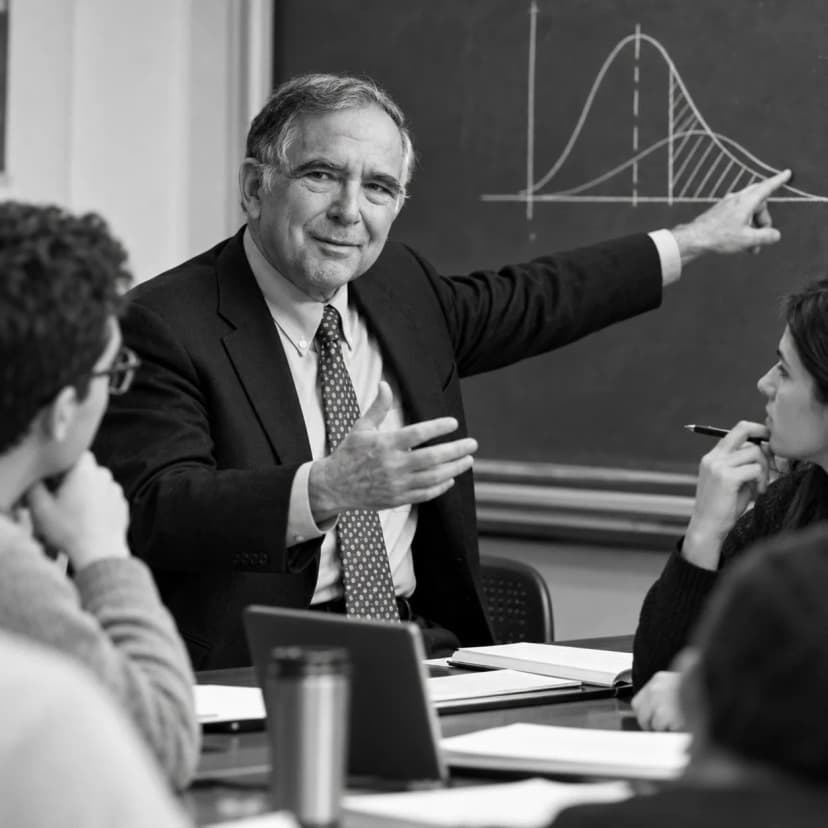
Richard Zeckhauser is the second author of the 1988 paper, written with William Samuelson, that introduced the term status quo bias.
Who they are
Zeckhauser holds the title Frank P. Ramsey Professor of Political Economy at the Kennedy School, Harvard University. His faculty page says he graduated from Harvard College summa cum laude and took his Ph.D. there. It places his work in decision theory and behavioral economics, with policy interests in human health, in helping markets work more effectively and in informed choice by individuals and government agencies.
The same page lists status quo bias among the ideas he is known for, alongside quality-adjusted life years, betrayal aversion and ignorance, meaning states of the world that are unknown, treated as a complement to risk and uncertainty. He is an elected fellow of the Econometric Society, the Institute of Medicine and the American Academy of Arts and Sciences, and the American Economic Association named him a Distinguished Fellow in 2014. The page counts more than 330 articles and 14 books and edited books. Two of the coauthored titles it names are The Patron's Payoff: Conspicuous Commissions in Italian Renaissance Art (2008) and Collaborative Governance: Private Roles for Public Goals (2011).
Key papers
The 1988 paper in the Journal of Risk and Uncertainty reports decision experiments and data on faculty choices of health plans and retirement programs. Its abstract says individuals disproportionately stick with the status quo and that the bias is substantial in important real decisions.
Key ideas
With Samuelson, Zeckhauser supplied the demonstration that gave later researchers a pattern to explain. The abstract says that economics, psychology and decision theory all offer possible explanations. The competing accounts since then are set out in the article What is status quo bias?
Sources
- Samuelson, W., & Zeckhauser, R. (1988). Status quo bias in decision making. Journal of Risk and Uncertainty, 1(1), 7-59. https://doi.org/10.1007/BF00055564