Robert Zatorre
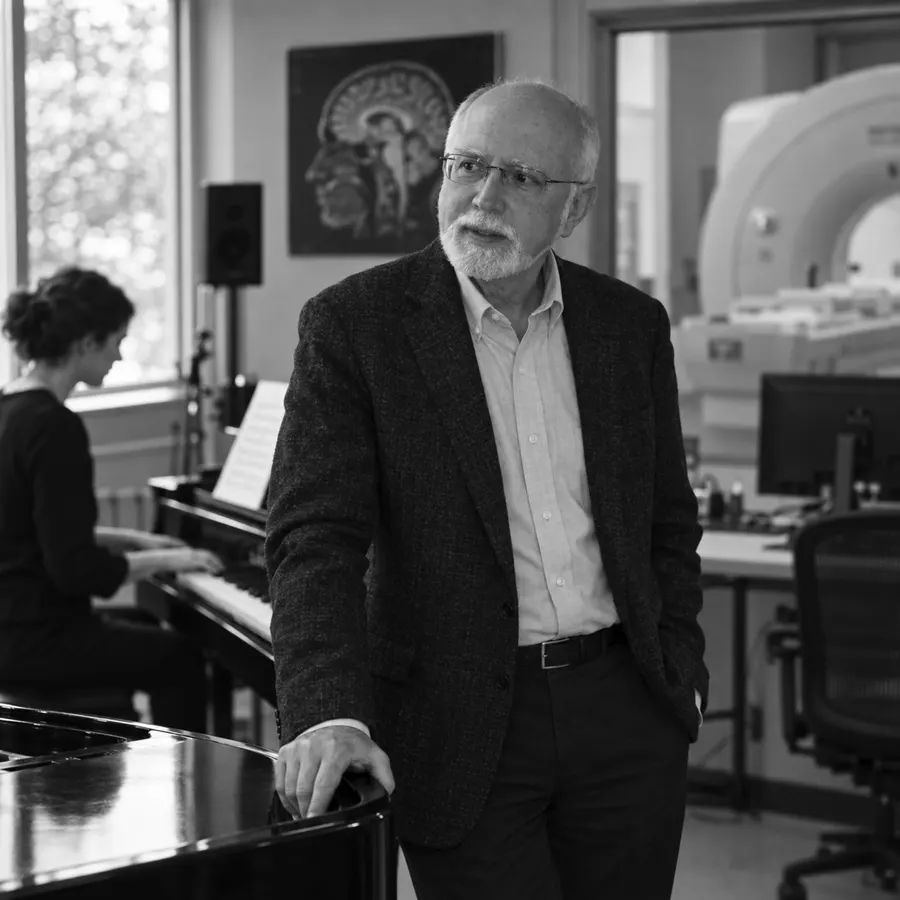
Cognitive neuroscientist at McGill, whose name is on both the strongest evidence in music reward research and the finding that most constrains it.
Who they are
Zatorre works on auditory cognition and on how the brain gets from a pattern of sound to a response worth having. The programme he has been part of produced the auction study, the theoretical review, the pharmacological test and the documentation of specific musical anhedonia.
A research group that publishes the result undermining its own tidy story is a group worth citing.
Key papers
Zatorre, R. J., & Salimpoor, V. N. (2013). From perception to pleasure: music and its neural substrates. PNAS, 110(Suppl 2), 10430-10437.
Ferreri, L., Mas-Herrero, E., Zatorre, R. J., et al. (2019). Dopamine modulates the reward experiences elicited by music. PNAS.
Mas-Herrero, E., Zatorre, R. J., Rodriguez-Fornells, A., & Marco-Pallarés, J. (2014). Current Biology.
Key ideas
Pleasure in music arises from interactions between cortical loops that generate predictions from sound patterns and subcortical systems responsible for reward and valuation.
Cortical loops between auditory and frontal areas hold musical information in working memory and recognise structural regularities, which is what expectancies are built from.
The same programme documented people for whom none of it produces any reward at all.
Concepts on this site
Sources
- doi:10.1073/pnas.1301228110
- doi:10.1073/pnas.1811878116