Rory Sutherland
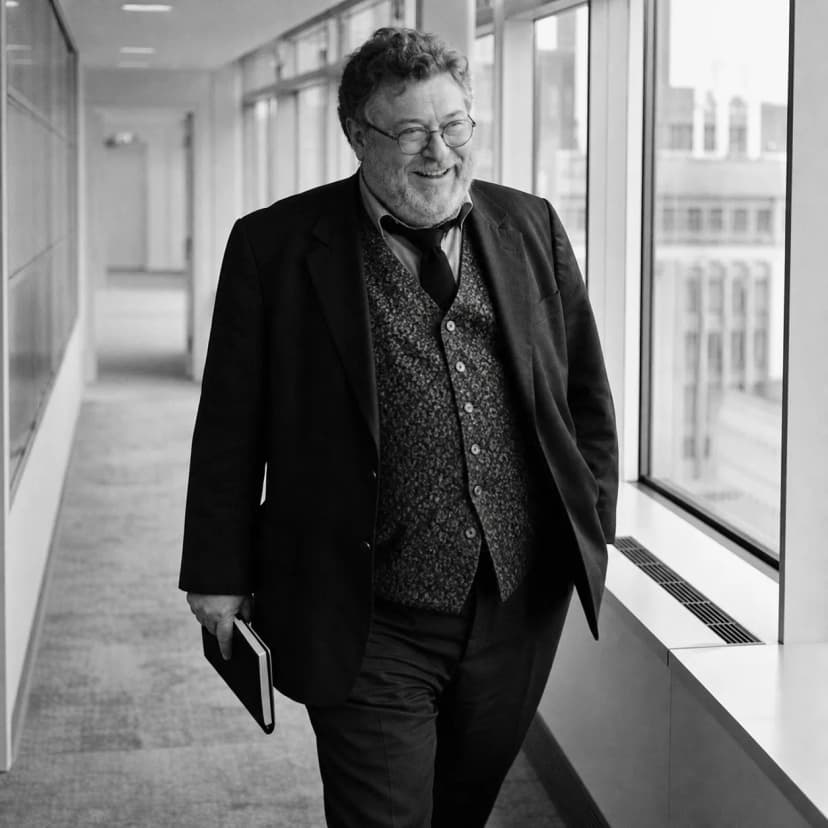
Rory Sutherland is Vice Chairman of Ogilvy UK and founder of the agency's behavioural science practice, and one of the most visible popularisers of behavioural economics inside advertising. His central argument is that value is largely psychological and contextual, so the highest-leverage move for a business is often to change perception and context rather than the product itself. That argument underpins Alchemy (2019), his best-known book.
Who they are
Sutherland has spent his career inside advertising rather than academia, which shapes how his ideas travel: he writes for practitioners, not for peer review, and his evidence is mostly drawn from case studies and campaigns rather than controlled experiments. As Vice Chairman of Ogilvy UK and founder of the agency's behavioural science practice, he has spent decades applying findings from psychology and behavioural economics to advertising and product decisions, and popularising them for a business audience through columns, talks and two books.
His recurring argument is that a product's context, price, framing and presentation are not decoration around a fixed underlying value; they are frequently the largest part of the value itself. He argues that businesses habitually over-invest in engineering the product and under-invest in engineering the perception of the product, when the second is often cheaper and more effective. That argument runs through Alchemy (2019), which collects examples of interventions that make little sense under a conventional rational-actor model of economics but work reliably once psychological context is taken into account. Transport for Humans (2021), written with the behavioural scientist Pete Dyson, applies the same lens to transport policy, arguing that public transport schemes fail as often for psychological reasons, uncertainty, unpredictability, status, as for logistical ones.
Sutherland's role on this site is as a practitioner bridge between academic behavioural science and applied branding: he restates the context effect in language advertising people already use, which makes his framing useful even where it is not itself a research finding.
Books
Key papers
Sutherland is an advertising practitioner rather than a researcher, so what follows is a bibliography. He has published no journal articles this site cites, and his framing is useful here as a restatement of research rather than as a research finding of his own.
Sutherland, R. (2019). Alchemy. WH Allen (UK edition) / HarperBusiness (US edition, published as Alchemy: The Dark Art and Curious Science of Creating Magic in Brands, Business, and Life). The collection of interventions that make little sense under a rational-actor model and work once psychological context is accounted for.
Sutherland, R., & Dyson, P. (2021). Transport for Humans: Are We Nearly There Yet? London Publishing Partnership. The same lens applied to transport policy, written with the behavioural scientist Pete Dyson.
Bibliography verified against publisher listings, 2026-09-01.
Key ideas
Context is part of the product, not decoration around it. Sutherland's recurring claim, echoed across talks and both books, is that changing how something is perceived can create as much value as changing the thing itself, often more cheaply. See the context effect.
Framing as a business lever. Much of Sutherland's advertising advice is applied framing: the same offer, service or product can be accepted or rejected depending on how it is presented, independent of its underlying terms. See framing.
Status as a hidden line item. A recurring move in Sutherland's examples is treating perceived status, rather than function, as the thing a customer is actually paying for. See status signaling.
The rational-actor blind spot. Sutherland's standing critique of conventional economics and much of traditional marketing is that both assume people optimise for stated, rational preferences, when observed behaviour is driven by psychological factors, uncertainty and status that a purely rational model leaves out.
Concepts on this site
The context effect, his central claim that context is part of the product
Framing, the presentation lever his advertising examples repeatedly use
Status signaling, the status logic behind much of what he calls psychological value
Find them elsewhere
X handle is linked from his Behavioral Scientist columnist page and his BrightonSEO speaker profile, which also links the LinkedIn. No personal website found
Checked 2026-09-10. Handles and affiliations go out of date, so treat this block as a snapshot rather than a standing fact.
Sources
- Sutherland, R. (2019). Alchemy. WH Allen (UK edition) / HarperBusiness (US edition, published as Alchemy: The Dark Art and Curious Science of Creating Magic in Brands, Business, and Life).
- Sutherland, R., & Dyson, P. (2021). Transport for Humans: Are We Nearly There Yet? London Publishing Partnership.
- Bibliography verified against publisher listings, 2026-09-01.