Shelley Taylor
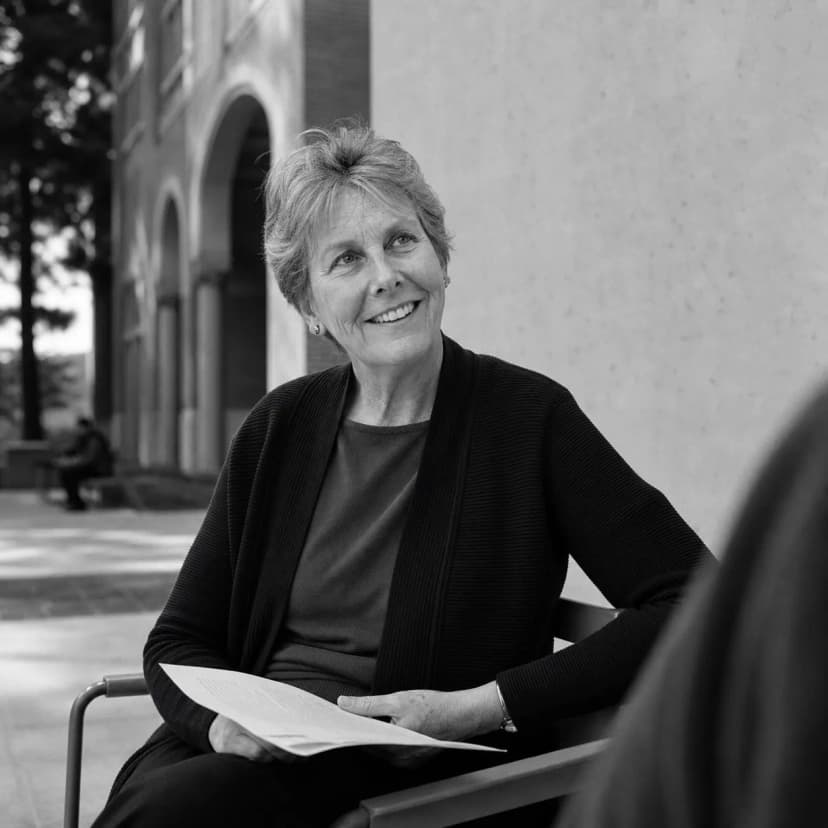
Shelley Taylor is a Distinguished Professor of Psychology at UCLA and the lead author of the 2000 paper that named tend-and-befriend: the finding that affiliation and caregiving are themselves a stress response, running alongside fight-or-flight rather than merely following it. The paper argued the pattern is more characteristic of females than males, a claim that drew a published rebuttal two years later. The underlying observation, that grouping together is a stress behaviour, has held up better than the sharpest version of the sex-difference argument.
Who they are
Taylor is a social psychologist at UCLA whose research sits at the intersection of stress physiology and social behaviour. Her best-known contribution, developed with co-authors Laura Cousino Klein, Brian Lewis, Tara Gruenewald, Regan Gurung and John Updegraff, is the tend-and-befriend model, published in Psychological Review in 2000. The paper argued that the standard fight-or-flight account of the stress response was built largely on male physiology and male-dominated laboratory samples, and that a fuller account needed to include tending, caring for offspring and calming others, and befriending, seeking out and maintaining social alliances, as stress behaviours in their own right rather than as secondary, purely social add-ons.
The paper framed the pattern as more characteristic of females than males, tying it to oxytocin and to the reproductive stakes of caregiving under threat. That framing drew a published rebuttal from David Geary and Mark Flinn in the same journal in 2002, who argued the evidence for a clean sex difference was weaker than the original paper suggested. The claim that has survived the exchange is the more general one: affiliation under stress is a behaviour with its own function, rather than a fallback once fight or flight fails or a pleasant side effect of proximity to others. Taylor's earlier work, including The Tending Instinct (2002), laid groundwork for that argument before the 2000 paper's terminology existed. Megan Gunnar's cortisol research, published roughly a quarter-century later, is the physiological follow-through: Taylor named the behaviour in 2000, and Gunnar's data shows it registering in the body.
Books
Key papers
Taylor's signature idea lives in a paper rather than a book:
Taylor, S. E., Klein, L. C., Lewis, B. P., Gruenewald, T. L., Gurung, R. A. R., & Updegraff, J. A. (2000). Biobehavioral responses to stress in females: Tend-and-befriend, not fight-or-flight. Psychological Review, 107(3), 411-429.
Geary, D. C., & Flinn, M. V. (2002). A published rebuttal to Taylor et al. (2000), contesting the strength of the sex-difference claim, in the same journal. Full citation details beyond authors, year and journal are not verified for this page and are omitted rather than guessed.
Key ideas
Tend-and-befriend as its own stress response, not a fallback. Taylor's core claim is that seeking social contact and caring for others under threat is a behaviour with its own biological logic, running alongside fight-or-flight rather than after it has failed. See tend-and-befriend.
The sex-difference claim did not survive intact. The 2000 paper argued the pattern was more characteristic of females than males. David Geary and Mark Flinn published a rebuttal in Psychological Review in 2002 challenging the strength of that evidence. The general claim, that affiliation is a stress behaviour, has held up considerably better than the specific sex-difference version of it, and this site treats the two as separable.
Social buffering as the downstream mechanism. If tending and befriending are stress responses, the presence of trusted others should measurably dampen a person's stress reaction, the territory Megan Gunnar's later cortisol work occupies. See social buffering.
Belonging as the broader need being served. Tend-and-befriend gives a mechanistic account of why proximity to others functions as a buffer against stress in the first place, connecting Taylor's work to the wider idea of belonging.
Concepts on this site
Tend-and-befriend, the stress response she named in 2000
Social buffering, the downstream effect her model predicts
Belonging, the broader need her research helps explain
Find them elsewhere
UCLA faculty page lists her department email; the Scholar profile gives the same UCLA affiliation. No social accounts found
Checked 2026-09-10. Handles and affiliations go out of date, so treat this block as a snapshot rather than a standing fact.
Sources
- Taylor, S. E., Klein, L. C., Lewis, B. P., Gruenewald, T. L., Gurung, R. A. R., & Updegraff, J. A. (2000). Biobehavioral responses to stress in females: Tend-and-befriend, not fight-or-flight. Psychological Review, 107(3), 411-429.
- Taylor, S. E. (1989). Positive Illusions: Creative Self-Deception and the Healthy Mind. Basic Books.
- Taylor, S. E. (2002). The Tending Instinct: How Nurturing Is Essential to Who We Are and How We Live. Times Books/Henry Holt.
- Geary, D. C., & Flinn, M. V. (2002). Rebuttal to Taylor et al. (2000), Psychological Review. Cited by authors, year and journal only; full title and pagination not independently verified.
- Bibliography verified against publisher listings, 2026-09-01.