Shira Gabriel
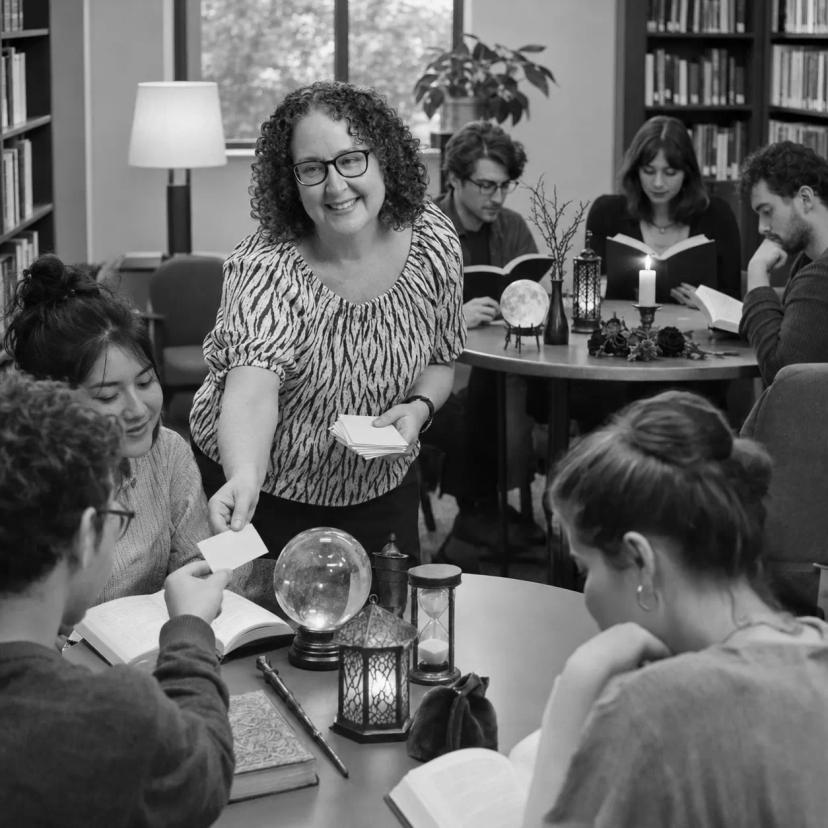
Shira Gabriel is a social psychologist and professor of psychology in the College of Arts and Sciences at the University at Buffalo. Her lab studies how people meet the need for social connection, through relationships and group memberships and also through media, leisure activities and comfort foods. She is first author, with Ariana Young, of the 2011 paper Becoming a Vampire Without Being Bitten, which this site cites in its article on why readers keep returning to Harry Potter.
Who she is
For more than a decade, Gabriel's lab has studied what it calls non-traditional social strategies alongside the traditional ones. A 2020 study published in Self and Identity, with Elaine Paravati and Esha Naidu, surveyed 173 participants, who used a median of seven strategies from a list of up to 17. Non-traditional strategies were about as effective as traditional ones at meeting social needs, and combining both predicted the best outcomes. The team called the measure a social fuel tank, a picture of how well a person's need for connection is being met. An earlier line of her work, reported by the university in 2009, found that watching a favourite television programme can ease feelings of loneliness and rejection.
Key papers
Gabriel, S., & Young, A. F. (2011). Becoming a vampire without being bitten: The narrative collective-assimilation hypothesis. Psychological Science, 22(8). doi:10.1177/0956797611415541.
Ministero, L. M., Green, M. C., Gabriel, S., & Valenti, J. (2022). Rereading: A scale for the tendency to reread. Psychology of Aesthetics, Creativity, and the Arts, 16(1), 97-109. doi:10.1037/aca0000375.
Key ideas
The 2011 paper proposes that reading a narrative can lead people to psychologically join the group it describes. Participants read passages about wizards from the Harry Potter series, or about vampires, and came to identify with the group in their story. Implicit and explicit measures both supported the result. The authors link this narrative collective assimilation to the need to belong, and report that it increased life satisfaction and positive mood. See Narrative Collective Assimilation and Need to Belong.
The Harry Potter article uses the result to explain why a fictional world can feel like a place readers belong to. A story with a defined group, such as a school or a house, offers a membership that a reader can take up for the length of a book and return to.
The 2022 rereading paper, written with Lauren Ministero, Melanie Green and Joseph Valenti, surveyed 671 adult volunteers online and built a short scale for the tendency to reread. It was distinct from the general tendency to read, and rereading was positively associated with trait narrative transportation after general reading was taken into account. The finding comes from a single correlational survey.
Where she appears on this site
Gabriel appears in Why We Can't Get Enough of Harry Potter. The related concepts are narrative collective assimilation and the need to belong. Connected people are Ariana Young, Lauren Ministero and Melanie Green.
Sources
- Gabriel, S., & Young, A. F. (2011), Psychological Science, doi:10.1177/0956797611415541. Published abstract read at an institutional record.
- Ministero, L. M., Green, M. C., Gabriel, S., & Valenti, J. (2022), Psychology of Aesthetics, Creativity, and the Arts, 16(1), 97-109. Read in full.
- University at Buffalo news release, 17 April 2020, consulted 4 November 2026.
Studies on this site by Gabriel
- Becoming a vampire without being bitten
Gabriel (2011) · Psychological Science
Articles that cite Shira Gabriel
- Why We Can't Get Enough of Harry Potter
How a ten-year series, four houses, collective assimilation and nostalgia combine to make Harry Potter a place readers belong to and hand on.
Concepts on this site
- Narrative Collective Assimilation
Narrative collective assimilation is the process by which reading a story leads a reader to identify with the group the story describes. Shira Gabriel and Ariana Young reported it in Psychological…
- Need to Belong
Roy Baumeister and Mark Leary argued in 1995 that the desire for interpersonal attachment is a fundamental human motivation rather than a preference, something closer to hunger than to taste. Their…