Steven Levitt
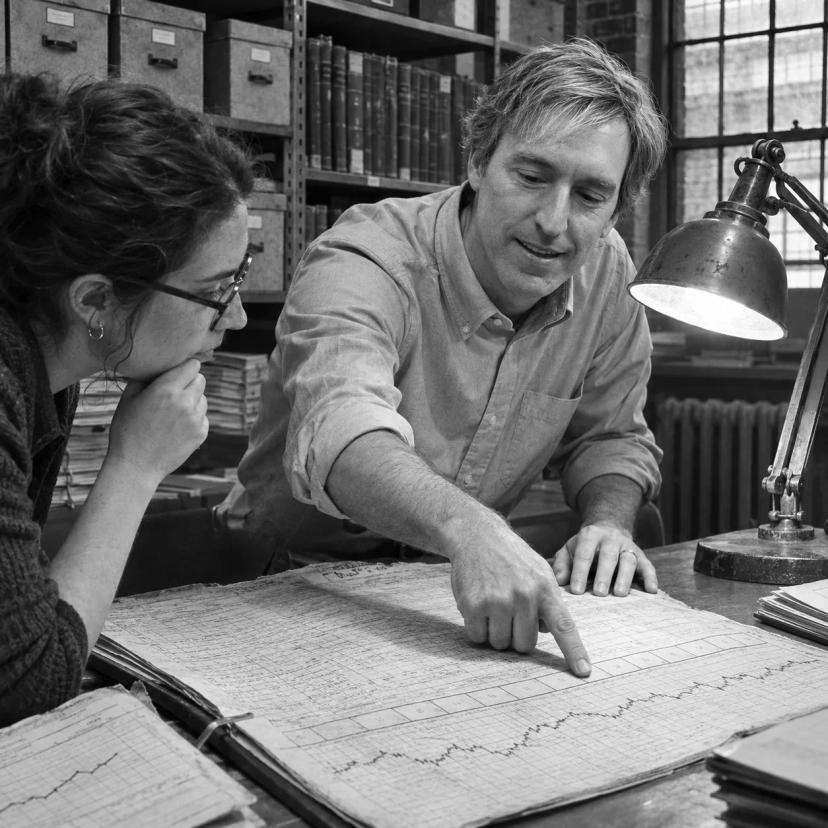
Steven D. Levitt is an economist and the first author, with John List, of the paper Was there really a Hawthorne effect at the Hawthorne plant? An analysis of the original illumination experiments. It reports on the recovered data of the Hawthorne lighting experiments and finds that the widely told pattern of rising output is not in the records.
Who they are
Steven D. Levitt appears in this site's sources as the first author of a 2011 paper in the American Economic Journal: Applied Economics, volume 3, issue 1, written with John List. He is described here as an economist, and this page records what that paper reports. It does not attribute to him any affiliation, role or later work beyond it. He is a different person from Theodore Levitt, the marketing writer who appears elsewhere in the vault.
Key papers
The paper analyses the original data of the lighting experiments run at Western Electric's Hawthorne plant from 1924 to 1927, in three departments of women who assembled relays or wound coils. The data had never been formally analysed and had been thought destroyed. The authors report that the widely repeated account, in which output rose with every change in the light, does not match the records.
Every lighting change began on a Monday, because the plant was closed on Sundays and the lights could be adjusted then. Output was generally higher on Mondays than on Fridays and Saturdays, and Monday output was about as high whether or not the light had been changed that day. The authors found hints of subtler Hawthorne-type effects, described the evidence for them as weak, and noted that the original experimental design was weak. The paper appeared first as NBER working paper 15016 in 2009.
Key ideas
The paper's central point is a method point: a pattern that looks like a response to an intervention can come from the calendar. Because every lighting change began on a Monday, the rise in output that followed could be read as a response to the light, when output on Mondays was higher in any case. The authors treat the records as the test of a story that had been repeated for decades in academic and popular accounts.
Sources
- Levitt, S. D., & List, J. A. (2011). Was there really a Hawthorne effect at the Hawthorne plant? An analysis of the original illumination experiments. American Economic Journal: Applied Economics, 3(1), 224-238. https://doi.org/10.1257/app.3.1.224
Studies on this site by Levitt
- Was there really a Hawthorne effect at the Hawthorne plant? An analysis of the original illumination experiments
Levitt (2011) · American Economic Journal: Applied Economics
Articles that cite Steven Levitt
- What is the Hawthorne effect?
The lighting records from the Hawthorne plant were thought lost. When economists found them, the story about workers who produced more under every change was not in the data.
Concepts on this site
- Research Participation Effects
Research participation effects is the label proposed for changes in behaviour that arise from taking part in research. It was put forward in a 2014 systematic review, whose authors judged that the…
- The Hawthorne Effect
The Hawthorne effect is the idea that people change their behaviour because they know they are being observed. It takes its name from studies at Western Electric's Hawthorne plant in the early…