Terence Mitchell
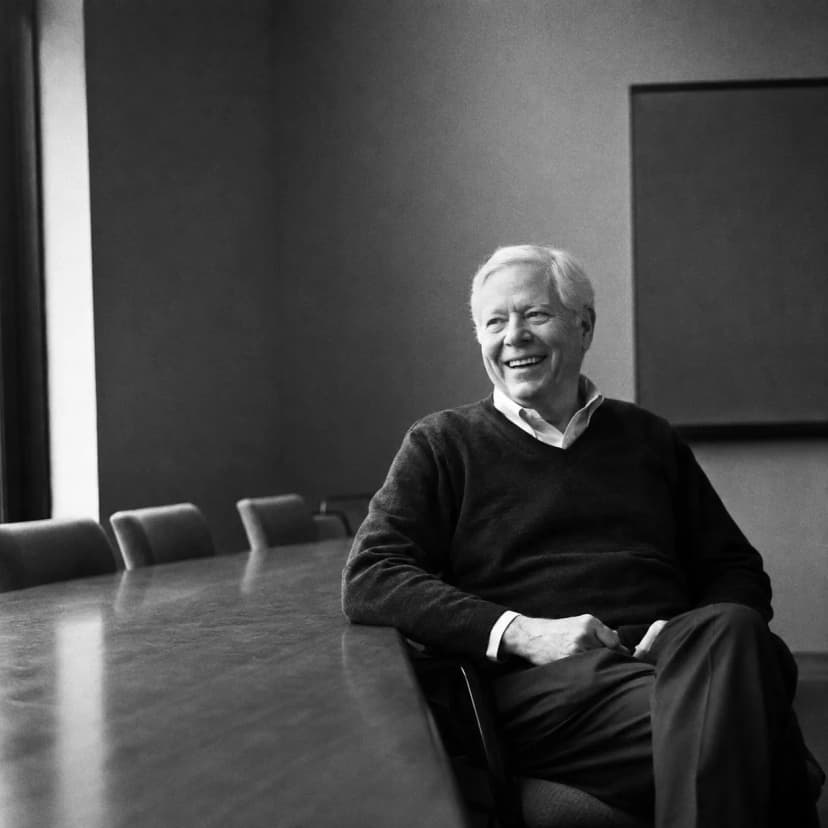
Terence Mitchell is Professor Emeritus at the University of Washington's Foster School of Business, an organisational psychologist, and the first author of the 1997 study that tracked people through three real events with ratings taken before, during and after. Anticipation and recollection were both more positive than the experience itself. That pattern is what is now called rosy retrospection. The direction is consistent and the size is not established.
Who they are
The design is what makes the study worth citing. Most work on how people remember experiences compares a memory with something other than the experience it is a memory of. Mitchell, with Leigh Thompson, Erika Peterson and Randy Cronk, instead followed people through three real events and took ratings at three points: in anticipation, during the event itself, and in recollection afterwards. The three events were a trip to Europe, a Thanksgiving vacation and a three-week bicycle trip in California.
The pattern was the same in each. The anticipation was more positive than the experience, and the recollection was more positive than the experience, with the experience itself sitting lowest. Whatever a person is doing when they remember a holiday, it is not retrieving the holiday.
The limits belong with the finding and this site carries them. The samples were small, the design is correlational within-person, and the sample sizes remain unverified here, which is why no figure from the study is carried into anything published. Partial independent support comes from Wirtz, Kruger, Scollon and Diener in 2003, where remembered enjoyment exceeded online ratings taken during a spring break trip and predicted wanting to repeat it. No large replication was located. The direction is plausible and consistent; the size is not established, and the concept sits at mixed for that reason.
Not to be confused with Jason Mitchell, a different researcher who also appears in this vault.
Key papers
Mitchell, T. R., Thompson, L., Peterson, E., & Cronk, R. (1997). "Temporal adjustments in the evaluation of events: The 'rosy view'." Journal of Experimental Social Psychology, 33(4), 421-448. Three real events, with ratings in anticipation, during and in recollection. Anticipation and recollection both more positive than the experience. Read in abstract only in this vault, and sample sizes are unverified, so no figure from it is carried.
The nearest independent support:
Wirtz, D., Kruger, J., Scollon, C. N., & Diener, E. (2003). "What to do on spring break?" Psychological Science, 14(5), 520-524. Remembered enjoyment exceeded ratings made during the trip, and predicted wanting to repeat it.
Mitchell has published widely in organisational psychology beyond this paper. The vault records only the 1997 study, so only that is listed, and this page does not claim to be his bibliography.
Key ideas
Measure all three points. Anticipation, experience and recollection, on the same people and the same events. That is the design, and it is why the study is still cited.
The experience sits lowest. Both looking forward and looking back are more positive than the thing itself.
The direction is consistent and the size is not established. Small samples, a correlational within-person design, and no large replication located.
No figure from it travels. Sample sizes are unverified in this vault, so the study is cited for the pattern and never for a number.
Wirtz and colleagues give partial independent support from a different event and a different method.
Sources
- Mitchell, T. R., Thompson, L., Peterson, E., & Cronk, R. (1997). "Temporal adjustments in the evaluation of events: The 'rosy view'." Journal of Experimental Social Psychology, 33(4), 421-448. Abstract only.
- Wirtz, D., Kruger, J., Scollon, C. N., & Diener, E. (2003). "What to do on spring break?" Psychological Science, 14(5), 520-524.
- Foster School of Business, University of Washington, faculty directory. Professor Emeritus. Affiliation and post.
- Vault note: [[Terence Mitchell]], which records the unverified sample sizes and the instruction not to carry a figure from the study.