Terry Robinson
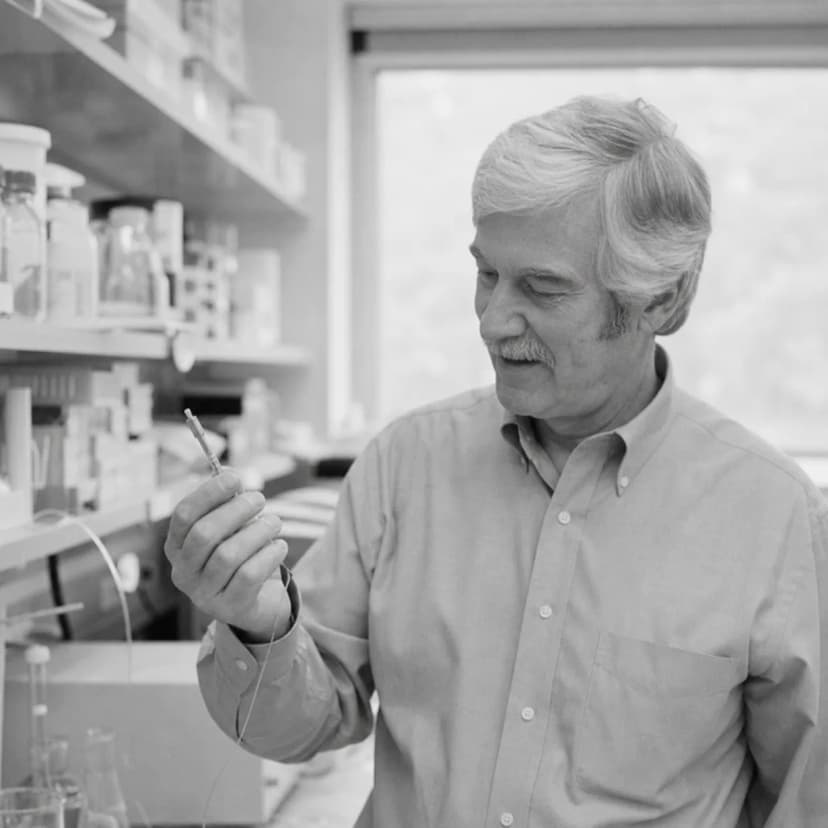
Terry Robinson is a behavioural neuroscientist at the University of Michigan and Kent Berridge's long-running collaborator on the incentive-sensitization theory of addiction. He is first author on both the theory's founding 1993 paper and its thirty-year reassessment in 2025, though Berridge's name tends to carry further in popular accounts of the work. Their joint research established that wanting a reward and liking it are separate, unevenly matched brain systems, a dissociation now central to how addiction researchers think about craving.
Who they are
Terry Robinson is Elliot S. Valenstein Distinguished University Professor Emeritus of Psychology and Neuroscience at the University of Michigan. His research career centres on one long partnership: with Kent Berridge, he built the case that a reward's pull and its pleasure are produced by different systems in the brain, and that these systems do not always move together.
Robinson is first author on the pair's two defining papers. The 1993 paper, published in Brain Research Reviews, proposed the incentive-sensitization theory of addiction: that repeated exposure to a drug can make the brain's wanting system progressively more reactive to drug-associated cues, independent of whether the drug itself remains as pleasurable. The 2025 paper, a thirty-year retrospective in the Annual Review of Psychology, revisits the theory with unusual candour for a career-defining idea. It corrects a misreading that grew out of a figure in the original 1993 paper, one that implied liking necessarily declines as addiction progresses. Robinson and Berridge state plainly that this was never a requirement of the theory, and that later evidence shows liking can stay high and stable even as wanting climbs.
Popular accounts of this research tend to credit Berridge alone, partly because Berridge supplied the memorable phrasing that circulated in books such as Adam Alter's Irresistible. The underlying theory, and both of its defining papers, are joint work, with Robinson as first author throughout. The pair are also careful about where the theory does and does not apply: they extend it, with visible hedging, to behaviours such as gambling and binge eating, but never to apps or social media, a limit worth noting whenever the framework is used outside addiction research.
Key papers
Robinson has published no solo-authored monograph. His one book credit is as editor of an academic collection on brain-research methods, an edited volume of other researchers' work, not a book he wrote himself. His defining contribution is two journal papers, both co-authored with Kent Berridge, on which Robinson is first author.
Robinson, T. E., & Berridge, K. C. (1993), "The neural basis of drug craving: An incentive-sensitization theory of addiction," Brain Research Reviews, 18(3), 247-291. Robinson is first author. The founding statement of incentive-sensitization theory.
Robinson, T. E., & Berridge, K. C. (2025), "The Incentive-Sensitization Theory of Addiction 30 Years On," Annual Review of Psychology, 76, 29-58. Robinson is again first author. A candid thirty-year reassessment that corrects earlier misreadings of the theory, including the claim that liking must decline as wanting rises.
Edited volume: Robinson, T. E. (Ed.) (1983), Behavioral Approaches to Brain Research, Oxford University Press. An edited academic collection, not a monograph.
Key ideas
Co-developer, with Kent Berridge, of the incentive-sensitization theory of addiction, and first author on both of its defining papers.
Wanting and liking are produced by different brain systems that do not always move together.
Sensitisation of wanting can persist for months or years, and can resurface at full strength after periods where it looked dormant.
The theory does not claim that liking necessarily declines in addiction, a correction Robinson and Berridge made explicitly in their 2025 review.
Concepts on this site
wanting versus liking, developed jointly with Kent Berridge, with Robinson first author on the defining papers
Find them elsewhere
Lab page at the University of Michigan carries his biography, and the Scholar profile is verified at umich.edu with a matching emeritus title. No social accounts could be confirmed as his
Checked 2026-09-10. Handles and affiliations go out of date, so treat this block as a snapshot rather than a standing fact.
Sources
- Robinson, T. E., & Berridge, K. C. (1993), "The neural basis of drug craving: An incentive-sensitization theory of addiction," Brain Research Reviews, 18(3), 247-291.
- Robinson, T. E., & Berridge, K. C. (2025), "The Incentive-Sensitization Theory of Addiction 30 Years On," Annual Review of Psychology, 76, 29-58.
- Robinson, T. E. (Ed.) (1983), Behavioral Approaches to Brain Research, Oxford University Press.