Walter Mischel
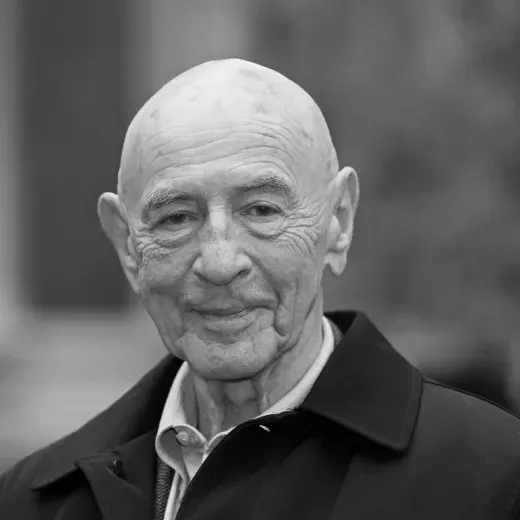
Walter Mischel, 1930 to 2018, was an Austrian-born American psychologist, latterly at Columbia University, who ran the Stanford delay-of-gratification studies from the late 1960s, universally known as the marshmallow test. The original behavioural work is sound and his own emphasis was always on strategy rather than character. The long-run predictive claim attached to it is the contested part, and the correction is the point of this page. He is also the author of the person-situation critique in Personality and Assessment, 1968, which is arguably the larger contribution and the one popular writing never mentions.
Who they are
Mischel spent most of his later career at Columbia, and two quite different bodies of work carry his name.
The first is the one nobody outside the discipline cites. Personality and Assessment, published in 1968, argued that behaviour is far less consistent across situations than trait theory assumed, and that people look consistent largely because their contexts are. It set off the person-situation debate and reshaped how personality was measured for a generation. Where a popular book runs a situationist argument about why people seem stable, this is usually where the argument comes from, whether or not he is named.
The second is the marshmallow test. From the late 1960s at Stanford, children of about four were left alone with a treat and told they could have a second one if they waited. What Mischel himself was interested in was what the child did during the wait: looking away, turning the chair round, reframing the treat as something else, sitting on their hands. On his account it is the strategy, not the willpower, that predicts the waiting, and that emphasis has held up well. Anna Lembke's reading of the same footage as self-binding, small acts of physically restructuring the situation so that the wanting has less to work on, is a good restatement of it.
The trouble is with the famous half rather than the interesting one. Shoda, Mischel and Peake in 1990 reported strong bivariate correlations between seconds waited at about age four and adolescent achievement and socioemotional measures, including the association with SAT scores that the popular version repeats. Those follow-ups used small samples. Tyler Watts, Greg Duncan and Haonan Quan published a much larger and much better controlled conceptual replication in Psychological Science in 2018. Among children whose mothers had not completed college, an extra minute of waiting at age four predicted about a tenth of a standard deviation gain in achievement at fifteen. That bivariate association was about half the size reported in the original studies, and it was reduced by roughly two thirds once family background, early cognitive ability and the home environment were controlled.
The other side is real and belongs here. Armin Falk, Fabian Kosse and Pia Pinger re-analysed the same comparison in Psychological Science in 2020 and argued that the predictive relationship survives in a more socioeconomically diverse sample and that the original conclusion is broadly confirmed. Sabine Doebel, Zachary Michaelson and Yuko Munakata raised a separate objection in 2020 about what the task measures at all. Watts and Duncan replied in the same issue, defending the controls. The exchange is live.
Where this site lands, and it has not moved: side with the replication on the long-run predictive claim, and with Mischel on the mechanism. The test is a measure of circumstances and learned strategy at least as much as of character, which is a good deal closer to what he argued in 1968 than the popular version has ever been. The claim that delay performance predicts later SAT scores better than IQ does is not carried here in any form. The vault has now caught four separate trade books reporting the marshmallow test with no replication caveat attached, across four disciplines and four publishers, which is why the caveat is treated here as a required part of the claim rather than as an optional footnote.
Key papers
Mischel, W. (1968), Personality and Assessment. The person-situation critique, and the work this site treats as his larger contribution.
Shoda, Y., Mischel, W., & Peake, P. K. (1990). The follow-up reporting bivariate correlations between seconds waited at about age four and adolescent achievement and socioemotional measures, including the SAT association. Small samples, and the source of the popular claim.
The replication record, which travels with the finding by default:
Watts, T. W., Duncan, G. J., & Quan, H. (2018), "Revisiting the Marshmallow Test," Psychological Science. Larger and better controlled. The association about half the size reported originally, and reduced by roughly two thirds once family background, early cognitive ability and the home environment were controlled. Tyler Watts is first author.
Falk, A., Kosse, F., & Pinger, P. (2020), "Re-Revisiting the Marshmallow Test," Psychological Science. The counter, arguing the predictive relationship survives in a more socioeconomically diverse sample and that the original conclusion is broadly confirmed.
Doebel, S., Michaelson, Z., & Munakata, Y. (2020). A separate objection about what the task actually measures.
Watts, T. W., & Duncan, G. J. (2020), "Controlling, Confounding, and Construct Clarity," Psychological Science. The reply in the same issue, defending the controls.
Publishers and volume numbers for several of these entries are not recorded in the vault and are not supplied here.
Key ideas
Strategy, not willpower. What the child does with attention during the wait is what predicts the wait. This is Mischel's own emphasis and it is the part that has held up.
The long-run prediction is attenuated. Watts, Duncan and Quan 2018 found the association about half the size originally reported, and reduced by roughly two thirds once family background and early cognitive ability were controlled. Falk, Kosse and Pinger 2020 argue the relationship survives in a more diverse sample. The exchange is live and this page carries both.
Side with the replication on the prediction and with Mischel on the mechanism. The task measures circumstances and learned strategy at least as much as character.
Personality and Assessment is the bigger book. The 1968 person-situation critique is where most situationist arguments about apparent consistency come from, and it is almost never credited when they are made.
The caveat is part of the claim. Four independent trade books have now been caught reporting the test without it. The burden sits with the writer who omits it.
Sources
- Mischel, W. (1968), Personality and Assessment.
- Shoda, Y., Mischel, W., & Peake, P. K. (1990). The adolescent follow-up.
- Watts, T. W., Duncan, G. J., & Quan, H. (2018), "Revisiting the Marshmallow Test," Psychological Science.
- Falk, A., Kosse, F., & Pinger, P. (2020), "Re-Revisiting the Marshmallow Test," Psychological Science.
- Doebel, S., Michaelson, Z., & Munakata, Y. (2020). The construct objection.
- Watts, T. W., & Duncan, G. J. (2020), "Controlling, Confounding, and Construct Clarity," Psychological Science.
- Vault note: [[Walter Mischel]], which records the standing verdict and the four books caught reporting the test without the replication record.