Willoughby Britton
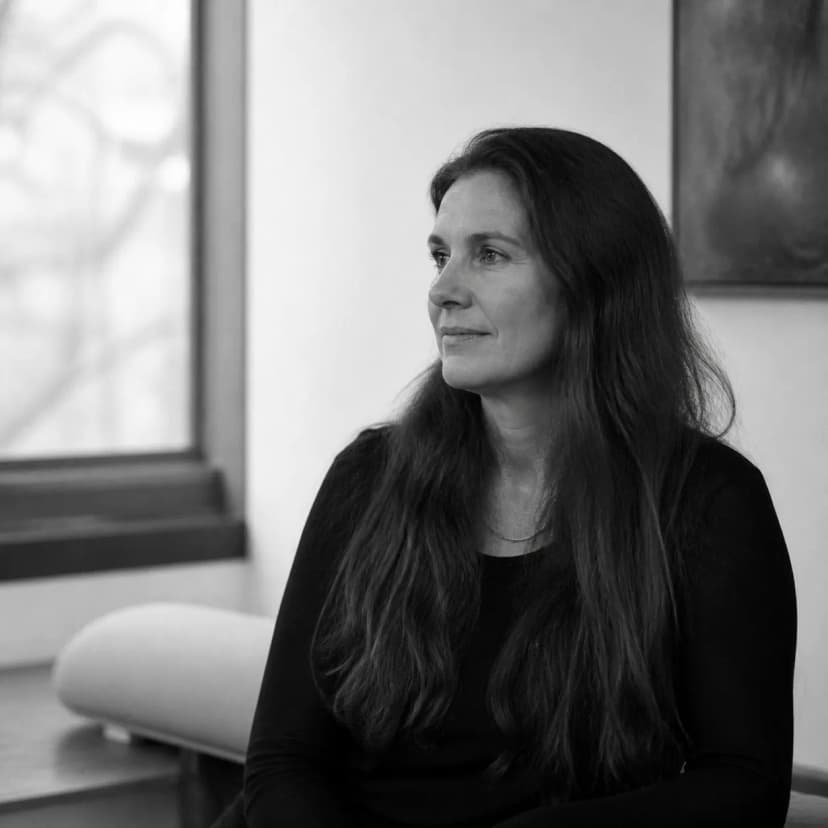
Willoughby Britton is a clinical psychologist and neuroscientist at Brown University who built the instrument the meditation literature was missing. Trials of mindfulness programmes had long asked participants a single open-ended question about whether anything had gone wrong, and had reported low rates of difficulty. Britton and her colleagues replaced that question with a 44-item structured interview and found that the open-ended version had been missing most of what was there. Her own reading of the resulting numbers is notably generous to the practice, which is worth saying, because the numbers get quoted by people who want them to be damning.
Who they are
Britton is Associate Professor of Psychiatry and Human Behavior at Brown University, where she directs the Clinical and Affective Neuroscience Laboratory. Her research concerns what contemplative practices actually do to the brain and the body, including in the treatment of mood disorders and trauma, and it has increasingly concerned a question the field had been slow to formalise: what happens to the people for whom a practice does not go smoothly.
With the religious-studies scholar Jared Lindahl she ran the Varieties of Contemplative Experience project, a long qualitative study of meditators and meditation teachers in Western Buddhist traditions. Interviewing practitioners and the teachers who had been running retreats for decades produced a taxonomy of meditation-related experiences across seven domains, cognitive, perceptual, affective, somatic, conative, sense of self and social, along with the factors that appeared to influence how such experiences unfolded. Its contribution was a vocabulary. Before it, difficult meditation experiences had no agreed set of names, and what cannot be named cannot be counted.
The counting came in 2021. Ninety-six people completed one of three variants of an eight-week mindfulness-based cognitive therapy programme, and an independent assessor interviewed every one of them using the structured instrument. Eighty-three per cent reported at least one side effect. Fifty-eight per cent reported at least one adverse effect of negative valence, and 37 per cent one with a negative impact on functioning. Between 6 and 14 per cent reported lasting bad effects, the range depending on whether lasting means more than a day, a week or a month. The result that matters most, though, is about method rather than magnitude: a single open-ended question, the kind trials normally rely on, identified only 26 of the 80 participants who had experienced a side effect.
Britton reads this generously, and the reading is defensible. Transient difficulty during meditation looks closer to normative than to alarming, participants evidently judged it tolerable enough to continue, and comparable rates appear across psychotherapy generally, where nobody concludes that therapy is dangerous. She also discloses that she founded Cheetah House, a nonprofit that supports people who have been harmed by meditation. That disclosure belongs on the record every time she is cited. It is a reason to read her carefully, and it is also the reason the instrument exists at all, because the people who came to her were the ones the trials had not asked.
Key papers
Britton, W. B., Lindahl, J. R., Cooper, D. J., Canby, N. K., & Palitsky, R. (2021), "Defining and Measuring Meditation-Related Adverse Effects in Mindfulness-Based Programs," Clinical Psychological Science, 9(6), 1185-1204, doi 10.1177/2167702621996340. The structured-interview trial, and the demonstration that open-ended questioning misses most cases.
Lindahl, J. R., Fisher, N. E., Cooper, D. J., Rosen, R. K., & Britton, W. B. (2017), "The varieties of contemplative experience: A mixed-methods study of meditation-related challenges in Western Buddhists," PLOS ONE, 12(5), e0176239. The qualitative taxonomy that made the later measurement possible.
Key ideas
Meditation research had been measuring harm with an instrument too blunt to detect it. How you ask determines what you find.
In the 2021 trial, a single open-ended question identified 26 of the 80 participants who had experienced a side effect. Structured interviewing found the rest.
Difficult experiences during meditation are common, mostly transient, and mostly judged tolerable by the people having them. A smaller group reports effects that persist beyond a month.
Britton's own interpretation is that these rates look comparable to psychotherapy in general rather than alarming in themselves.
She discloses founding Cheetah House, a nonprofit supporting people harmed by meditation. Report the disclosure whenever citing her.
None of this is a case against meditation. It is a case for consent, for screening, and for trials that ask properly.
Concepts on this site
Meditation-Related Adverse Effects
Find them elsewhere
Her Brown page, her own site willoughbybritton.com and cheetahhouse.org link only Cheetah House organisational accounts, not personal ones, so no handle was recorded. A LinkedIn profile in her name exists but nothing she controls links to it
Checked 2026-09-10. Handles and affiliations go out of date, so treat this block as a snapshot rather than a standing fact.
Sources
- Britton, W. B., Lindahl, J. R., Cooper, D. J., Canby, N. K., & Palitsky, R. (2021), "Defining and Measuring Meditation-Related Adverse Effects in Mindfulness-Based Programs," Clinical Psychological Science, 9(6), 1185-1204, doi 10.1177/2167702621996340.
- Lindahl, J. R., Fisher, N. E., Cooper, D. J., Rosen, R. K., & Britton, W. B. (2017), "The varieties of contemplative experience: A mixed-methods study of meditation-related challenges in Western Buddhists," PLOS ONE, 12(5), e0176239.
- Goyal, M., et al. (2014), "Meditation Programs for Psychological Stress and Well-being: A Systematic Review and Meta-analysis," JAMA Internal Medicine, 174(3), 357-368. (For the benefit side of the same ledger.)
- Disclosure, as reported by Britton: she is the founder of Cheetah House, a nonprofit organisation supporting people experiencing difficulties related to meditation.
- Nothing on this page is medical advice. If a meditation practice is producing distress that does not pass, the sensible next step is a qualified clinician, not a longer sit.