The Compromise Effect
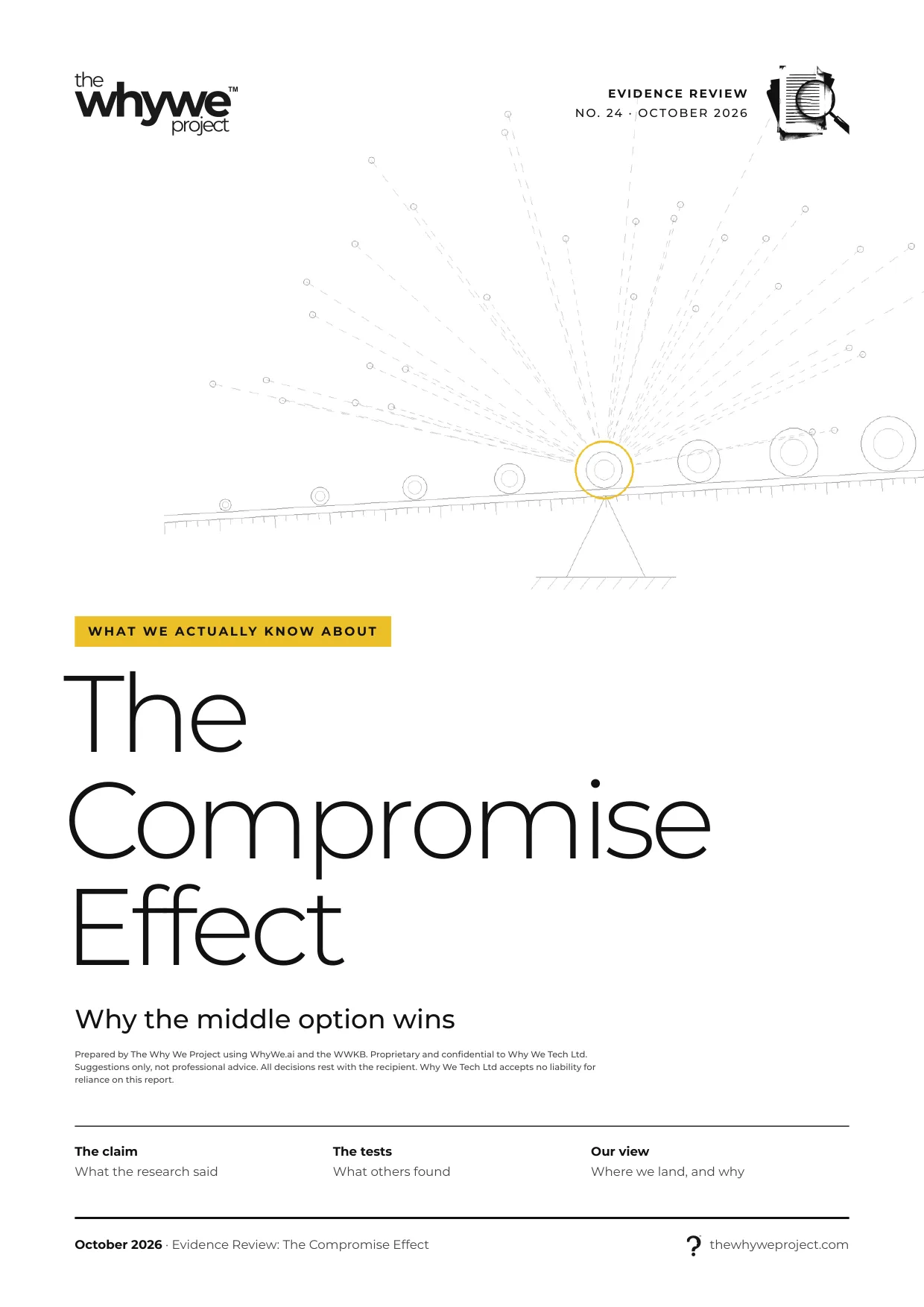
What is the compromise effect?
It is the tendency for an option to gain share when it becomes the middle choice in a set, between a cheaper, plainer option and a dearer, richer one. Studies from cameras to drink sizes and supermarket shelves find the middle option wins more often than it would alone, especially when people are unsure what they want or expect to explain their choice. The pull weakens with real money, familiar brands, the option not to choose and little time to think.
What the report found
- The middle gains. When a third option is added at one end of a range, the option that becomes the middle wins a larger share, even though nothing about it has changed. The pattern appears with cameras, drinks, groceries, savings and simple judgements of shape.
- It rests on reasons. The middle is easy to explain and hard to fault. The effect grows when people expect to justify their choice, when they are unsure what they want, when a choice feels difficult and when they are focused on avoiding losses.
- It is robust but variable. Pooled studies find that middle options are chosen more often than other options, but the size of the effect varies by up to three times with the products, the attributes and the way a study is set up.
- It has clear limits. The pull weakens with real money at stake, a familiar brand at one end, an option not to choose, little time to think, several items to buy, or several options at the extremes.
- It is not always an error. A range of options carries information about what is ordinary, and much of the effect can be read as people sensibly inferring what they want from what is offered. Ranges are best designed so that the middle is a genuinely good choice.
What is inside
- The idea and where it came from
- The original studies, explained
- What happened when others tested it
- Where researchers disagree
- What we can say with confidence
Plus a timeline of the key studies, three debates set out side by side and a table grading each common claim.
Who it is for
For marketers and product teams, people who design price tiers, sizes, plans and bundles, and anyone who wonders why the medium so often feels right.
How we work
Evidence Reviews follow one well known idea from its origin to today: the original studies, what happened when others tested them, where researchers disagree and what we can say with confidence. Every claim is graded, and both sides of each debate are set out before we say where we stand.
Cite this report
The Why We Project (2026) The Compromise Effect: Why the middle option wins. Evidence Review No. 24. Dubai: Why We Tech Ltd. Available at: thewhyweproject.com