Choice Design
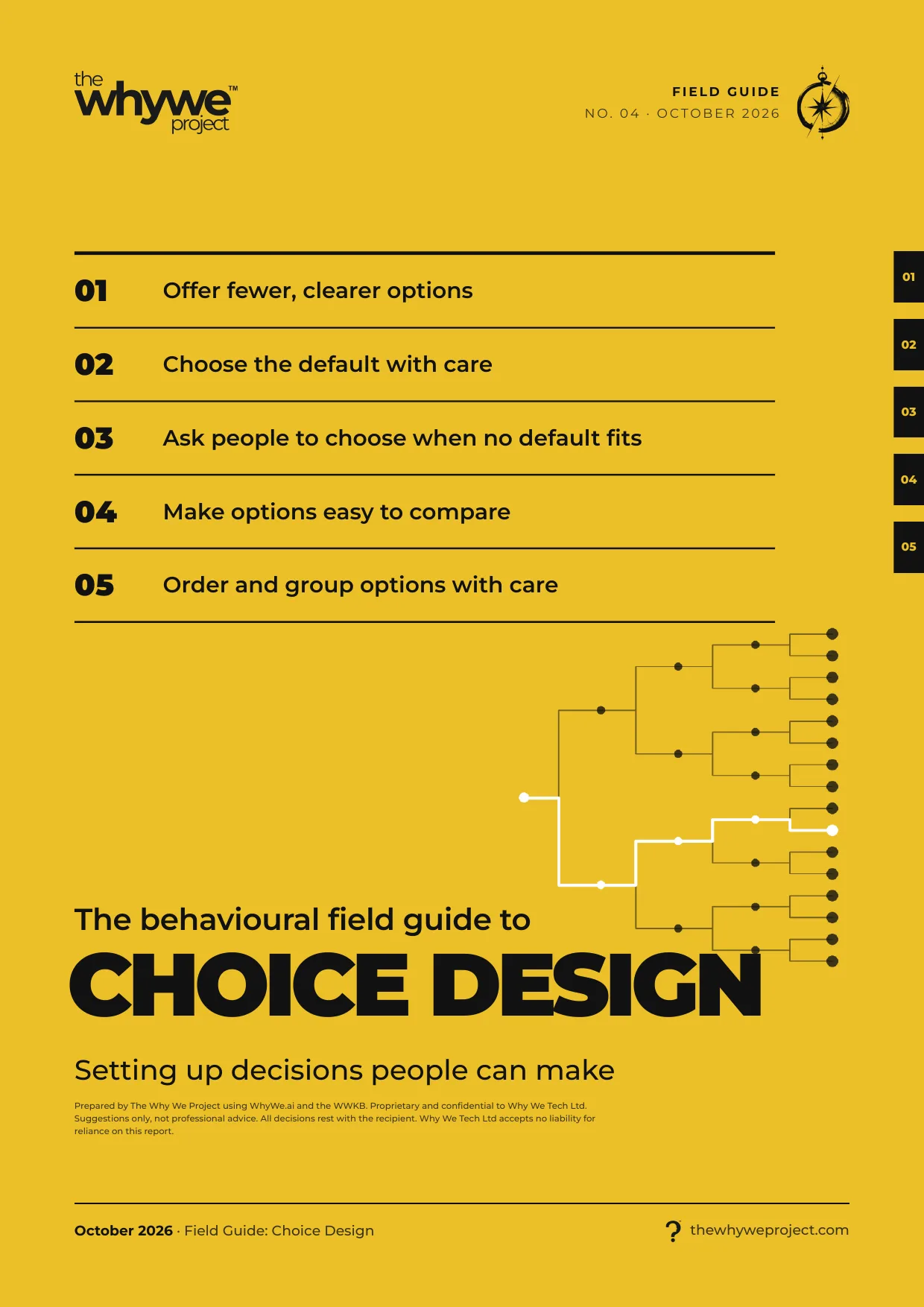
How do you design a choice people can make well?
Ask whether one option suits nearly everyone. If so, make it the default: automatic enrolment raised pension participation from 37 to 86 per cent. If not, ask people to choose, cut and sort the options, show each person their own costs, and order the list on purpose.
What the report found
- Offer fewer, clearer options. In a famous test, 30 per cent of shoppers who stopped at a display of 6 jams bought one, against 3 per cent at a display of 24. Later reviews found the effect depends on the setting: too much choice hurts when options are hard to compare and people are unsure what they want.
- Choose the default with care. When a company enrolled new staff in its pension plan unless they opted out, participation rose from 37 to 86 per cent. Across 58 studies, defaults had a sizeable effect, strongest when people read them as a recommendation.
- Ask people to choose when no default fits. Requiring new staff to say yes or no to the pension plan raised enrolment by 28 percentage points compared with asking them to opt in.
- Make options easy to compare. Sending older Americans a letter with their personal costs under each drug plan raised switching to a cheaper plan from 17 to 28 per cent. Without such help, most employees in one firm chose health plans that were worse in every way.
- Order and group options with care. Dishes listed first or last on a menu were up to twice as popular as the same dishes in the middle. People also tend to spread their choices evenly across whatever groups they are shown.
Who it is for
For anyone who designs a menu, price list, plan comparison, sign-up form or any set of options for other people.
How we work
Field Guides turn behavioural science into practical principles, each with the evidence, a worked example and what to watch out for. Every claim is graded Established, Emerging or Untested, and where researchers disagree, as they do on whether too much choice is a real problem, both sides are set out before we say where we stand.
Cite this report
The Why We Project (2026) Choice Design: Setting up decisions people can make. Field Guide No. 04. Dubai: Why We Tech Ltd. Available at: thewhyweproject.com